Medicine Ball Squat Jump
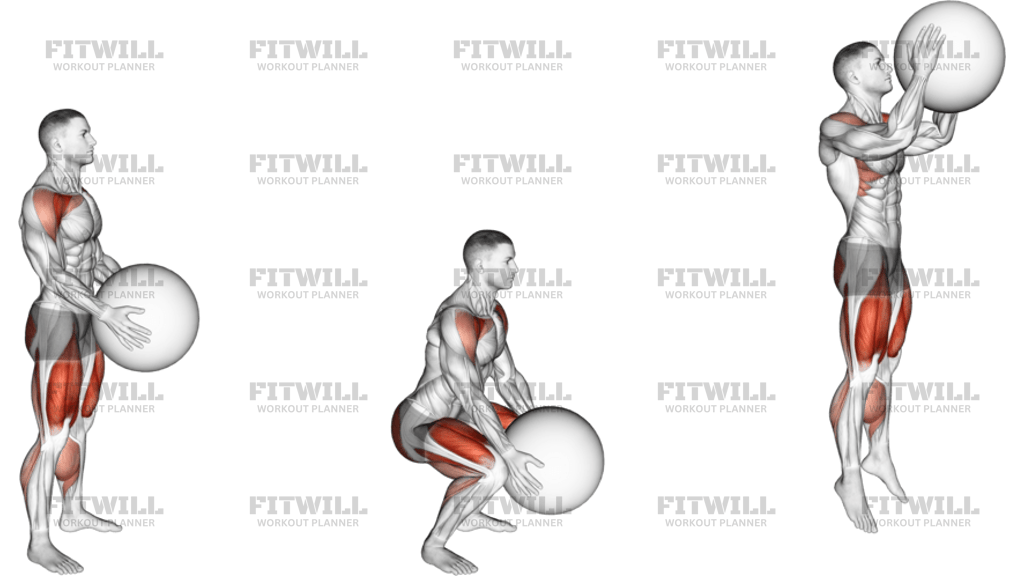
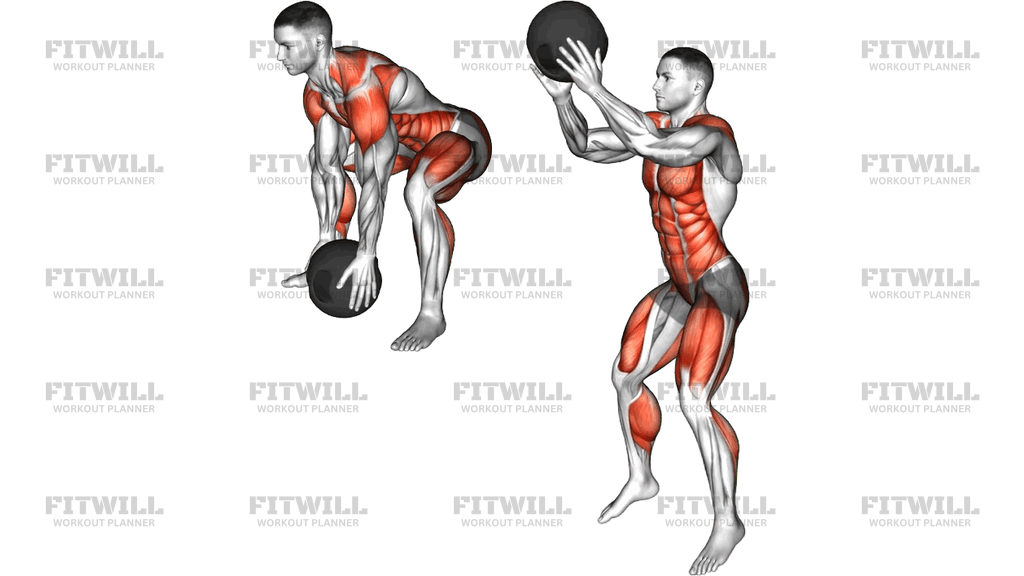
Medicine Ball Squat Jump is a lower-body power drill that combines a loaded squat with an explosive jump. Holding the medicine ball close to your chest adds front-loaded resistance, which makes the squat pattern more demanding on the thighs, glutes, and trunk while still keeping the movement simple and easy to organize.
The exercise is useful when you want to train force production, landing control, and rhythm in the same rep. Because the ball stays in front of the body, your torso has to stay braced while the knees and hips bend together, which is why setup matters more here than in a plain bodyweight jump squat. A clean rep should feel powerful on the way up and quiet and controlled on the way down.
Start by standing tall with the medicine ball hugged to the chest or held just below chin height, then sit back into a squat until the thighs are well loaded. The jump should come from driving through the floor, extending the hips, knees, and ankles together, not from swinging the ball or tipping the chest forward. Keep the ball steady so the legs do the work and the upper body simply anchors the load.
The landing is just as important as the takeoff. Land softly with the knees tracking over the toes, absorb the impact by bending the hips and knees, and immediately reset into the next squat only if the landing is stable. If the landing gets loud, the torso collapses, or the knees cave inward, reduce the speed or load so you can keep each repetition crisp.
This movement fits well in athletic warm-ups, power blocks, conditioning circuits, or lower-body sessions that need a plyometric element without a complex setup. It is not meant to be a fatigue chase; short sets with high-quality jumps usually work better than long sets where the jump height drops off. Use a light-to-moderate medicine ball that lets you stay explosive while still challenging your posture and control.
[ Workout Log & Planner ]
Put your next workout in Fitwill
Keep your plan and training log ready when you are.


Instructions
- Stand with your feet about shoulder-width apart and hold the medicine ball against your chest with both hands.
- Set your weight through the midfoot and heels, keep your chest tall, and let your elbows stay comfortably in front of your ribs.
- Sit back and down into a squat until your thighs are loaded and your heels stay grounded.
- Brace your trunk, keep the ball close, and avoid letting your shoulders round forward.
- Drive hard through the floor and jump straight up by extending your hips, knees, and ankles together.
- Keep the medicine ball steady as you leave the ground instead of swinging it for momentum.
- Land softly on both feet with bent knees and hips, absorbing the impact quietly.
- Reset into the next squat only after the landing is balanced and repeat for the planned reps.
Tips & Tricks
- Hold the ball at chest height, not at arm's length, so the front load challenges the squat without pulling you forward.
- Use a medicine ball that lets you jump explosively; if the ball slows the takeoff, it is too heavy.
- Think "sit and spring" rather than dropping straight down and bouncing out of the bottom.
- Keep your knees tracking over your toes on the descent and on the landing to avoid valgus collapse.
- Make the landing quiet. Loud foot contact usually means you are absorbing impact too late or letting the torso fold.
- Stop the set when jump height clearly drops, because repeated slow jumps turn this into sloppy conditioning instead of power work.
- If your heels pop up during the squat, widen your stance slightly or reduce depth so you can keep pressure through the floor.
- For more control, pause briefly in the bottom squat before the jump; for more power, keep the descent smooth but still controlled.
Frequently Asked Questions
What muscles does Medicine Ball Squat Jump work?
It mainly trains the thighs and glutes, with the calves and core helping you stabilize and explode out of the squat.
Should I hold the medicine ball at my chest or overhead?
Keep it at chest height for this exercise. That front-loaded position is what makes the squat jump more challenging without turning it into a shoulder-driven movement.
How heavy should the medicine ball be?
Use a light to moderate ball that still lets you jump quickly. If the load slows your takeoff or makes the landing noisy, it is too heavy for this drill.
Do I need to squat very deep before the jump?
Only squat as deep as you can keep your heels down and your torso braced. A controlled athletic squat is better than chasing extra depth and losing power.
Is Medicine Ball Squat Jump beginner-friendly?
Yes, if the ball is light and the reps are kept low. Beginners should focus on soft landings and consistent body position before trying to jump higher or faster.
What is the biggest form mistake in Medicine Ball Squat Jump?
Letting the knees cave in or the chest collapse as you land. Keep the ball close, drive the knees out in line with the toes, and absorb the landing with bent hips and knees.
Can I use Medicine Ball Squat Jump in a warm-up?
Yes. It works well in a power-focused warm-up when you want to raise heart rate and prime the legs without a complicated setup.
What should my landing sound like?
It should be quiet and controlled. If the feet slap the floor, you are probably landing too stiffly or using a ball that is too heavy.