Balloon Drill
Balloon Drill is a medicine ball toss-and-catch drill built to sharpen coordination, rhythm, and lower-body control. It asks you to stay athletic through every rep, so the thighs, core, and shoulders all have to work together instead of letting momentum take over. The goal is a smooth, repeatable pattern where the stance, brace, toss, and catch stay organized from the first rep to the last.
This movement is useful when you want a drill that feels more dynamic than a static hold but still demands clean body position. Because the ball has to leave your hands and come back under control, the drill trains power transfer, reaction, and stability at the same time. It can fit well into a warm-up, conditioning block, or sport-focused session where quick coordination matters.
The setup matters more than people expect. A light medicine ball and a clear space let you keep the toss crisp instead of chasing a bad catch. Start in a shoulder-width athletic stance with soft knees, ribs stacked over the pelvis, and the ball held at chest height so the first throw begins from a balanced position instead of a rushed reach.
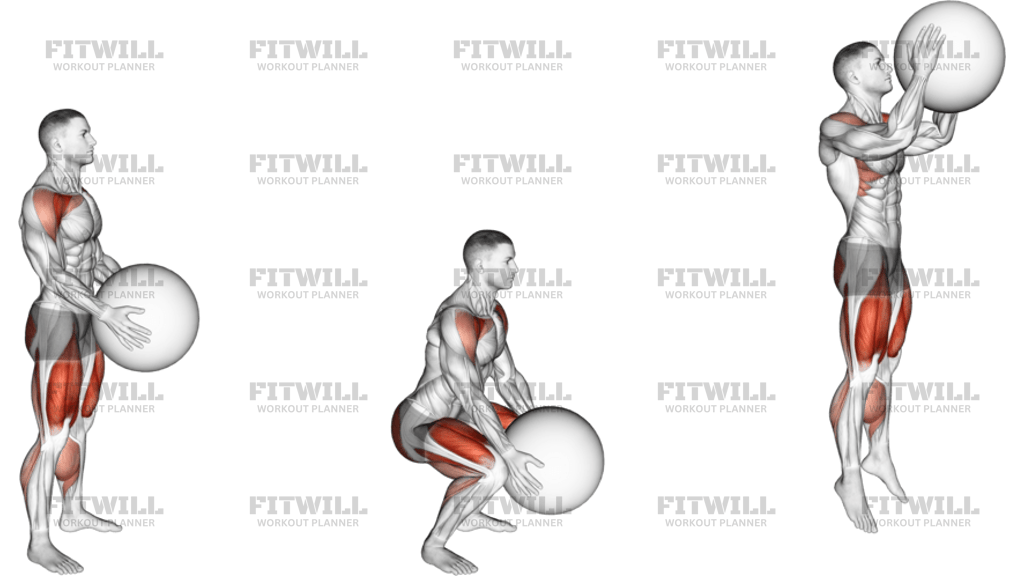
Each repetition should feel like a small power-and-receive cycle. Drive the ball upward or slightly forward from the chest, follow it with your eyes, then catch it with bent elbows and knees so the landing absorbs force through the legs instead of the lower back. If the catch pulls your chest back or your feet shuffle to save balance, the toss is too high, too heavy, or too fast.
Balloon Drill works best when the reps look nearly identical. Keep the same throw height, the same stance width, and the same tempo so the drill trains skill rather than chaos. Beginners can use a very light medicine ball and keep the toss low; more advanced athletes can make the rhythm quicker or add a forward toss, as long as the catch stays clean and controlled.
Because the drill is short and responsive, it also works well as a primer before lower-body training or field work. The repeated catch teaches you to stay stacked through the trunk while the thighs manage the small dip on each landing, which makes it a practical choice when you want the body to feel awake without getting fatigued before the main workout.
[ Workout Log & Planner ]
Put your next workout in Fitwill
Keep your plan and training log ready when you are.


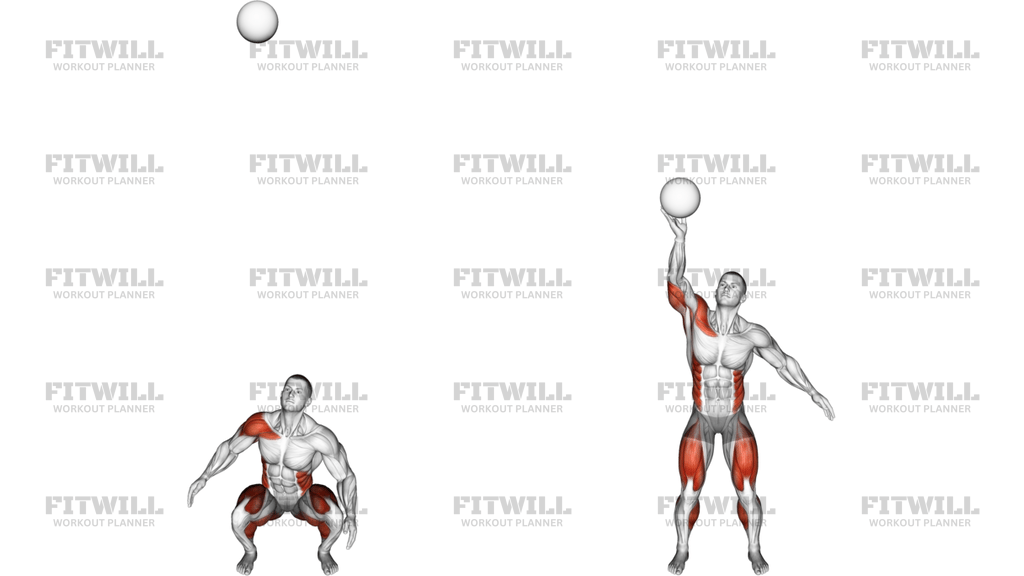
Instructions
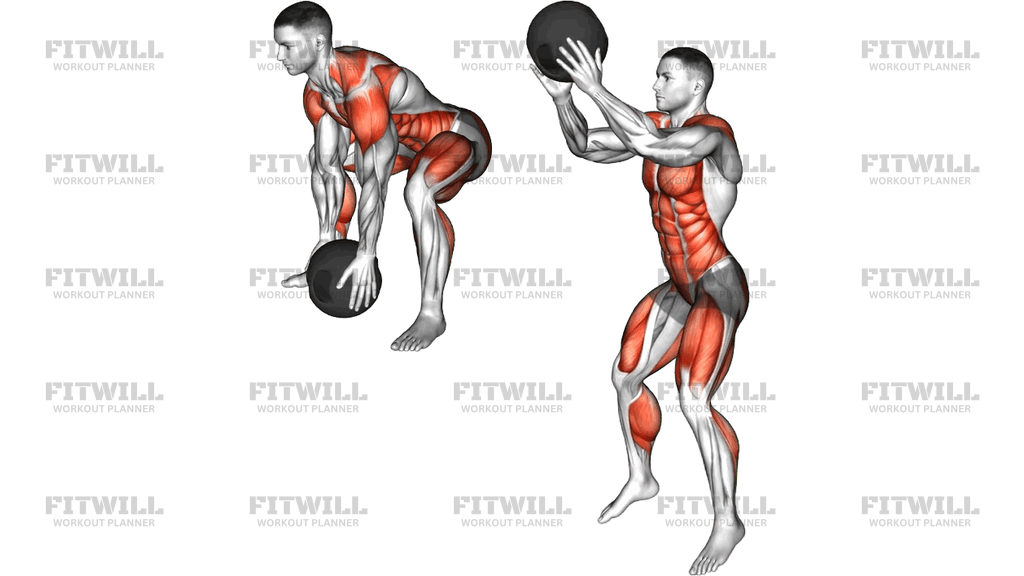
- Stand with your feet about shoulder-width apart and hold a medicine ball at chest height with both hands.
- Softly bend your knees and set your ribs over your pelvis so you start from an athletic stance instead of a tall lockout.
- Brace your trunk and keep your elbows slightly in front of your torso as you prepare the toss.
- Toss the medicine ball upward or slightly forward from the chest using a quick drive from the legs and arms together.
- Keep your eyes on the ball and stay ready to receive it without leaning backward.
- Catch the ball with both hands and let your knees and elbows bend to absorb the return.
- Bring the ball back to chest height, re-center your stance, and reset your brace before the next rep.
- Repeat for the planned reps with the same toss height and the same controlled rhythm.
- After the last rep, lower the ball with control and step out of the stance safely.
Tips & Tricks
- Use a light medicine ball that you can catch cleanly without your shoulders jolting upward.
- Keep the toss in front of your face and chest; throwing too high usually turns the drill into a scramble.
- Let your knees soften on the catch so the thighs help absorb force instead of landing stiff-legged.
- If the ball drifts left or right, shorten the toss path and keep both hands centered on the release.
- Do not lock your elbows when you throw or catch; soft arms make the drill smoother and safer.
- Keep your heels down and weight balanced through the middle of your feet so the stance stays athletic.
- If you need to chase the ball with your feet, the toss is too aggressive for your current load or space.
- A slower, cleaner rhythm is better than a fast toss that makes you lose posture on the catch.
Frequently Asked Questions
What muscles does Balloon Drill work?
Balloon Drill mainly challenges the thighs, core, shoulders, and arms because you have to throw, catch, and absorb the medicine ball without losing your stance.
Can beginners do Balloon Drill?
Yes. Start with a very light medicine ball and keep the toss low enough that you can catch it without stepping or leaning back.
Do I need a wall or partner for Balloon Drill?
No. The basic version can be done with a simple toss and catch in open space, though a wall or partner can change the return speed if your program calls for it.
How high should I toss the medicine ball?
Only high enough to catch it cleanly at chest or face level. If the return forces you to reach or shuffle, the toss is too aggressive.
What should I feel during the catch?
You should feel your legs and trunk absorb the landing while your hands guide the ball back to center, not a hard slap through the shoulders or lower back.
What is the most common mistake in Balloon Drill?
The biggest mistake is using a ball that is too heavy or tossing it too high, which turns a control drill into a sloppy chase.
Can I use a different implement instead of a medicine ball?
A soft, manageable ball is the closest substitute. Avoid hard or awkward objects, because the point of Balloon Drill is a safe, repeatable catch.
How many reps should I do?
Use short sets where every toss looks the same, usually enough to stay crisp rather than so long that your catch gets sloppy.