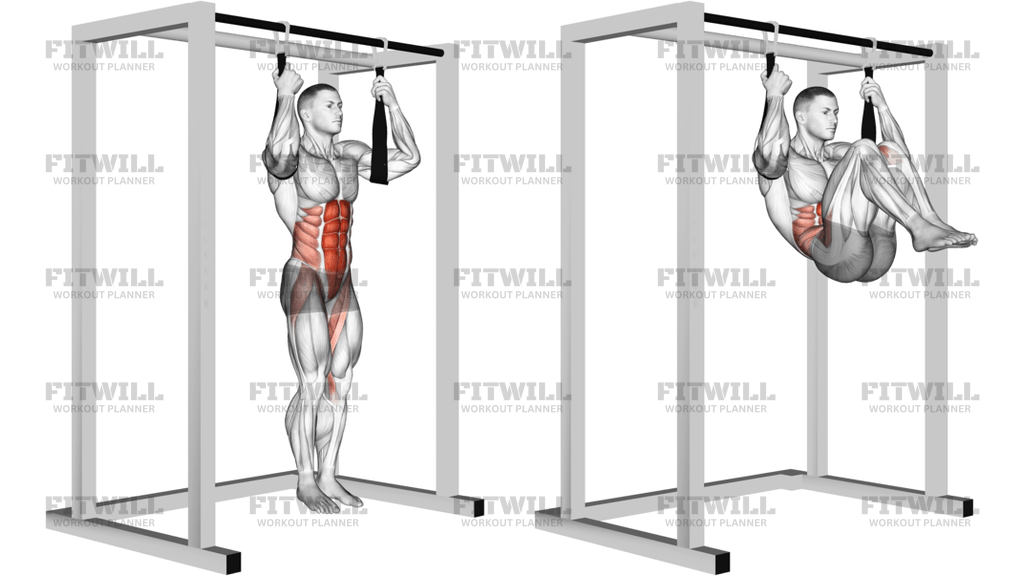
Hanging Knees To Elbows
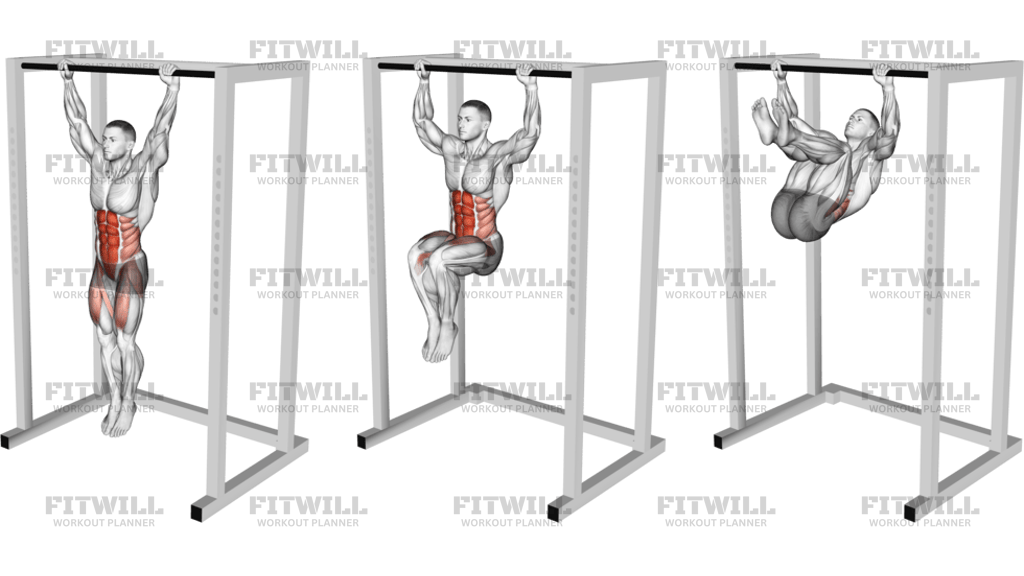
Hanging Knees To Elbows is a bodyweight core exercise performed from a pull-up bar. It combines a strong grip, active shoulders, and a powerful hip flexion pattern to train the abs, obliques, and hip flexors while the upper body works to keep you steady. The movement looks simple, but the quality of each rep depends on how still you can keep the rest of the body.
The setup matters because the bar hang creates a long lever. Start from a full dead hang with the hands fixed, shoulders engaged, and ribs stacked over the pelvis instead of arched open. When the torso is organized before you lift, the knees can travel toward the elbows without turning the rep into a swing. That active hang also helps the movement stay honest, because relaxed shoulders make the body swing and steal tension from the abs.
Each repetition should begin with a small tuck of the pelvis and then a controlled curl of the knees upward. Bring the thighs toward the torso, aim the knees toward the elbows, and pause briefly at the top before lowering with control until the body is still again. If you have to swing to get the knees up, reduce the range and make the descent slower.
This exercise is useful for athletes, climbers, gymnasts, and anyone who wants a harder hanging core drill than a basic knee raise. It can be used in a core block, as accessory work after pulling exercises, or as a conditioning movement when you want strict reps rather than speed. In a workout, it works well after pull-ups, rows, or lat pulldowns because the core is already warm and the grip demand is clear.
Beginners can shorten the lever by keeping the knees bent and lifting only as high as they can while staying quiet through the torso. More advanced lifters can slow the lowering phase or add a brief pause at the top, but the same rule always applies: the rep is only good if the bar hang stays controlled. For strict strength work, choose fewer reps and longer pauses; for conditioning, keep the range smaller and the swing almost invisible. If you feel pinching in the shoulders or strain in the lower back, cut the range and reset the hang before the next rep.
[ Workout Log & Planner ]
Put your next workout in Fitwill
Keep your plan and training log ready when you are.


Instructions
- Grip the pull-up bar slightly wider than shoulder width and hang with your arms straight, palms facing forward, and your feet together under you.
- Let your shoulders stay active by pulling them slightly down away from your ears as you settle into a still dead hang.
- Brace your abs, tuck your ribs down, and bring your pelvis under you so your torso does not arch.
- Begin the rep by bending at the hips and knees together, curling your thighs upward instead of kicking your legs.
- Drive your knees toward your elbows or upper arms, keeping the lift smooth and avoiding a backward swing.
- Hold the top position for a brief pause when your knees are as high as you can get them without losing control.
- Lower your legs slowly until your elbows are long again and your body is back in a quiet hang.
- Reset any swing between reps, breathe out as you lift and in as you lower, then release the bar safely after the final rep.
Tips & Tricks
- If your shoulders shrug, think about pulling the bar down and keeping the shoulder blades slightly depressed.
- Keep your knees together so the lift stays straight ahead instead of twisting into a side-to-side swing.
- A small posterior pelvic tilt at the start makes the abs do more of the work than the hip flexors.
- Use bent knees for cleaner reps; straightening the legs makes the movement much harder and more likely to swing.
- If the set turns into momentum, stop after one strict rep and restart from a dead hang.
- Lowering under control is where the abs stay loaded, so do not drop the legs fast after the top position.
- A firm overhand grip usually feels most stable on a straight bar; only change grips if the bar setup forces it.
- Keep your chin neutral and avoid looking up at the bar the whole time, which can make the torso arch.
Frequently Asked Questions
What muscles does Hanging Knees To Elbows work?
It primarily works the abs, especially the rectus abdominis, with the obliques and hip flexors helping to lift the knees. Your grip, lats, and upper back also work hard to keep you hanging.
Is Hanging Knees To Elbows the same as a leg raise?
It is a hanging knee-raise variation with a stronger emphasis on the abs and hip flexors than a simple hanging knee lift. Bringing the knees toward the elbows makes it more demanding than a basic raise.
Can beginners do Hanging Knees To Elbows?
Yes, but many beginners should start with hanging knee raises or bent-knee tucks before trying to bring the knees all the way to the elbows. The key is a still torso, not a big swing.
What grip should I use on the bar for Hanging Knees To Elbows?
An overhand grip on a pull-up bar is the most common setup for Hanging Knees To Elbows. Use a grip width that lets your shoulders stay comfortable and your body hang without twisting.
How high should my knees go in Hanging Knees To Elbows?
Lift them as high as you can while keeping the hang strict. If you have to lean back or kip to touch the elbows, shorten the range and build control first.
Why do I swing during Hanging Knees To Elbows?
Swing usually means the rep started before the body was fully still or the knees were lifted too aggressively. Stop the rep, let the body go dead still, and restart with a slower lift and a tighter ribcage.
What can I use instead of Hanging Knees To Elbows?
A hanging knee raise, captain's chair knee raise, or lying reverse crunch are all easier substitutions. They train the same basic hip flexion and spinal flexion pattern with less grip demand.
Is Hanging Knees To Elbows safe for my shoulders and lower back?
It should feel like a controlled core drill, not a painful shoulder hang or a lower-back arch. If your shoulders pinch or your back takes over, cut the range and return to a more basic hanging knee raise.