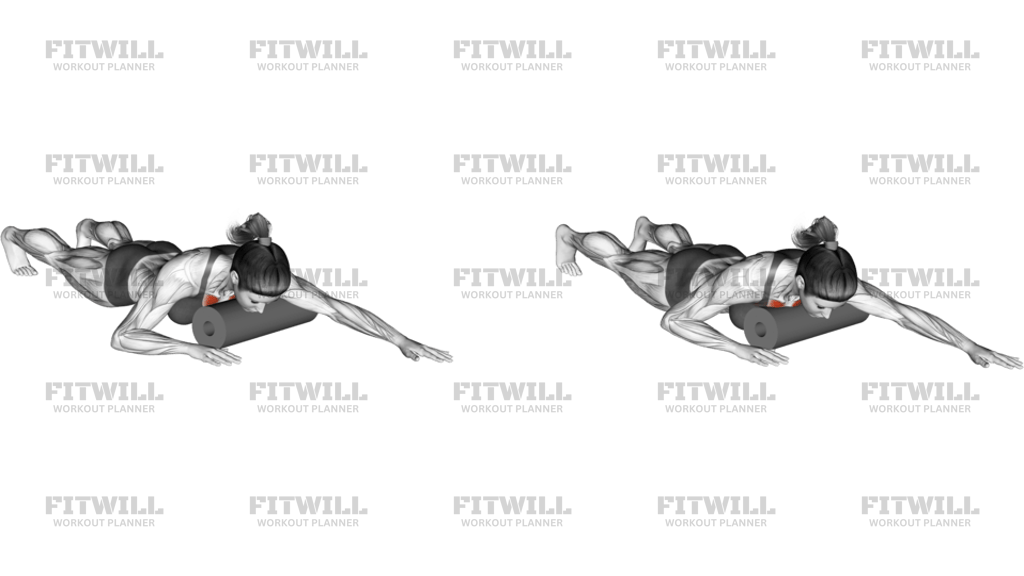
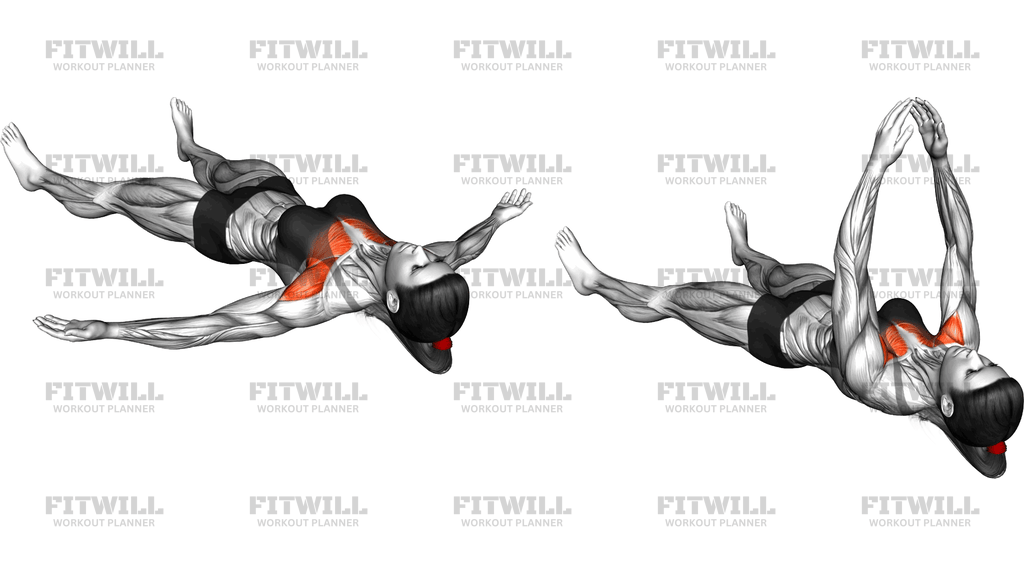
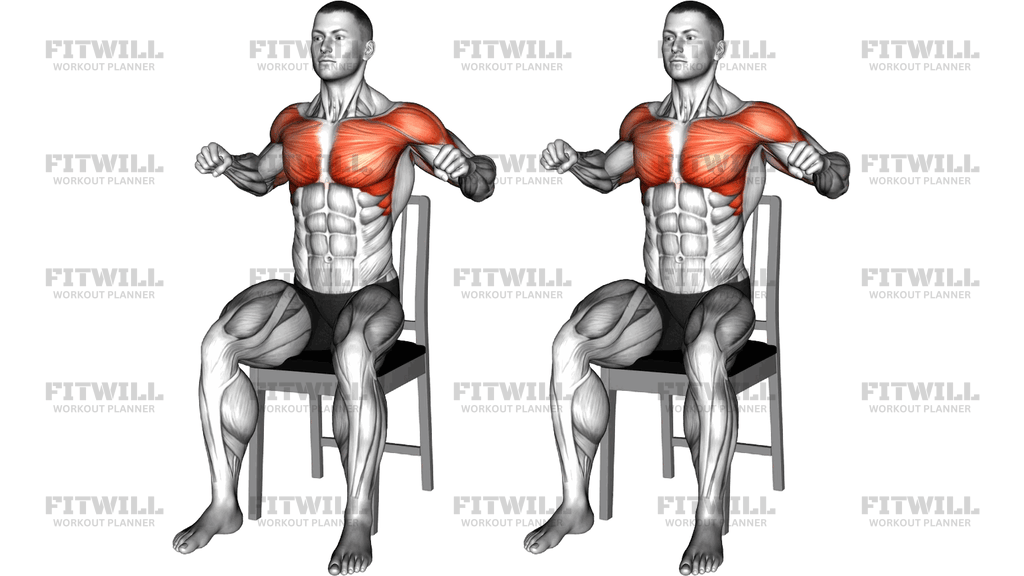
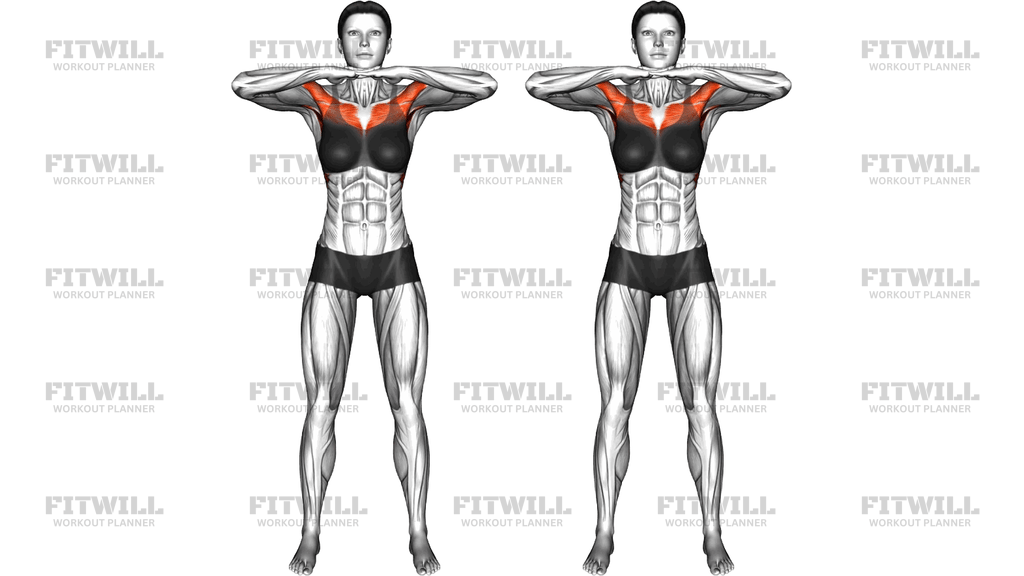
Bodyweight Kneeling Push-Up Row
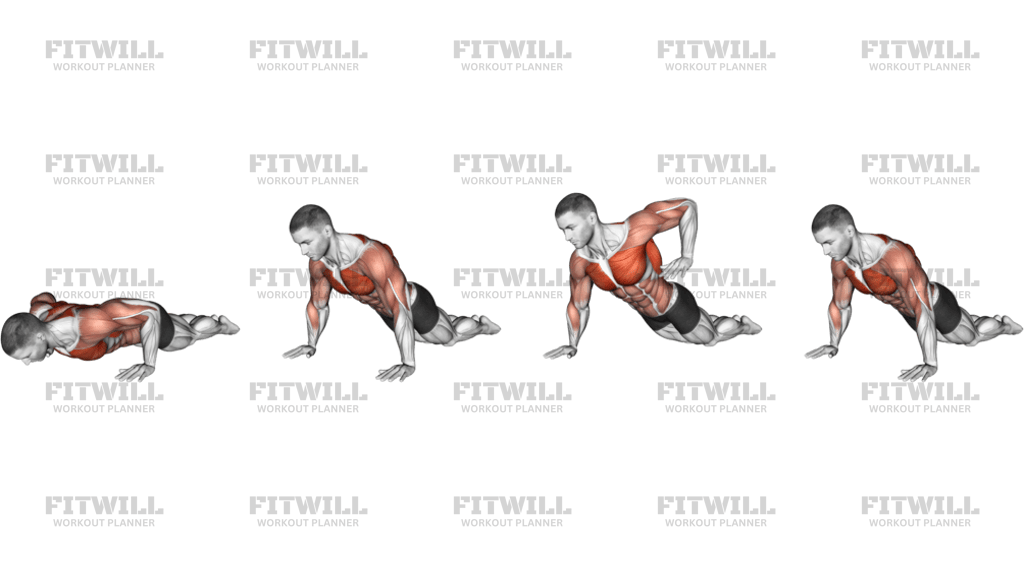
Bodyweight Kneeling Push-Up Row is a bodyweight compound drill that blends a kneeling push-up with a row-like reach and rotation. It is useful when you want chest, shoulders, triceps, and core work in the same rep, with extra demand on shoulder control and torso stability. The kneeling position lowers the load enough to make the movement approachable, but the alternating support challenge still asks for good control from the first rep.
The exercise trains pressing strength and anti-rotation at the same time. When you lower into the push-up and then shift into the row phase, one side of the chest and shoulder has to support the body while the other side opens and pulls. That makes the movement feel very different from a standard kneeling push-up because the trunk has to stay organized while the shoulders take turns loading.
Setup matters because small changes in hand placement and knee position change the whole exercise. Place your hands under or just outside your shoulders, keep your knees on the floor, and make a straight line from head to knees before the first rep starts. A slight brace through the ribs and hips helps keep the lower back from sagging when you press and rotate.
The push-up portion should feel deliberate and smooth, with the elbows tracking back rather than flaring hard to the sides. At the top, let the working side row back by driving the elbow toward the ribs or hip while the shoulder blade moves in toward the spine. The movement is not about a big twist; it is about keeping the chest controlled while one side does more work and the opposite side stays steady.
Bodyweight Kneeling Push-Up Row is a practical choice for warmups, accessory work, and circuits when you want upper-body tension without a heavy external load. It can also help beginners learn how to keep the torso quiet during a pressing pattern before moving on to harder push-up variations. Keep the rep quality high, stop before the shoulders shrug or the hips spin open, and reset cleanly before each alternating rep.
[ Workout Log & Planner ]
Put your next workout in Fitwill
Keep your plan and training log ready when you are.


Instructions
- Start on the floor with your knees down, hands under or slightly outside your shoulders, and your body in a straight line from head to knees.
- Spread your fingers, press the palms into the floor, and keep your shoulders set away from your ears before you begin.
- Brace your ribs and hips so your lower back stays long and your torso does not sag as you lower.
- Bend your elbows and lower your chest toward the floor like a kneeling push-up, keeping the elbows angled back rather than flared wide.
- Press through both hands to return to the top position with your arms straight and your body still aligned from head to knees.
- Shift your weight onto one hand and row the opposite side by driving that elbow back toward your ribs or hip.
- Keep your hips mostly square to the floor as the rowing side opens, and avoid swinging your chest open to fake the pull.
- Return the working hand to the floor, re-center your shoulders, and repeat the next rep on the other side.
- Breathe in on the lowering phase, exhale as you press and row, and reset briefly before the next rep if your position starts to drift.
Tips & Tricks
- Keep the kneeling line long. If your hips sit too far back, the push-up turns into a shortened press; if they drift too far forward, the lower back starts to arch.
- Think about reaching the rowing elbow toward your back pocket, not lifting it straight out to the side.
- A small torso turn is fine, but if your chest spins open, shorten the row and keep more weight over the planted hand.
- Use a hand position that lets your wrists stack under the shoulders without feeling cramped; a slightly wider stance often feels better for this movement.
- Lower under control and avoid dropping into the bottom, because the shoulder on the planted side has to stabilize your body before the row starts.
- Pause for a moment at the top of the row so the rep does not become a fast twist-and-swing pattern.
- If the shoulders shrug toward your ears, reduce the range and keep the neck long while you press away from the floor.
- Stop the set when the hips start shifting side to side faster than the arms can control them.
Frequently Asked Questions
What muscles does Bodyweight Kneeling Push-Up Row work?
It mainly trains the chest, triceps, front shoulders, and core, with extra shoulder stabilizer work during the row phase.
Is Bodyweight Kneeling Push-Up Row good for beginners?
Yes, the kneeling setup lowers the load and makes it easier to learn the press-and-row pattern before progressing to a harder version.
How should my hands be placed for Bodyweight Kneeling Push-Up Row?
Put your hands under or just outside your shoulders so you can press cleanly without letting the wrists drift too far forward or too far wide.
Should my hips stay square during the row?
Mostly yes. A little rotation is normal, but the goal is to keep the ribs and hips controlled instead of rolling fully open.
What should I feel most in the row portion?
You should feel the shoulder blade and upper back on the rowing side working while the planted side and core keep the body steady.
What is the most common mistake in Bodyweight Kneeling Push-Up Row?
The biggest error is turning the rep into a fast twist. Keep the push-up and row smooth so the torso stays controlled.
Can I make Bodyweight Kneeling Push-Up Row harder?
Yes. Slow the lowering phase, pause at the top of the row, or move toward a full plank variation once the kneeling version feels easy.
What should I do if my lower back arches during this exercise?
Shorten the range, brace the ribs down, and keep the knees and shoulders in a more stacked line so the core can support the rep.