Bodyweight Windmill
Bodyweight Windmill is a standing core and hip-control exercise that trains the body to keep one arm stacked overhead while the torso hinges and rotates through a long, controlled arc. The movement is built around the obliques, but it also asks the hips, hamstrings, glutes, upper back, and shoulder stabilizers to stay organized so the reach to the floor stays smooth instead of collapsing into the lower back.
Unlike a loaded windmill, the bodyweight version lets you focus on shape, balance, and range of motion. That makes it useful as a warm-up, a mobility-strength drill, or a light accessory for people who want better side-bending control and better trunk stability in a split stance. The goal is not to twist aggressively; it is to keep the top arm long, the chest open, and the pelvis controlled while the torso travels downward.
The setup matters a lot. A wide stance gives you room to hinge, but the feet should still feel rooted and active so the arches do not cave and the knees do not drift inward. As you lower, the hips shift back and slightly toward the side of the reaching hand while the overhead arm stays vertical. That stacked line from wrist to shoulder helps the rib cage rotate without dumping the whole movement into the low back.
The repetition should feel deliberate from start to finish. Reach toward the shin, ankle, or foot only as far as you can keep the top arm aligned and the neck relaxed. If the chest closes, the shoulders round, or the pelvis turns away from the reaching side, shorten the range and own the position before going deeper. Returning to standing should be just as controlled as the descent.
Bodyweight Windmill is a good choice for athletes and lifters who need better trunk stiffness, hip dissociation, and lateral control without adding external load. It can also help people learn the pattern before progressing to kettlebells or dumbbells. Keep the motion pain-free and smooth, and treat the exercise like a skill drill rather than a race for depth.
[ Workout Log & Planner ]
Put your next workout in Fitwill
Keep your plan and training log ready when you are.


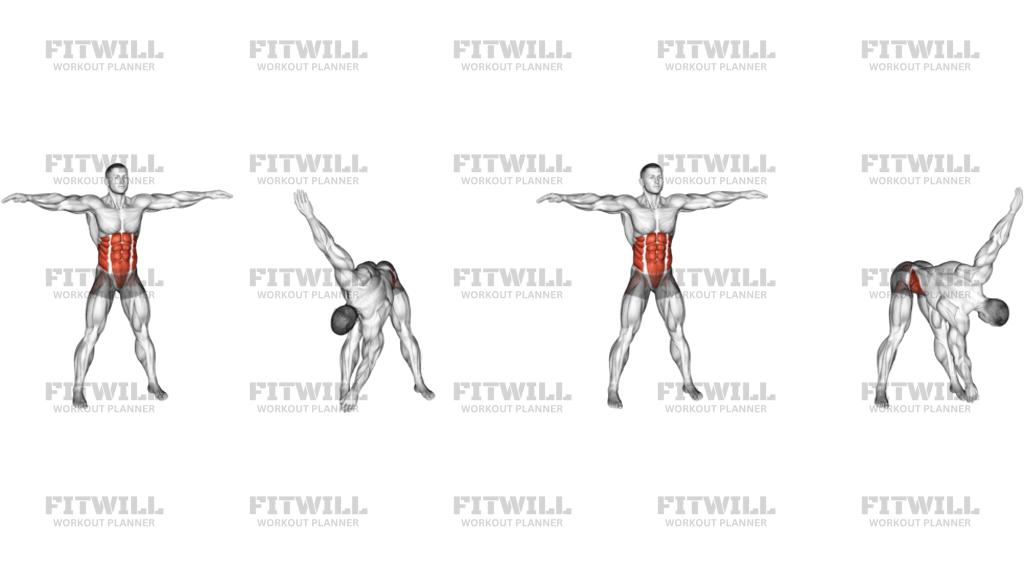
Instructions
- Stand with your feet wider than shoulder width and turn the toes out slightly so you can hinge without losing balance.
- Raise one arm straight overhead and lock your eyes on that hand to help keep the shoulder stacked during the rep.
- Let the other arm hang free in front of the body, then brace your midsection before you start to move.
- Push your hips back toward the side of the reaching hand while keeping most of your weight in the planted foot and heel.
- Rotate the chest open as you hinge so the overhead arm stays long and vertical rather than drifting forward.
- Reach the lower hand toward the shin, ankle, or foot on the same side only as far as you can keep the torso controlled.
- Pause briefly in the bottom position, then drive the hips forward to stand tall while keeping the top arm stacked.
- Lower the arm and reset before the next rep, then repeat on the same side or switch sides as programmed.
Tips & Tricks
- Keep the overhead arm lined up with the shoulder and wrist; if it starts drifting forward, the torso is probably twisting instead of hinging.
- Think about sending the hips back, not just bending at the waist, so the glutes and hamstrings share the work with the obliques.
- A slight bend in the knees is fine, but do not turn the windmill into a squat.
- If you cannot reach the ankle without rounding, stop at the shin and build range gradually.
- Keep the chest open toward the lifted hand so the upper rib cage does not cave toward the floor.
- Press the standing foot into the ground to keep the arch, knee, and hip from collapsing inward.
- Move slowly enough that you could pause anywhere on the way down without losing balance.
- Exhale as you come back to standing to help the trunk organize around the overhead arm.
- If the lower back feels pinched, shorten the range and reduce how far you rotate the ribs.
Frequently Asked Questions
What muscles does Bodyweight Windmill work?
The main emphasis is on the obliques, with the hips, hamstrings, glutes, abs, and shoulder stabilizers helping control the reach.
Can beginners perform this exercise?
Yes. It is often easier to learn than a loaded windmill because you can focus on balance, shoulder stack, and hip hinge before adding weight.
How low should I reach in the Bodyweight Windmill?
Reach only as low as you can while keeping the overhead arm vertical and the chest open. Shin or ankle height is enough if that is where your position stays clean.
Should my knees stay straight during the rep?
Keep a soft knee rather than locking out hard. A slight bend helps you hinge and rotate without overloading the hamstrings or losing balance.
What is the biggest mistake in Bodyweight Windmill?
Most people either twist too much or rush the descent. The goal is a controlled hinge with the arm stacked, not a fast side bend.
Why does the top arm need to stay overhead?
Keeping the arm stacked helps the rib cage and shoulder stay organized. If the arm drifts forward, the torso usually loses the line that makes the movement effective.
Is Bodyweight Windmill more of a strength or mobility exercise?
It can be both. With slow, controlled reps it builds core and hip control, and with shorter, smoother reps it works well as a mobility drill.
Can I use Bodyweight Windmill as a warm-up?
Yes. It fits well before lower-body, rotational, or overhead training because it wakes up the hips, trunk, and shoulder position at the same time.