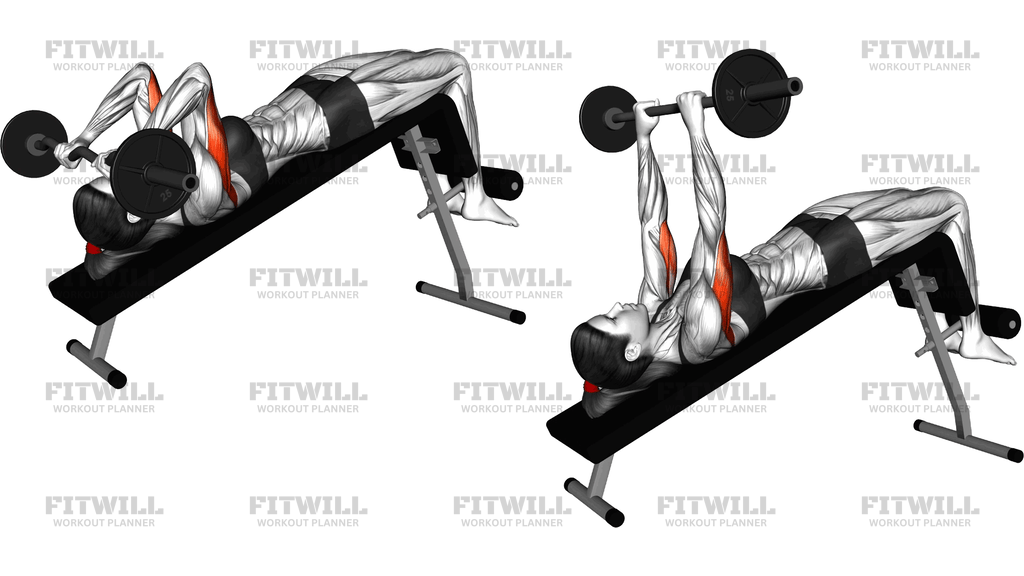
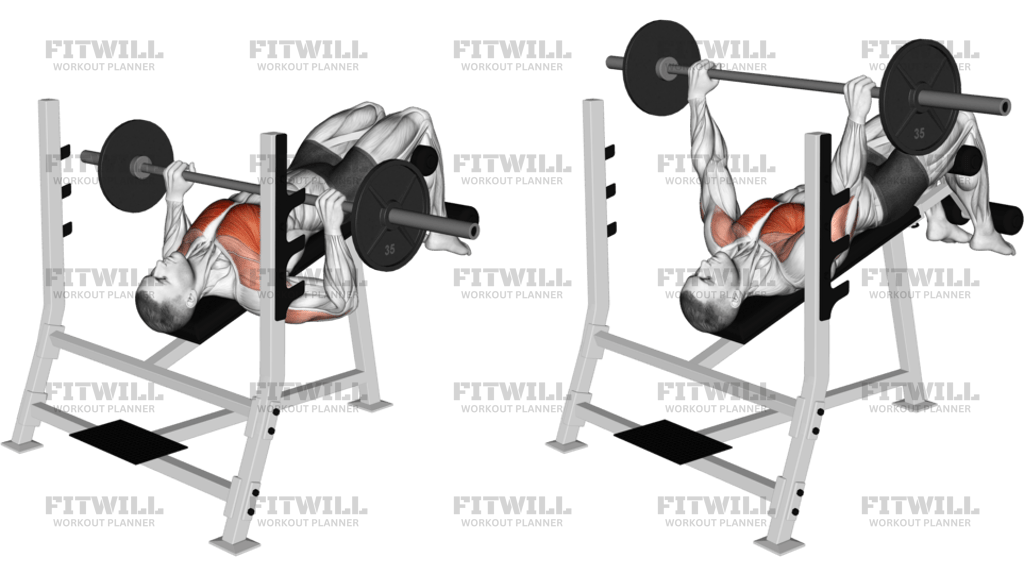
Barbell Reverse-Grip Floor Press
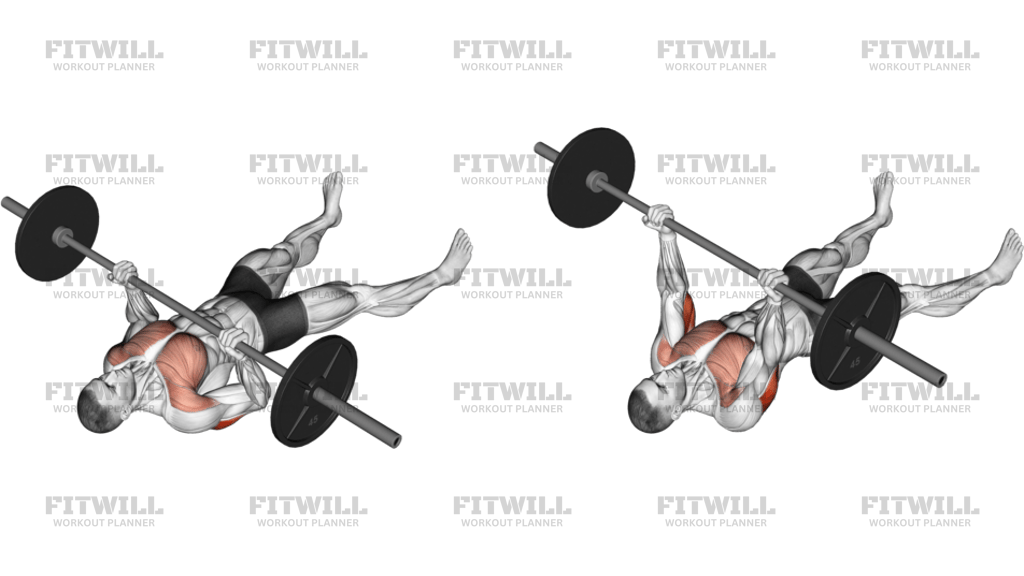
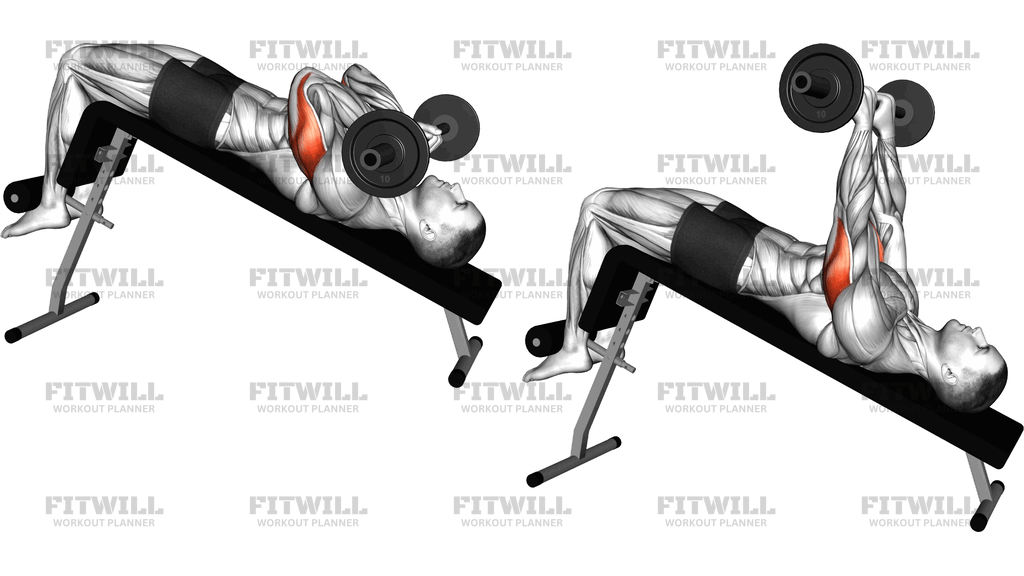
Barbell Reverse-Grip Floor Press is a triceps-focused pressing exercise done while lying on the floor with a reverse, palms-up barbell grip. The floor shortens the range of motion, so the press starts with a dead stop on each rep and puts more emphasis on elbow extension than on the deep chest stretch you get from a bench press. That makes it a useful option when you want to train pressing strength, lockout power, and triceps work without loading the shoulders through a large bottom position.
The setup matters because the reverse grip changes both the feel of the press and the way the wrists and elbows line up. A narrow, palms-up grip keeps the forearms under the bar, while the floor keeps the upper arms from dropping below the torso. From the bottom, the upper arms should lightly touch the floor, then the bar is pressed back up without bouncing or losing shoulder position. The movement is usually most effective when the elbows stay tucked and the bar tracks in a short, controlled line over the lower chest and shoulders.
This exercise is commonly used as accessory work after heavier pressing, as a triceps builder for athletes who need stronger lockout mechanics, or as a shoulder-friendlier alternative to a full-range barbell press. Because the bar is held in a reverse grip, the wrists must stay stacked and the load usually needs to be lighter than a standard floor press. The movement should feel stable and deliberate, not awkward or rushed.
For clean reps, lower the bar under control, touch the upper arms to the floor softly, pause long enough to remove momentum, and press back to full elbow extension while keeping the wrists straight. If the bar drifts toward the face, the elbows flare, or the wrists start to fold back, the load is too heavy or the grip is too wide. With good control, this becomes a precise triceps press that is easy to repeat and simple to progress.
[ Workout Log & Planner ]
Put your next workout in Fitwill
Keep your plan and training log ready when you are.


Instructions
- Lie on the floor with your knees bent, feet flat, and eyes under the bar, then take a reverse grip with your hands just inside shoulder width.
- Rack or lift the bar to a straight-arm position over your lower chest, keeping your wrists stacked over your forearms and your knuckles facing the ceiling.
- Pull your shoulder blades gently back and down so your upper back stays firm against the floor.
- Lower the bar slowly toward the lower chest and upper ribs, letting your elbows track close to your sides.
- Keep the bar path short and controlled until your upper arms touch the floor softly.
- Pause briefly on the floor without relaxing your shoulders or letting the bar bounce.
- Press the bar back up by extending your elbows and driving the bar slightly back toward the shoulder line.
- Finish with straight elbows, then reset your breath and shoulder position before the next rep.
Tips & Tricks
- Keep the grip narrow enough that your forearms stay vertical when the bar reaches the floor.
- Let the bar rest in the meat of your palms, not deep in your fingers, so the reverse grip stays secure.
- Touch the upper arms to the floor gently; a hard bounce turns the floor into a spring and takes tension off the triceps.
- Tuck the elbows enough to keep them near 30 to 45 degrees from the torso instead of flaring them wide.
- Keep the wrists straight from start to finish, because bent wrists make the reverse grip unstable fast.
- Use a lighter load than you would on a standard floor press; the reverse grip is less forgiving and more wrist-sensitive.
- Pause on the floor for a clear dead stop if you want more triceps work and less momentum.
- If the bar drifts toward your face on the press, lower the load and shorten the rep until the bar path stays consistent.
Frequently Asked Questions
What muscle does Barbell Reverse-Grip Floor Press target most?
The triceps are the main target, especially through the lockout phase. The chest, front delts, and forearms help stabilize and press the bar.
Why use the floor instead of a bench?
The floor stops the descent when the upper arms touch down, which shortens the range of motion and shifts more work toward the triceps and the top half of the press.
How should my hands be positioned on the bar?
Use a reverse grip with the hands just inside shoulder width and the wrists stacked over the forearms. If the wrists bend back or the bar feels unstable, the grip is too wide or the load is too heavy.
How far should I lower the bar?
Lower it until the upper arms touch the floor softly. You should not be trying to touch the bar to the chest or bounce off the floor.
Can beginners do this exercise?
Yes, but only with a very light load and a controlled setup. The reverse grip is less stable than a standard press, so technique matters more than weight.
What is the most common mistake?
Letting the wrists bend back and flaring the elbows wide are the big ones. Both usually make the bar drift and reduce triceps tension.
Is this different from a reverse-grip bench press?
Yes. The floor press removes the deep bottom position, so you get a shorter range of motion and less shoulder extension than on a bench.
What should the bar path look like?
The bar should travel down toward the lower chest and then press back up slightly toward the shoulders. A big looping path usually means the grip or elbow angle needs to be adjusted.