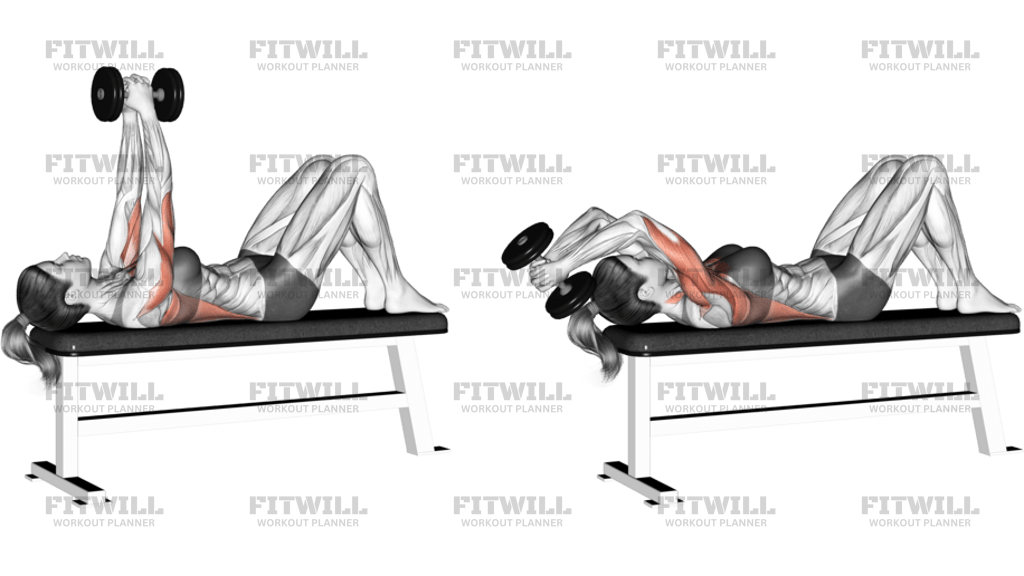
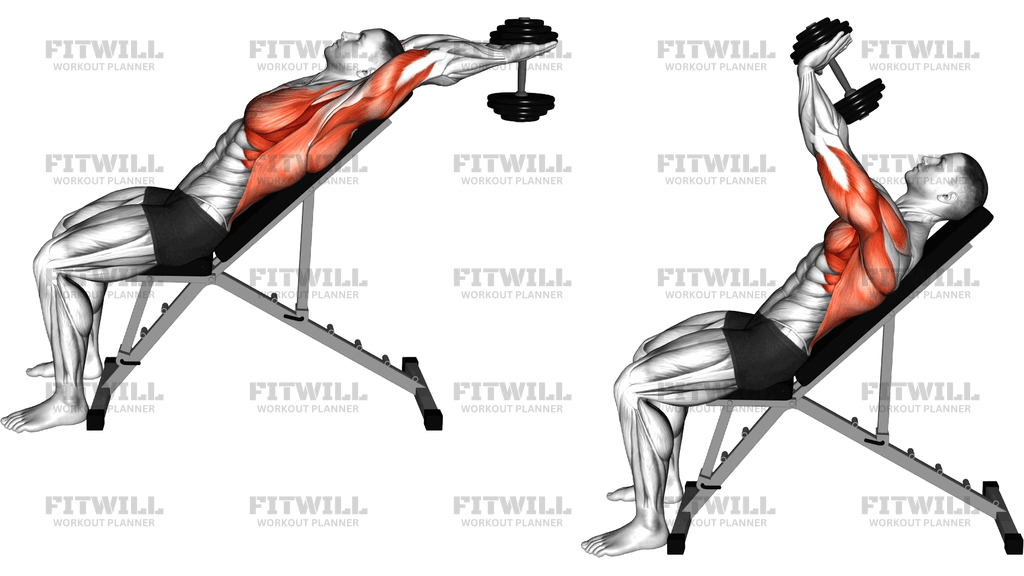
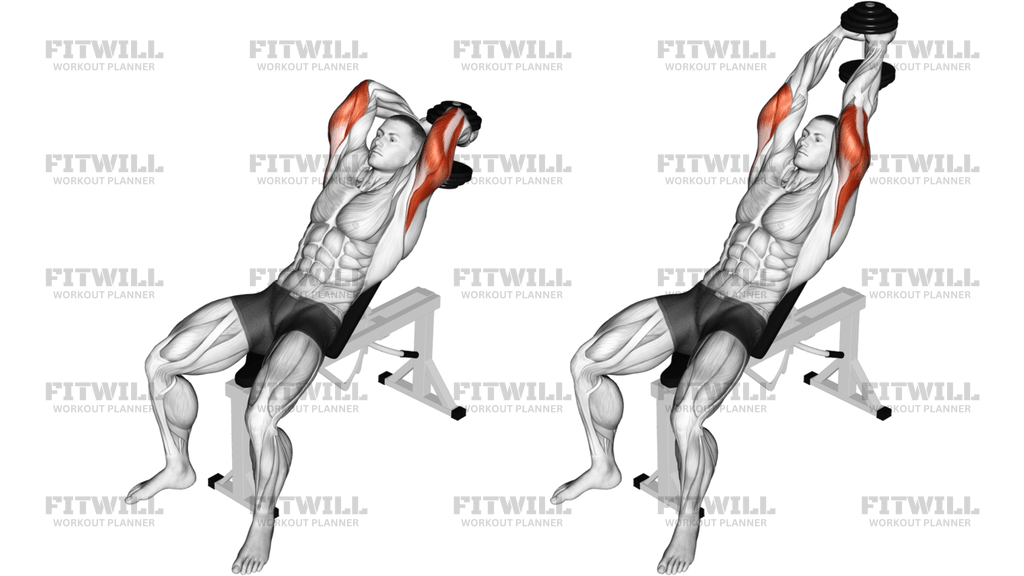
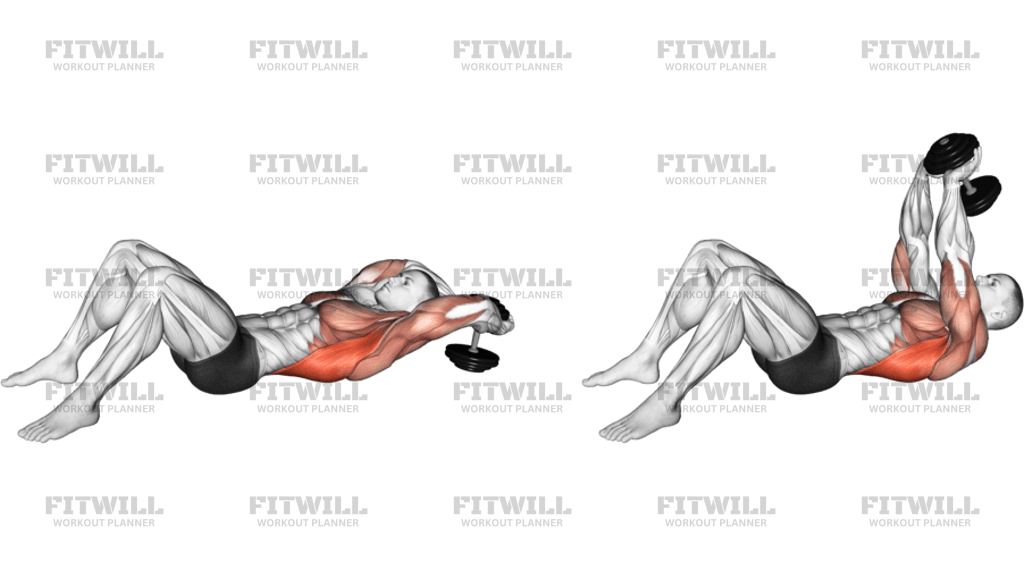
Dumbbell Lying Alternate Extension
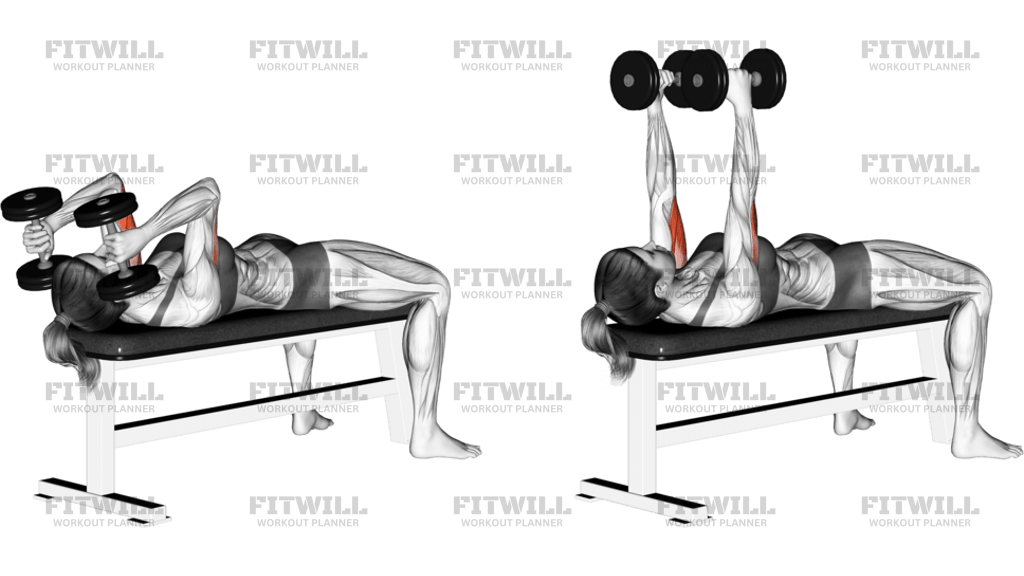
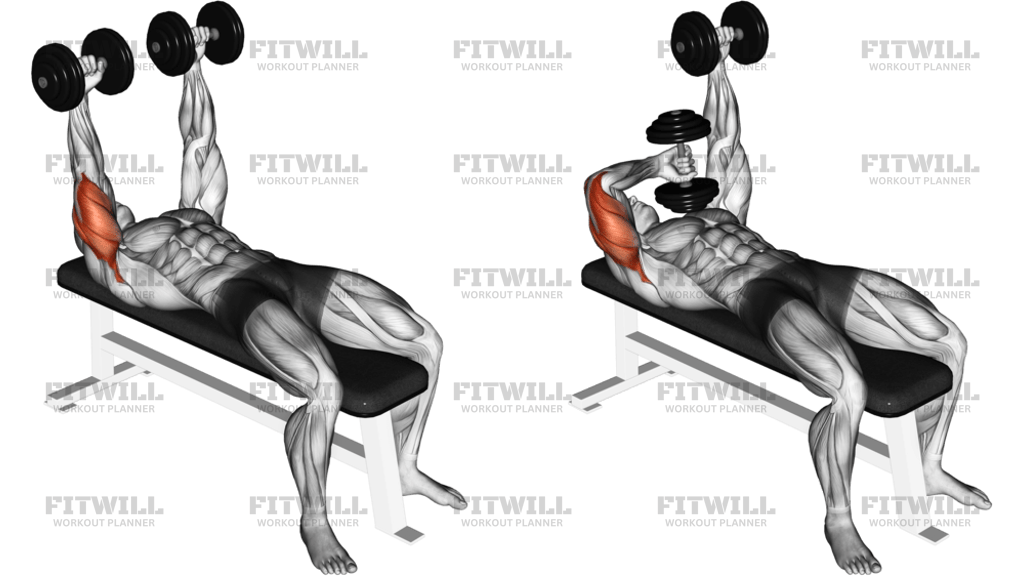
Dumbbell Lying Alternate Extension is a bench-based triceps exercise performed by lying on a flat bench and extending one dumbbell at a time while the other arm stays controlled. The alternating pattern keeps the set focused on elbow extension rather than letting both arms rush through the same path at once. It is especially useful when you want direct triceps work with a little extra demand on shoulder stability and trunk control.
The main emphasis is the triceps brachii. The forearm flexors help keep the wrist stacked under the dumbbell, the anterior deltoid helps hold the upper arm in position, and the trunk resists unwanted rotation as you switch sides. Because one arm is working while the other waits, the exercise rewards clean alignment more than heavy loading.
Set your upper back and head on the bench, plant your feet, and hold the dumbbells so your elbows can start bent and slightly above or beside the shoulders, depending on your mobility. The upper arm should stay nearly fixed as you lower and press one dumbbell through a controlled arc. If the elbow drifts wide or the shoulder rolls forward, the triceps lose tension and the rep turns into a shoulder-dominant press.
On each rep, lower one dumbbell until the elbow is comfortably bent and the triceps are stretched without the shoulder coming loose from the bench position. Then extend the arm back up by straightening the elbow, not by throwing the weight upward. Keep the non-working arm steady, switch sides deliberately, and breathe out as you extend. A smooth tempo matters more than chasing a big range if the bottom position makes the shoulder or elbow feel pinched.
This exercise fits well in arm-focused sessions, push accessories, or any workout where you want unilateral triceps volume without needing a cable station. It is a good option for lifters who want to clean up side-to-side differences in elbow lockout strength, but only if the load is light enough to keep the bench position stable. If the set becomes a struggle to keep the shoulders down and the elbows quiet, the dumbbells are too heavy for the pattern.
Fitwill
Log Workouts, Track Progress & Build Strength.
Achieve more with Fitwill: explore over 9600 exercises with images and videos, access built-in and custom workouts, perfect for both gym and home sessions, and see real results.
Start your journey. Download today!




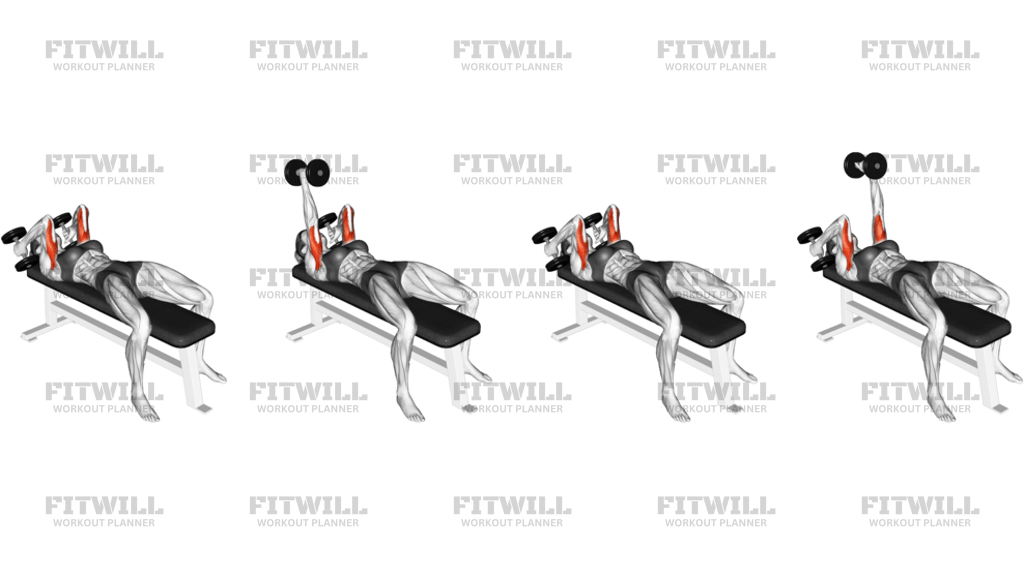
Instructions
- Lie on a flat bench with your head, upper back, and hips supported, feet planted firmly on the floor.
- Hold a dumbbell in each hand above your chest with your palms facing in and your elbows bent.
- Set your shoulders down against the bench and keep your upper arms angled mostly vertical.
- Lower one dumbbell by bending that elbow while the other arm stays still in the start position.
- Stop the lowering phase when the working triceps is stretched and the elbow stays in line with the shoulder.
- Press the dumbbell back up by straightening the elbow until the arm is nearly locked out without snapping the joint.
- Keep your wrist stacked over the elbow and avoid letting the dumbbell drift toward your face or out over your shoulder.
- Switch to the other arm and repeat the same path with the same shoulder and elbow position.
- Exhale as you extend, inhale as you lower, and continue alternating for the planned reps before lowering both dumbbells carefully to finish.
Tips & Tricks
- Use a bench height that lets your feet stay flat and your lower back remain calm instead of bridging hard to finish the rep.
- Keep the elbow from flaring wide; the closer the upper arm stays to the start angle, the more the triceps do the work.
- Choose a dumbbell that you can lower slowly without the working shoulder rolling forward at the bottom.
- If the wrist bends back under the load, reduce weight and stack the knuckles over the forearm so the force stays centered.
- A short pause at the top helps remove momentum and makes each side do its own work instead of bouncing between arms.
- Do not let the non-working arm relax all the way out of position; keep it ready so the alternation stays smooth.
- If one shoulder feels unstable, lower the elbow only as far as you can keep the upper arm anchored to the bench line.
- Think about straightening the elbow, not moving the whole arm, because the shoulder should stay mostly quiet throughout the set.
Frequently Asked Questions
What does Dumbbell Lying Alternate Extension train most?
It primarily trains the triceps, especially the long and lateral heads during elbow extension from a lying position.
Why alternate arms instead of extending both dumbbells together?
Alternating forces each triceps to work on its own and makes it easier to keep the bench position and elbow path strict.
Where should my upper arm be during the rep?
Your upper arm should stay mostly fixed with only a small amount of movement, so the elbow does the majority of the work.
How far should I lower the dumbbell?
Lower only until you feel a strong triceps stretch and can still keep the shoulder pinned to the bench without pain or wobble.
What is the most common mistake with this exercise?
Letting the elbow flare or turning the movement into a shoulder press is the most common error.
Can beginners do this exercise?
Yes, but it works best with very light dumbbells and a slow tempo until the elbow path feels stable.
Should I feel this in my shoulders or forearms?
Some shoulder and forearm work is normal for support, but the main burn should stay in the triceps near the back of the upper arm.
What should I do if my elbows ache?
Shorten the range slightly, lower the load, and keep the wrists stacked so the joint is not forced into an awkward angle.