Neck Circle Stretch
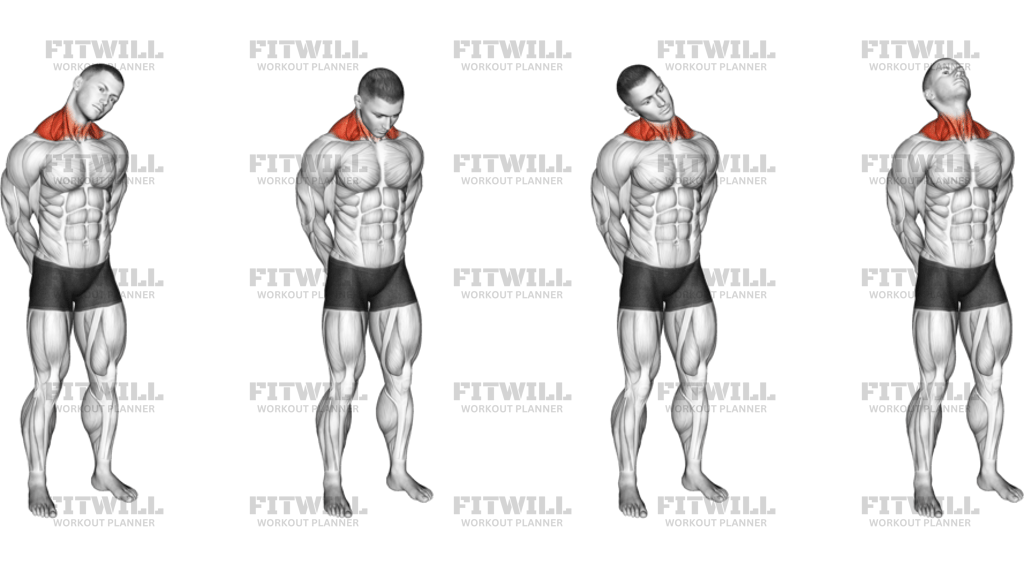
Neck Circle Stretch is a standing mobility drill for the muscles that often tighten around the base of the skull, the sides of the neck, and the upper shoulders. The goal is not to crank the head through a huge range. It is to trace a slow, smooth circle with the chin while the torso stays tall and the shoulders stay quiet.
This movement is most useful when the neck feels stiff from desk work, pressing volume, driving, or a long warm-up with the head fixed in one position. It can help you explore side-bending, gentle rotation, and controlled extension without loading the spine. When the circle stays small and deliberate, Neck Circle Stretch can loosen the area without turning into a jerky head roll.
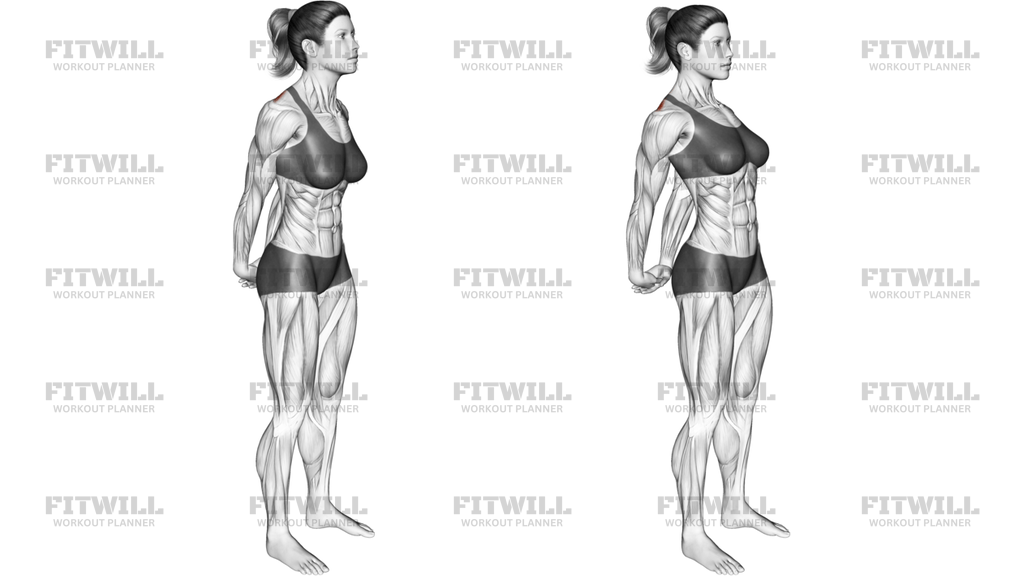
Setup matters more than range. Stand with your feet about hip-width apart, knees soft, ribs stacked over the pelvis, and the crown of the head reaching upward. Many people clasp their hands behind their back or keep the arms relaxed to discourage shrugging. From there, let the chin travel toward one shoulder, then forward through center, then toward the other shoulder in a slow loop that you can keep smooth from start to finish.
The best repetitions feel controlled, even, and unforced. Move only as far as you can keep the jaw relaxed and the neck path clean. If the backward part of the circle feels pinchy or compressed, shorten the range immediately and keep the movement more like a half-circle. Breathing should stay calm and easy, with no breath-holding or bracing that creates extra tension in the upper traps.
Use Neck Circle Stretch as a warm-up, between upper-body sets, or as a recovery drill after training. It is especially helpful when one side of the neck feels tighter than the other, but it should never be forced into pain or dizziness. The safest version is the one that stays slow, symmetrical, and comfortable enough that you could repeat it for several reps without the shoulders rising or the head wobbling.
[ Workout Log & Planner ]
Put your next workout in Fitwill
Keep your plan and training log ready when you are.


Instructions
- Stand tall with your feet hip-width apart, knees soft, and your shoulders relaxed down away from your ears.
- If it helps you keep the chest open, clasp your hands behind your back or let your arms hang loosely at your sides.
- Tuck your chin slightly and begin the circle by letting one ear drift toward one shoulder.
- Roll the chin forward through center so the nose moves toward your chest without collapsing your upper back.
- Continue the circle to the other side, keeping the movement slow enough that the head never snaps or bounces.
- If the back of the circle feels pinchy, shorten the arc and keep the neck motion more like a half-circle.
- Breathe out as you move through the tightest part of the circle and inhale as you pass through the easier part.
- Complete the same number of circles in the opposite direction, then return to a neutral head position before the next set.
Tips & Tricks
- Keep the circle small. Big neck circles usually turn into forceful cervical extension instead of a useful stretch.
- Do not jut the chin forward aggressively on the front of the circle; let the motion glide instead of reaching.
- If the back of the neck feels compressed, stop before full extension and use a forward-side-forward half-circle.
- Let the shoulders stay heavy. If they rise, the upper traps are taking over and the neck will feel tighter.
- A loose jaw usually makes the circle smoother, especially when you pass through the front and side positions.
- Move the head as one unit without twisting the rib cage to chase more range.
- Use this drill as a reset between pressing or desk work sets when the neck feels stiff, not when you are rushing for time.
- If one side feels much tighter, spend a little longer on that direction but keep the same slow tempo.
- Stop immediately if the movement causes dizziness, a sharp pinch, or symptoms that travel into the arm.
Frequently Asked Questions
What does Neck Circle Stretch work?
It mainly mobilizes the muscles around the neck, especially the upper traps, levator scapulae, and the deeper muscles that control head position. The upper back and shoulders stay quiet while the neck moves.
Should Neck Circle Stretch be done standing or seated?
Standing is common because it makes it easier to keep the torso tall and the shoulders relaxed. You can also do it seated on a bench or chair if standing makes you sway.
Should I make a full circle with my head?
Only if the motion feels smooth and comfortable all the way around. If the back of the neck pinches, switch to half-circles and avoid forcing the head into hard extension.
Why do people clasp their hands behind their back for this stretch?
That hand position helps keep the chest open and discourages shrugging. It also makes it easier to notice whether the neck is moving instead of the shoulders.
How many Neck Circle Stretch reps should I do?
A few slow circles in each direction is usually enough. The goal is to reduce stiffness and improve motion, not to fatigue the neck.
What is the most common mistake during Neck Circle Stretch?
The most common mistake is rushing the circle and dropping the head backward too far. That usually creates compression instead of a controlled stretch.
Can beginners do Neck Circle Stretch safely?
Yes, as long as they keep the range small and move slowly. Beginners should avoid aggressive backward circles and stop if the neck feels unstable or dizzy.
When is Neck Circle Stretch most useful?
It works well before upper-body training, after long desk sessions, or between sets when the neck and shoulders feel stiff. It is most useful as a mobility reset, not as a strength exercise.