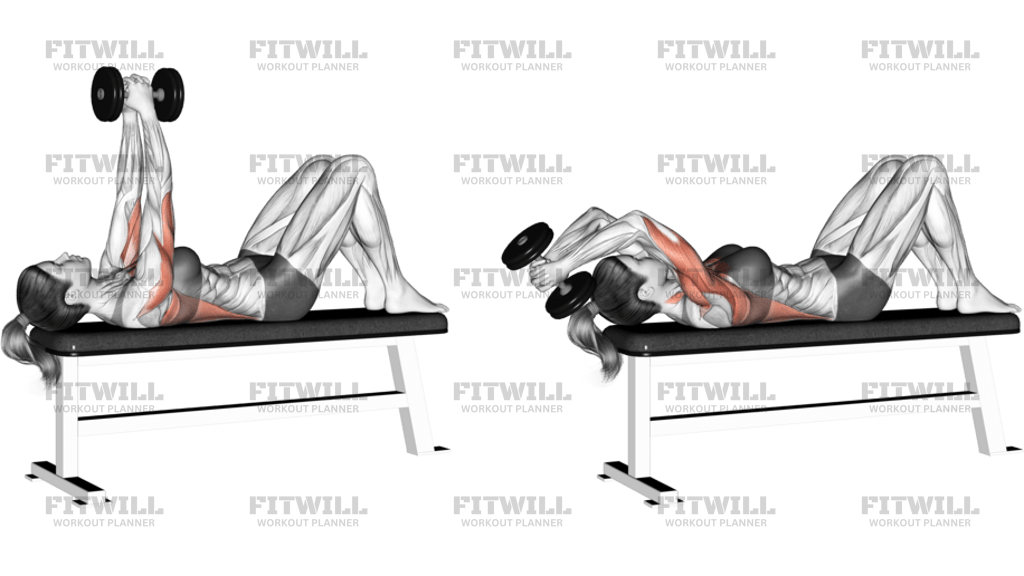
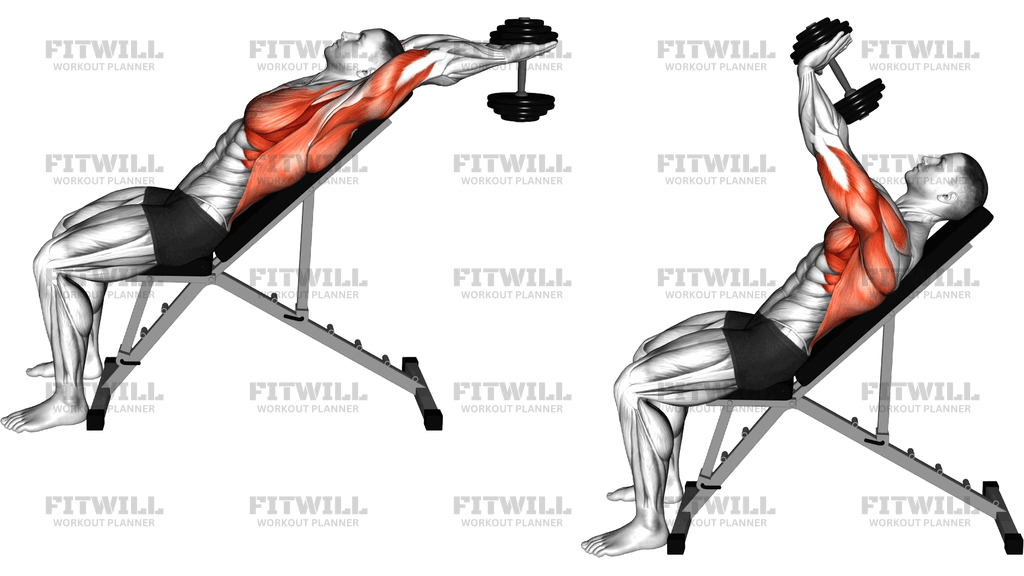
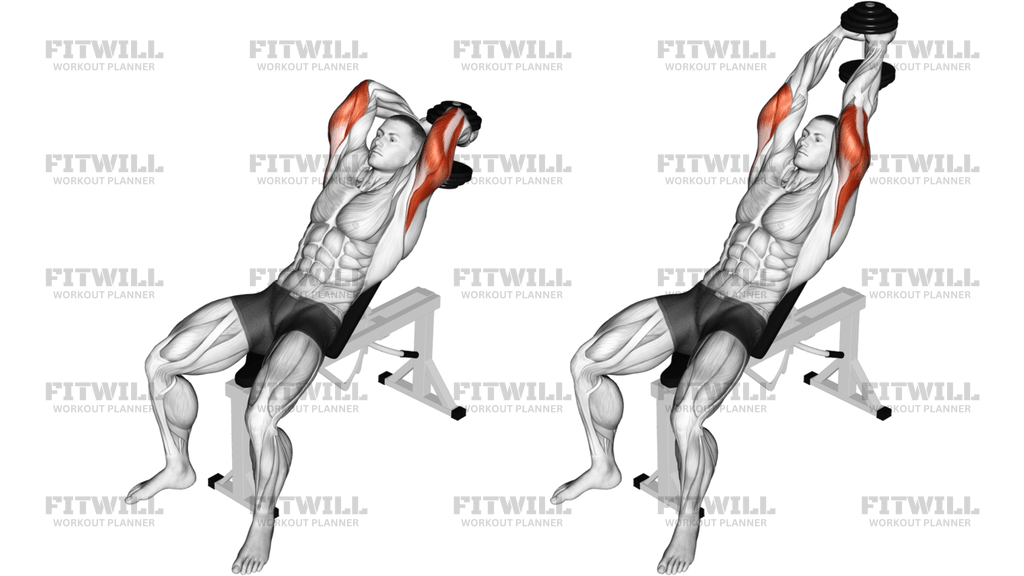
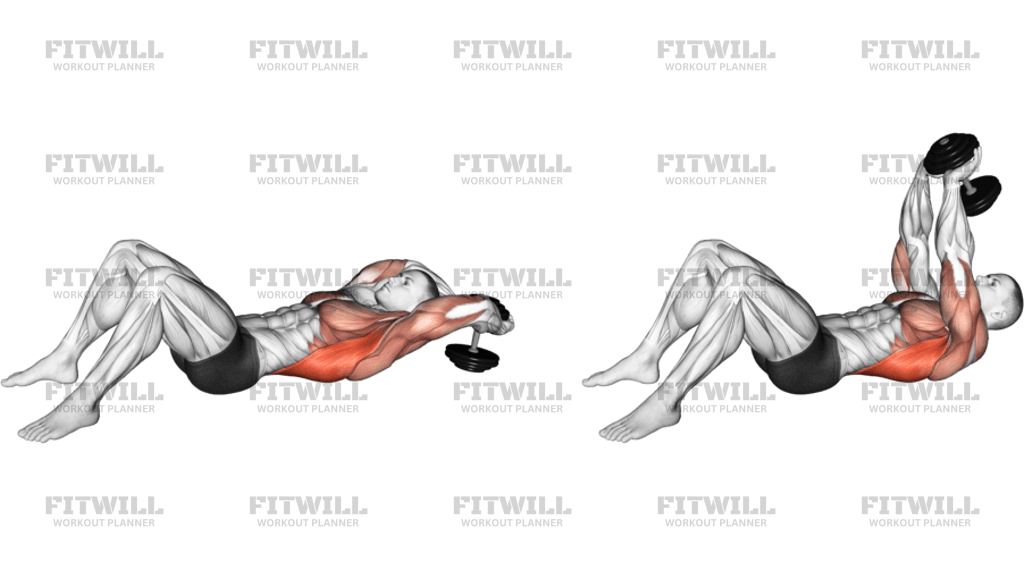
Dumbbell Incline Close-Grip Press Variation
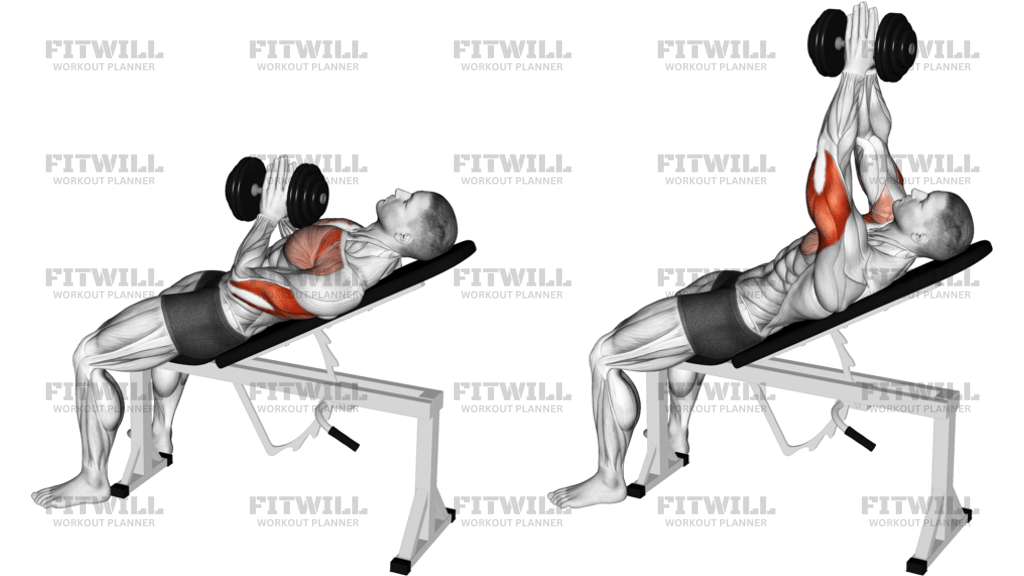
Dumbbell Incline Close-Grip Press Variation is an incline pressing exercise performed with two dumbbells held close together over the chest. The close hand position keeps the elbows tucked and places a stronger emphasis on the triceps than a standard incline dumbbell press, while the upper chest and front shoulders still contribute to the lift. It is a useful option when you want pressing strength with a narrower path and more direct arm involvement.
The incline bench changes the line of force and the feeling of the rep. On a lower or moderate incline, the press still hits the upper chest, but the triceps have to finish the lockout with a more vertical path. Because the dumbbells stay close, the exercise also rewards shoulder stability and clean wrist position. That makes setup important: if the bench angle, shoulder position, or elbow path is sloppy, the movement turns into a loose shoulder press instead of a controlled close-grip press.
The best execution starts with the dumbbells touching or nearly touching above the upper chest, palms facing each other, shoulder blades set on the bench, and feet planted firmly. Lower the weights slowly to the upper chest line with the elbows tracking close to the body, then press them back up along the same path. Keep the dumbbells stacked over the wrists, avoid letting the elbows flare, and finish each rep by squeezing the triceps without bouncing the bells together.
This variation fits well in upper-body strength work, triceps-focused accessory work, or as a lower-joint-stress alternative to a barbell close-grip bench press. It is also useful when you want to train pressing strength with a more natural shoulder path than a fixed bar. The movement should feel controlled and deliberate from the first rep to the last, not fast or unstable.
If the front of the shoulders takes over too much, reduce the incline, lower the load, and keep the elbows tighter on the descent. If the elbows drift wide or the dumbbells separate too far, the triceps lose tension and the press becomes less specific. A clean rep here is one where the torso stays pinned to the bench, the wrists stay straight, and the dumbbells travel in a smooth line from the upper chest to the top position.
[ Workout Log & Planner ]
Put your next workout in Fitwill
Keep your plan and training log ready when you are.


Instructions
- Set an adjustable bench to a low or moderate incline and sit with a dumbbell in each hand on your thighs.
- Lie back with your head, upper back, and glutes supported on the bench, feet flat on the floor, and the dumbbells held close together above your upper chest.
- Turn your palms toward each other, stack the dumbbells over your wrists, and pull your shoulder blades gently down and back into the bench.
- Brace your midsection and keep your elbows tucked about 30 to 45 degrees from your torso before you start the rep.
- Lower the dumbbells under control toward the upper chest line, keeping them close together and tracking in a smooth diagonal line.
- Pause briefly when the dumbbells reach the bottom position without letting the shoulders roll forward or the weights drift wide.
- Press the dumbbells back up until your elbows are straight, finishing with the bells close together over the chest and the triceps fully extended.
- Keep the wrists neutral, breathe out on the press, and inhale as you lower into the next rep.
- Reset the shoulder blades and repeat for the planned number of reps, then bring the dumbbells back to the thighs before sitting up.
Tips & Tricks
- A low incline usually keeps more tension on the triceps and upper chest than a steep incline, which starts to feel like a shoulder press.
- Hold the dumbbells close enough that they almost touch, but do not smash them together or let them drift apart at the top.
- Keep the elbows tucked during the lowering phase; flaring them wide shifts stress toward the shoulders and reduces the close-grip effect.
- The dumbbells should stay stacked over the wrists so the hands do not bend back under load.
- Use a controlled bottom position instead of bouncing off the chest line, especially if the range of motion feels limited by the incline angle.
- If your shoulders feel crowded, shorten the descent slightly and lower the bench angle before adding more weight.
- Keep your ribcage down instead of over-arching your lower back to fake a longer press path.
- Think about pressing the dumbbells up and slightly back toward the line over your upper chest, not straight toward your feet.
- Stop the set when the close hand position starts breaking down, because the triceps lose tension once the weights separate or wobble.
Frequently Asked Questions
What muscles does Dumbbell Incline Close-Grip Press Variation work most?
The triceps are the main driver, with the upper chest and front delts assisting through the press.
Why use an incline bench for this close-grip press?
The incline shifts more work toward the upper chest and front shoulders while still letting the triceps finish the lockout.
Should the dumbbells touch during the rep?
They can stay lightly together or very close together, but they should not bounce or slam as you press.
How far should I lower the dumbbells?
Lower them toward the upper chest line until you feel a controlled stretch without losing shoulder position or elbow tuck.
What bench angle works best?
A low to moderate incline is usually best because it keeps the triceps involved without turning the movement into a steep shoulder press.
What is the most common form mistake?
Letting the elbows flare and the dumbbells drift apart is the biggest issue because it reduces triceps tension and stresses the shoulders more.
Can beginners do this exercise?
Yes, beginners can use light dumbbells and a shallow incline if they can keep the wrists stacked and the elbows tucked.
Is this a good substitute for a barbell close-grip bench press?
Yes, it is a useful substitute when you want a more natural shoulder path and less fixed-bar stress on the wrists and elbows.
Where should I feel the exercise most?
You should feel the triceps working hard, with the upper chest and front shoulders helping during the press.