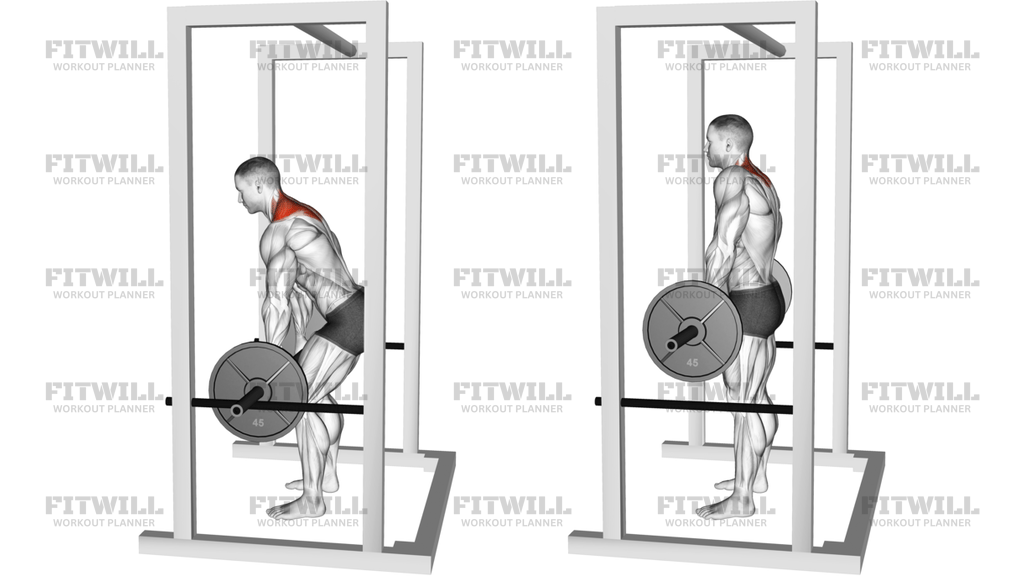
Barbell Seated Shrug
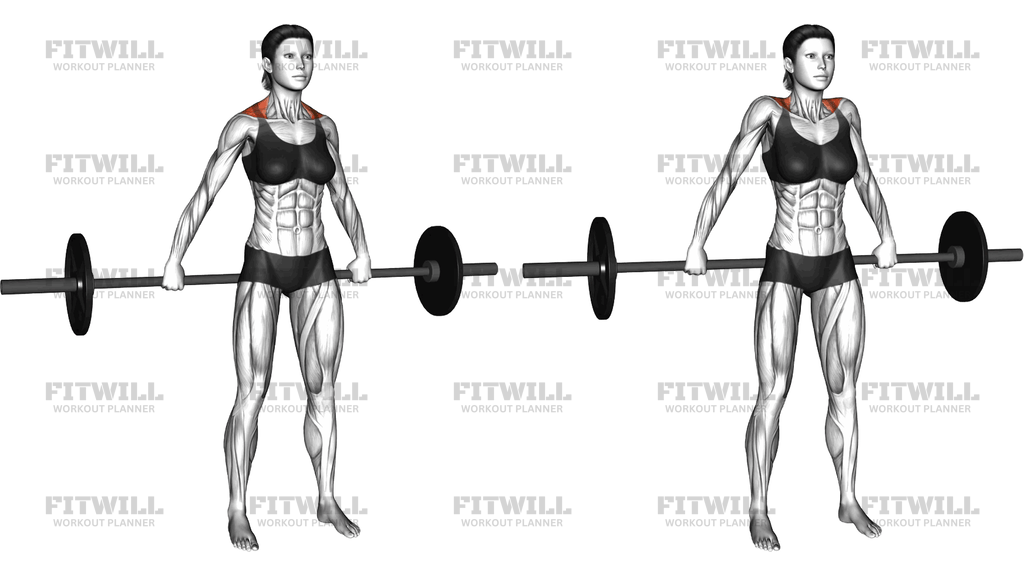
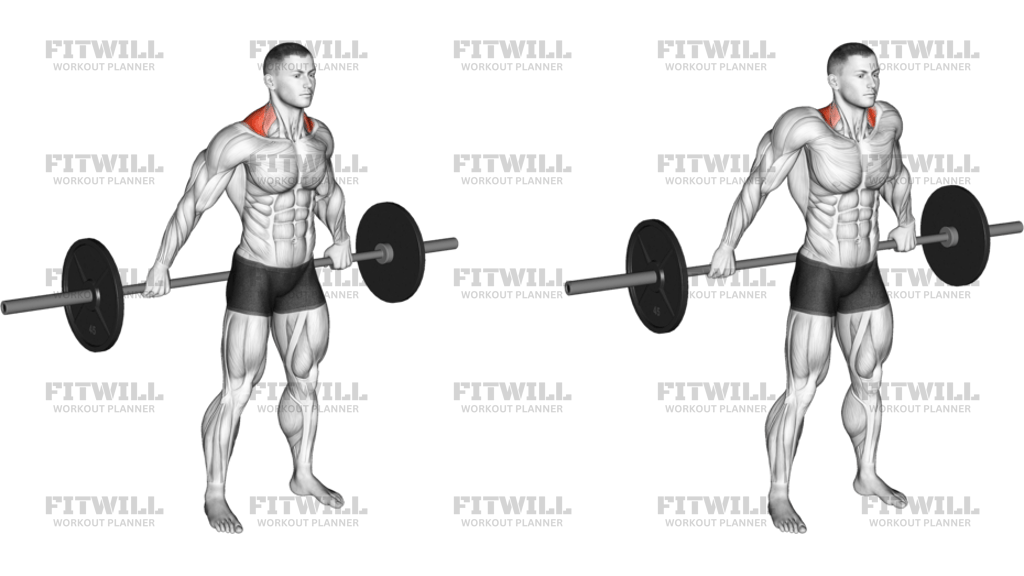
Barbell Seated Shrug is a trap-focused upper-back exercise performed while sitting on a flat bench with a barbell in front of the legs. The seated position removes most leg drive and makes it easier to isolate the upper trapezius, so the shoulders do the work instead of the hips or lower back. It is a simple but very specific movement: hold the bar with straight arms, elevate the shoulder girdle, and control the descent.
The exercise mainly trains the upper trapezius, with the levator scapulae, rhomboids, and forearm grip helping stabilize the bar and shoulder blades. In practice, that means you should feel the work high on the tops of the shoulders and along the base of the neck, not as a curl, row, or bounce. Because the range of motion is short, clean setup and deliberate tempo matter more than chasing heavy weight.
Set up on a bench that lets your feet stay planted and your torso stay tall. Grip the bar just outside your thighs, let the arms hang long, and keep the chest lifted without leaning back. From there, drive the shoulders straight up toward the ears, keep the elbows locked, and avoid rolling the shoulders in a circle. A brief pause at the top helps you own the contraction before lowering the bar under control.
Barbell Seated Shrug is useful as accessory work for athletes, lifters who want stronger upper-back posture, or anyone trying to build trap size without using a standing shrug or momentum. It fits well after bigger compound lifts or as a focused upper-back finisher. Use a load that lets you keep the neck relaxed and the bar path vertical; if the weight starts pulling you forward or making you twist, it is too heavy.
Treat each rep as a controlled shoulder elevation, not a heave. The goal is repeatable tension through the upper traps while the rest of the body stays quiet. When done well, the exercise is stable, direct, and easy to scale for strength or hypertrophy without needing a large range of motion.
[ Workout Log & Planner ]
Put your next workout in Fitwill
Keep your plan and training log ready when you are.


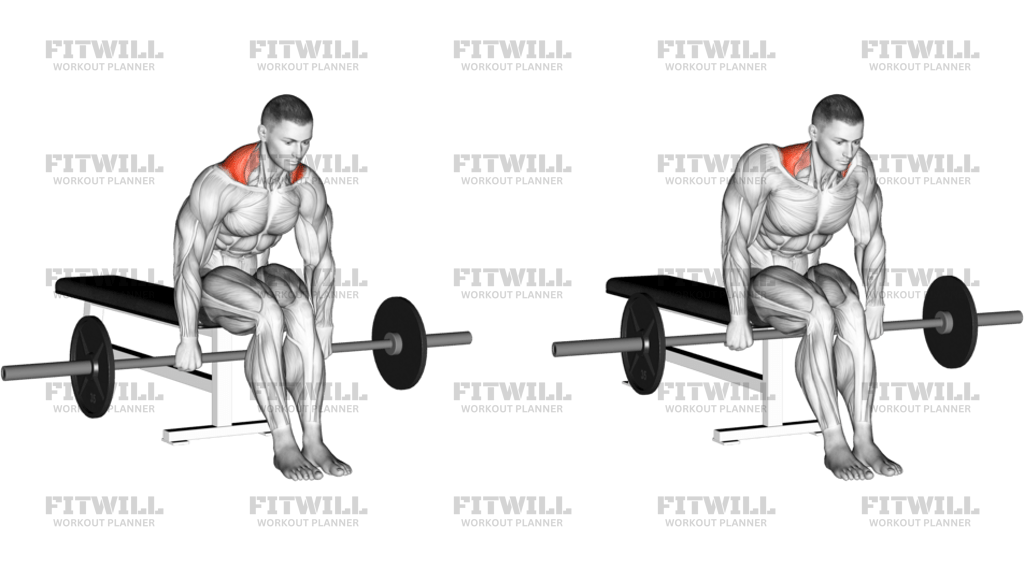
Instructions
- Sit on a flat bench with both feet planted and the barbell resting across the upper thighs just in front of the knees.
- Take an overhand grip just outside your thighs and let your arms hang straight without bending the elbows.
- Sit tall with your chest lifted, ribs stacked over your pelvis, and your head in a neutral position.
- Set the shoulders down and back slightly before each rep so the shrug starts from a controlled low position.
- Exhale and shrug both shoulders straight up toward your ears without leaning back or swinging the bar.
- Keep the arms long and the wrists quiet while the bar moves only because the shoulders rise.
- Pause for a brief count at the top when the traps are fully contracted.
- Inhale and lower the shoulders slowly until the bar returns to the starting position under control.
- Reset your posture before the next rep and stop the set if you cannot keep the motion vertical.
Tips & Tricks
- Think of lifting the shoulder blades toward the ceiling rather than pulling the bar with your hands.
- Keep the neck long; if your chin juts forward, the upper traps and neck start fighting each other.
- A short pause at the top is usually more effective than adding more load or faster reps.
- Use a bench height that lets you sit upright without rounding your lower back to reach the bar.
- If the bar drifts away from your thighs, the weight is probably too heavy for strict seated shrugs.
- Keep the elbows locked so the set stays in the traps instead of turning into a partial upright row.
- Straps can help if grip fatigue ends the set before your traps do.
- Stop before the shoulders start rolling forward or circling; the path should be straight up and straight down.
Frequently Asked Questions
What muscles does Barbell Seated Shrug target most?
It primarily targets the upper trapezius, with the levator scapulae, rhomboids, and forearms helping stabilize the lift.
Why do this shrug while seated on a bench?
Sitting reduces leg drive and body sway, which makes it easier to isolate the traps and keep the bar path strict.
Should I roll my shoulders during the rep?
No. Move the shoulders straight up and back down; rolling turns the exercise into a different pattern and usually reduces trap tension.
How wide should my grip be on the bar?
Use an overhand grip just outside the thighs so the arms can stay straight without forcing the shoulders into an awkward position.
Where should I feel this exercise?
You should feel it high on the shoulders and near the base of the neck, not in the lower back or as a pulling sensation in the arms.
Is Barbell Seated Shrug beginner-friendly?
Yes, as long as the load is light enough to keep the torso still and the shoulders moving vertically.
What is the most common mistake with seated shrugs?
Using too much weight and turning the rep into a lean, bounce, or shoulder roll instead of a clean shrug.
Can I use straps for this exercise?
Yes. Straps are useful if grip fatigue limits your trap work before your shoulders are the limiting factor.