Reverse Crunch Version 2
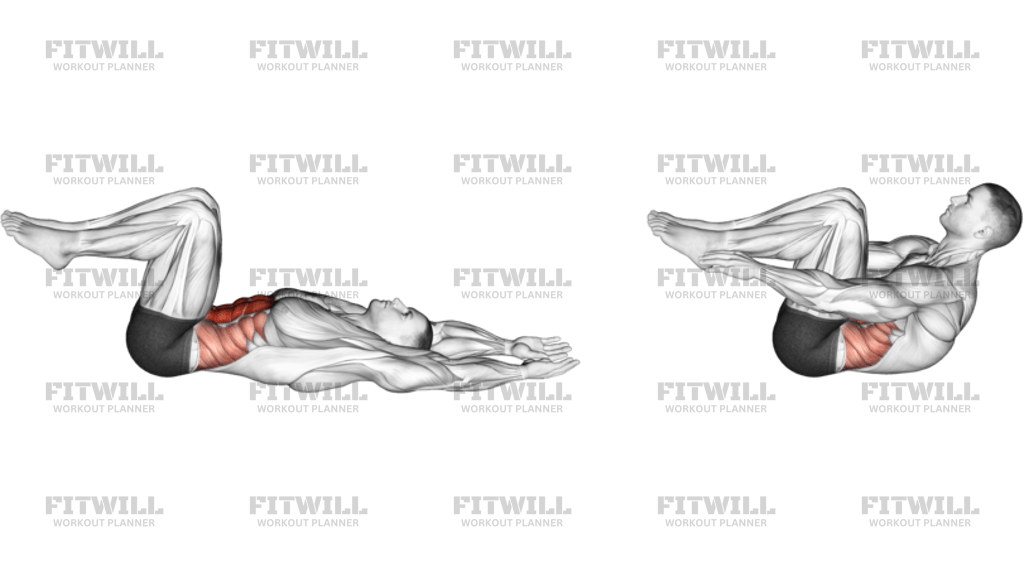
Reverse Crunch Version 2 is a floor-based abdominal exercise that starts with the legs long and finishes with the knees drawn in and the pelvis curling off the floor. The movement is driven by a controlled posterior pelvic tilt rather than by swinging the legs or throwing the hips upward. In the image, the arms stay long beside the torso for balance, the head and shoulders remain relaxed, and the lower body does the visible work while the trunk stays organized.
This version is especially useful when you want a strict core drill that trains the abs through a hard leverage position. With the legs extended, the abdomen has to control the initial curl and prevent the low back from arching away from the floor. As the knees travel toward the chest, the pelvis should roll up just enough to lift the tailbone and low back slightly, which keeps the emphasis on the rectus abdominis while the hip flexors and obliques assist.
Setup matters because the exercise only works well if the ribs stay down and the lower back stays honest. Lie on your back on a mat, place your arms beside your body, and start with the legs extended in front of you. Keep the chin gently tucked, the neck relaxed, and the core braced before the first rep. From there, exhale as you curl the knees in and let the pelvis follow, not the other way around.
The return phase should be just as controlled as the lift. Lower the pelvis slowly until the low back reconnects with the floor, then lengthen the legs without letting them drop or snap. The best sets look smooth and repeatable from start to finish, with a small but deliberate curl, steady breathing, and no momentum. Use Reverse Crunch Version 2 as accessory ab work, as part of a core circuit, or as a warm-up for bracing and pelvic control.
Fitwill
Log Workouts, Track Progress & Build Strength.
Achieve more with Fitwill: explore over 9600 exercises with images and videos, access built-in and custom workouts, perfect for both gym and home sessions, and see real results.
Start your journey. Download today!




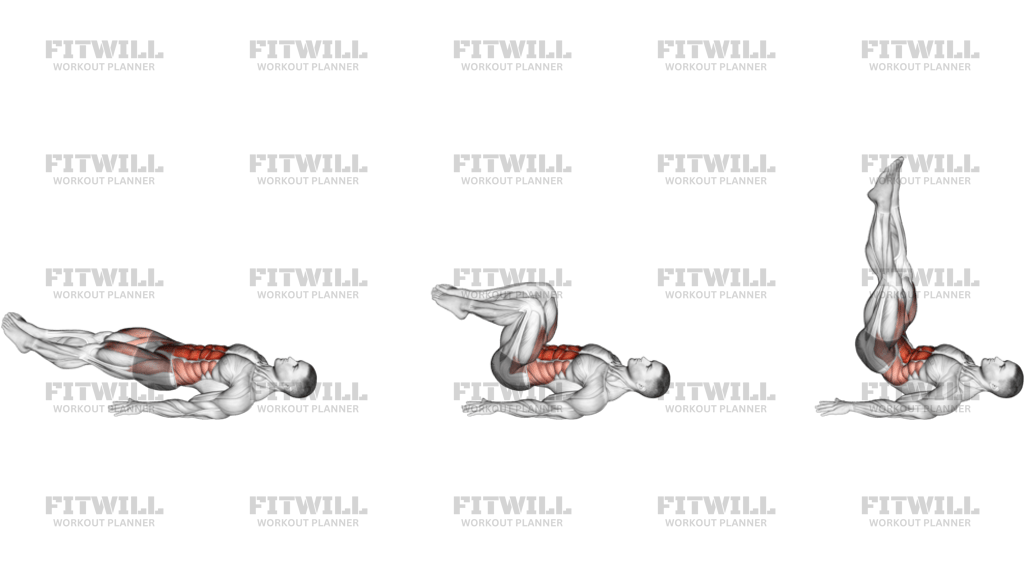
Instructions
- Lie on your back on a mat with your arms straight by your sides, palms down, and your legs extended in front of you.
- Set your ribs down, lightly press your lower back toward the floor, and keep your chin gently tucked so your neck stays relaxed.
- Bring your knees toward your chest in one controlled motion, keeping the thighs close and avoiding any kick or swing.
- As the knees come in, curl your pelvis upward so the tailbone and lower back peel slightly off the floor.
- Pause briefly at the top when your abs are fully shortened and your legs are stacked over your hips.
- Lower the pelvis slowly until your lower back reconnects with the floor.
- Extend your legs back out to the starting position without letting them drop fast or arch your back.
- Reset your breathing and repeat for the planned number of reps.
Tips & Tricks
- Keep your hands on the floor for balance, not for pushing your torso around.
- Think about curling your pelvis toward your ribs instead of simply lifting your knees.
- If your lower back arches early, shorten the lever by bending the knees more before you start the set.
- A small, clean curl is better than a big swing that takes tension off the abs.
- Exhale as the knees travel in and the pelvis starts to roll up.
- Lower the legs slowly; the eccentric phase should be as controlled as the lift.
- Keep your shoulders relaxed so the neck does not tense up and steal the work.
- Stop the set if your hips start rocking or your legs begin snapping back down.
- If the hip flexors cramp, reduce the range and slow the tempo before adding reps.
Frequently Asked Questions
What muscles does Reverse Crunch Version 2 train most?
It mainly targets the rectus abdominis while the obliques and deep core help stabilize the torso.
Why are the legs long at the start of this version?
The straight-leg start makes the lever longer, so the abs have to work harder to control the curl.
How high should my hips come off the floor?
Only enough to lift the tailbone and lower back slightly; this is a pelvic curl, not a swing upward.
Can beginners do this reverse crunch?
Yes, but beginners usually do better with a smaller range and bent knees until they can control the pelvis.
What is the most common mistake with this movement?
Letting the legs swing and using momentum instead of curling the pelvis under control.
Why keep the arms on the floor beside the body?
The arms provide balance and help keep the torso quiet without turning the rep into a push or a swing.
Should I feel this in my hip flexors too?
Some hip flexor help is normal, but the abs should drive the curl and the pelvis should be the part that finishes the rep.
How can I make Reverse Crunch Version 2 harder?
Slow the lowering phase, pause at the top, or keep the legs straighter so the abs work against a longer lever.
Is this a good exercise for lower abs?
Yes, it is a strong choice for lower-ab emphasis because the pelvis must roll up at the top of the rep.