Band Hip Adduction
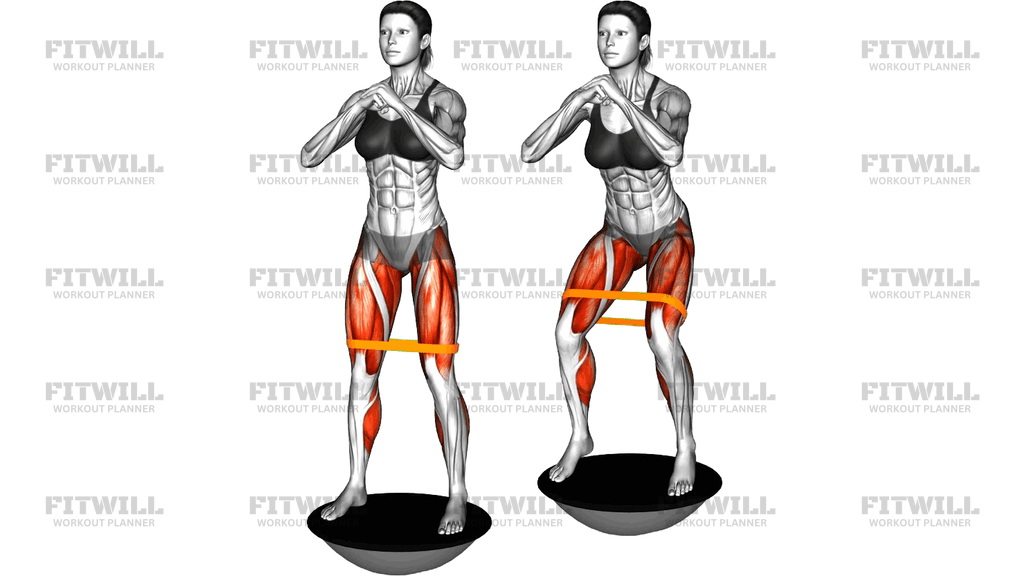
Band Hip Adduction is a standing hip isolation exercise that trains the inner thigh to pull the leg back toward the body's midline against band tension. It is most useful when you want adductor strength, pelvic control, and cleaner single-leg stability without loading a heavy machine. The standing version also asks the trunk and stance leg to stay organized, so it can expose side-to-side control differences that are easy to miss in simpler open-chain drills.
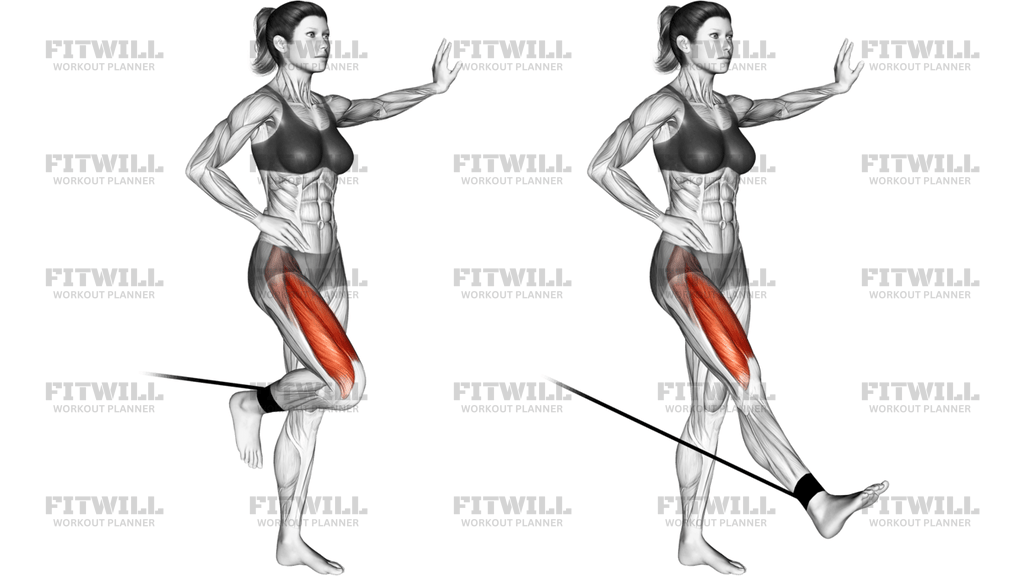
The setup matters because the band line and body angle determine whether the movement stays in the hip or turns into a torso twist. In the image, the working ankle is pulled outward by a low anchor while the opposite hand holds the frame for balance. That position lets the moving leg travel across the front of the standing leg while the pelvis stays mostly square and the torso stays tall. If you step too far from the anchor or lean away, the band will start to pull you into rotation instead of adduction.
Each repetition should start with a soft knee, level hips, and enough tension in the band that the working leg has to work from the first inch of motion. Sweep the leg inward across the midline under control, then pause briefly when the inner thigh is fully shortened. The return should be slow and deliberate so the band does not yank the leg back into the start. Keep the foot pointed mostly forward, breathe steadily, and let the adductors do the work instead of swinging the leg or hiking the hip.
This exercise fits well as accessory work, a warm-up drill before squats or lateral work, or a targeted hip session when the goal is stronger adductors and better lower-body control. It is usually best done with light to moderate resistance and crisp technique, not with maximal band tension. If the stance knee collapses inward, the pelvis turns, or the torso begins to drift, reduce the band tension or shorten the range until you can keep the motion clean and repeatable.
[ Workout Log & Planner ]
Put your next workout in Fitwill
Keep your plan and training log ready when you are.


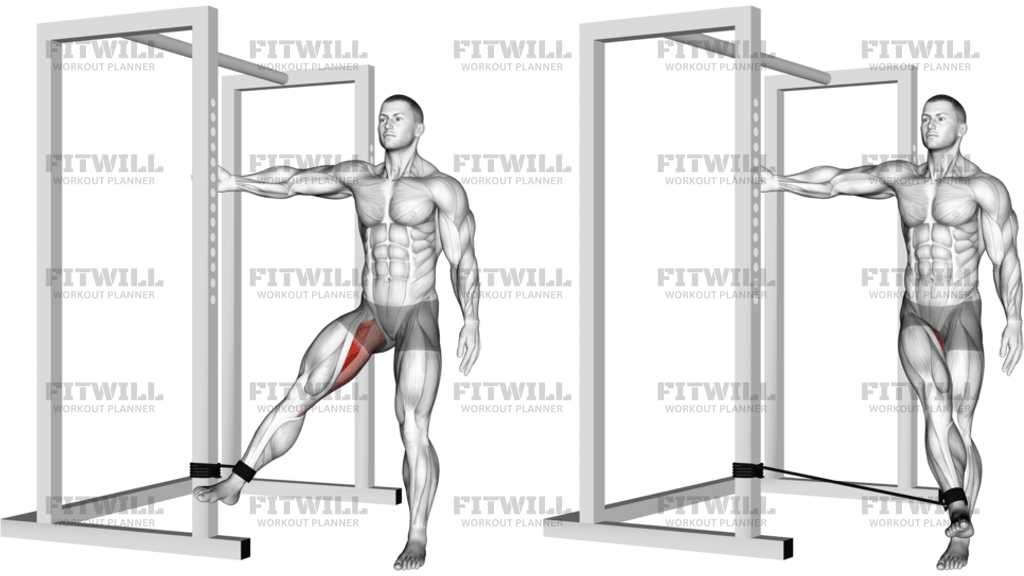
Instructions
- Stand sideways to the low anchor and loop the band around the ankle of the outside leg.
- Hold the post or frame with the hand on the same side as the moving leg for balance.
- Plant the stance foot under your hip, keep a soft bend in both knees, and square your hips to the front.
- Let the band pull the working leg slightly away from center so the inside thigh starts under tension.
- Brace your torso and sweep the working leg inward across the front of the standing leg.
- Keep the toes mostly forward and the pelvis level as the leg crosses toward midline.
- Pause for a moment when the inner thigh is fully shortened and the feet are close together.
- Return the leg slowly to the start without letting the band yank your hip open.
- Reset your posture between reps and repeat for the planned set.
Tips & Tricks
- Keep the stance knee unlocked; locking it straight usually shifts tension into the low back and standing hip.
- Aim for a small, clean arc across the midline rather than a big swing that twists the pelvis.
- Hold the support with enough pressure to stay upright, but do not pull your body toward the frame.
- Use a low anchor so the band line stays close to the floor and the leg can adduct instead of lifting forward.
- If the foot turns outward, the adductors lose leverage and the movement often becomes a hip-flexor tug.
- Exhale as the leg comes inward and keep the ribs stacked over the pelvis.
- Lower the resistance if you cannot control the return for at least two to three seconds.
- Stop each set when the standing hip starts shifting or the working foot begins to skim the floor.
Frequently Asked Questions
What does Band Hip Adduction train most?
It primarily targets the inner-thigh adductors, with the standing hip and core helping you stay tall and balanced.
Why do I need to hold onto the frame during this exercise?
The support hand keeps you from leaning into the band and helps the moving leg travel cleanly across the standing leg.
Should my torso twist when the leg moves inward?
No. Keep the ribs and pelvis facing forward so the adductors move the leg instead of the trunk rotating.
How far should the working leg travel?
Only as far as you can move while keeping the pelvis level and the return under control. A smaller range is better than a sloppy one.
Can I use this as a warm-up before squats or lunges?
Yes. It works well as a light activation drill before lower-body sessions, especially when you want the inner thigh and hip stabilizers awake.
What is the most common mistake?
Letting the pelvis drift, the stance knee cave, or the band snap the leg back instead of resisting the return.
Is this exercise appropriate for beginners?
Yes, if the band is light and the movement stays slow. Beginners should prioritize balance and pelvic control over resistance.
What should I feel if I am doing it correctly?
You should feel the inner thigh of the moving leg working hard, with some steady effort from the stance leg and trunk to keep you stable.