Dumbbell Bar Grip Sumo Squat
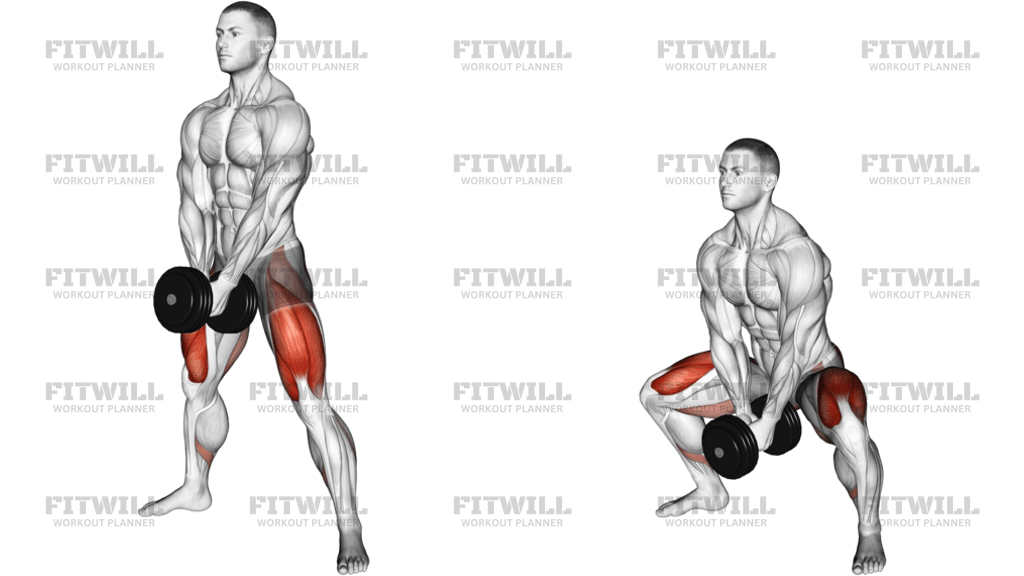
Dumbbell Bar Grip Sumo Squat is a wide-stance lower-body squat where one dumbbell is held vertically with both hands between the legs. The exercise keeps the load centered and low, which makes it useful for building hip strength, glute development, and control in a squat pattern without needing a barbell on the back.
The wide stance and turned-out feet shift a lot of the work toward the glutes and inner thighs while the hamstrings, core, and lower back help you stay balanced. In anatomy terms, the main work centers on the Gluteus maximus, with support from the Biceps femoris, Rectus abdominis, and Erector spinae. Dumbbell Bar Grip Sumo Squat is especially helpful when you want a squat that feels more hip-driven than knee-driven and a setup that is easy to learn.
The setup matters because the dumbbell should hang straight down and stay close to the centerline while you squat. Stand with a wide stance, turn the toes out enough for the knees to open, and keep the chest tall before you descend. If the feet are too narrow or the knees cave inward, the lift stops feeling like a sumo squat and starts turning into a rushed hinge or an unstable squat.
On each rep, sit the hips down between the knees, let the knees track over the toes, and keep pressure through the heels and midfoot. Lower until you reach a depth you can control without rounding the lower back, then drive the floor apart and stand back up by squeezing the glutes. The dumbbell should stay centered and quiet throughout the rep rather than swinging or drifting forward.
Dumbbell Bar Grip Sumo Squat works well as accessory lower-body training, in warmups that groove squat mechanics, or in higher-rep strength and hypertrophy work. It is also a practical option when you want a squat variation that challenges the hips and glutes while staying simpler to set up than a machine or barbell variation. Keep the range pain-free, keep the torso organized, and stop the set if the stance, depth, or grip starts to break down.
[ Workout Log & Planner ]
Put your next workout in Fitwill
Keep your plan and training log ready when you are.


Instructions
- Stand with your feet wider than shoulder width, turn your toes out, and hold one dumbbell vertically with both hands between your thighs.
- Let your arms hang straight down so the dumbbell stays centered under your shoulders, and keep your chest lifted with your ribs stacked over your pelvis.
- Brace your core before you descend, then keep your knees pointed in the same direction as your toes.
- Sit your hips down between your knees and slightly back while keeping your heels and midfoot planted on the floor.
- Lower until your thighs reach a comfortable depth and the dumbbell comes close to the floor without touching it.
- Pause briefly at the bottom if you can keep tension in your glutes and thighs without collapsing your torso.
- Drive through your heels and the outside edges of your feet to stand back up, keeping the dumbbell vertical and centered.
- Exhale as you rise, finish tall without leaning back, and reset your stance before the next rep.
Tips & Tricks
- Widen the stance until your knees can open without your arches collapsing inward.
- If the dumbbell drifts forward, bring it back under your shoulders and let it hang straight down between the legs.
- Think about spreading the floor with your feet to keep the knees tracking out through the whole rep.
- Keep the torso slightly inclined, but do not let the chest drop so far that your lower back rounds.
- Use a slower lowering phase if you tend to bounce out of the bottom or lose tension.
- Choose a depth that lets you keep the dumbbell quiet and the heels rooted; do not chase depth at the expense of position.
- If your groin or hips feel pinched, shorten the stance a little and turn the toes out less aggressively.
- Stop the set when your knees start caving, the dumbbell starts swinging, or your back position changes.
Frequently Asked Questions
What does Dumbbell Bar Grip Sumo Squat work most?
It primarily targets the glutes, while the inner thighs, hamstrings, and core help stabilize the wide squat position.
How should I hold the dumbbell in Dumbbell Bar Grip Sumo Squat?
Hold one dumbbell vertically with both hands so it hangs straight down between your legs. Keep your arms long and the weight centered under your shoulders.
How wide should my stance be?
Wide enough that your knees can open over your toes without your feet collapsing inward. Most people need a noticeably wider stance than a normal squat.
How deep should I go in Dumbbell Bar Grip Sumo Squat?
Go as low as you can while keeping your heels down, your spine neutral, and the dumbbell controlled. Depth should be earned by hip mobility, not forced.
Is Dumbbell Bar Grip Sumo Squat good for beginners?
Yes, if you start light and focus on stance, knee tracking, and control. It is often easier to learn than a barbell squat because the load stays low and centered.
Why do my knees cave inward during this squat?
Usually the stance is too narrow, the toes are not turned out enough, or the load is too heavy. Open the feet slightly more and think about pushing the knees out over the toes.
What should I do if my lower back rounds?
Reduce the depth, keep your chest taller, and brace before each rep. If rounding still happens, shorten the stance a bit or lower the weight.
Can I use Dumbbell Bar Grip Sumo Squat in a strength routine?
Yes. It works well as lower-body accessory work for moderate to higher reps, especially when you want a glute-focused squat without a barbell.