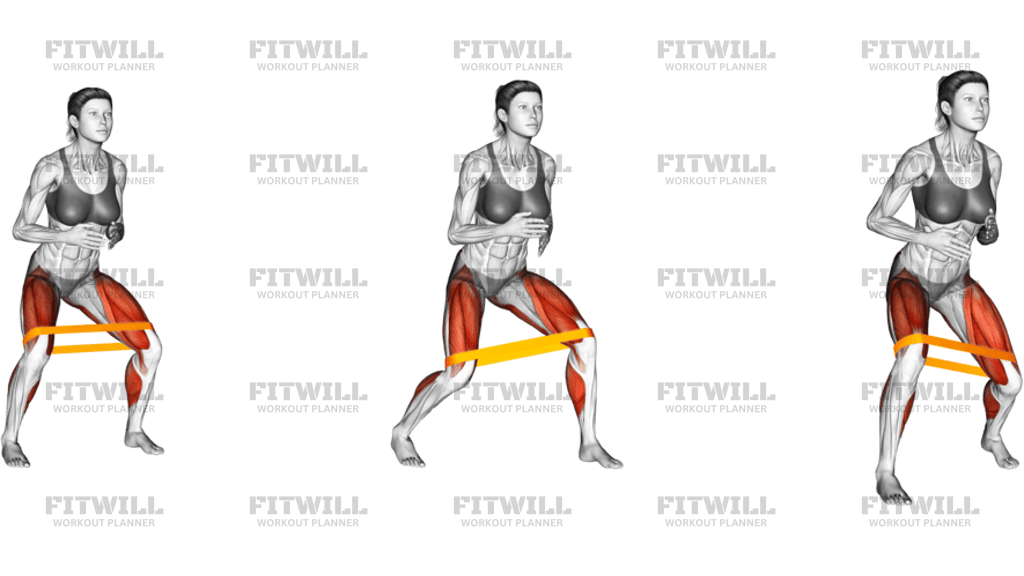
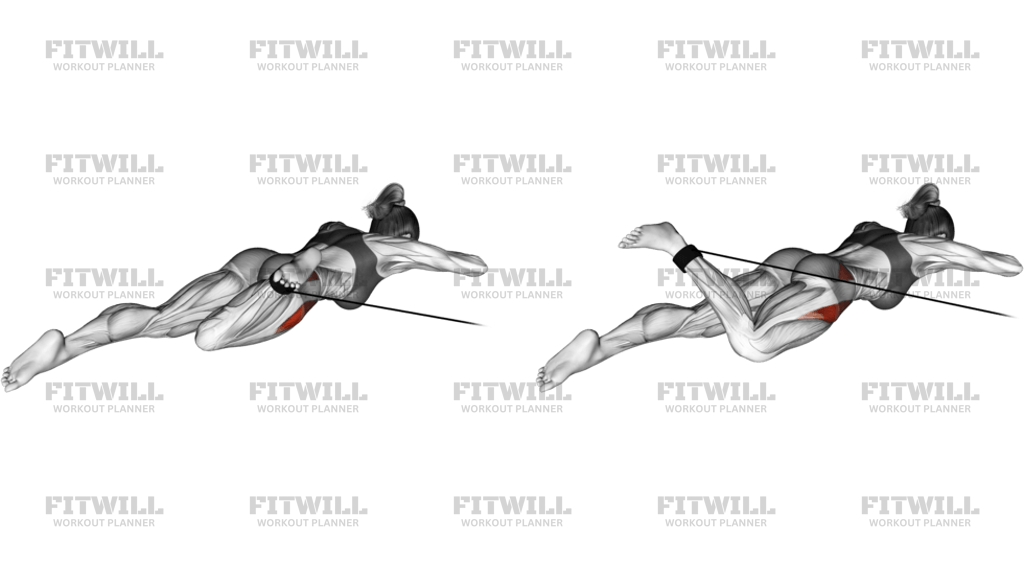
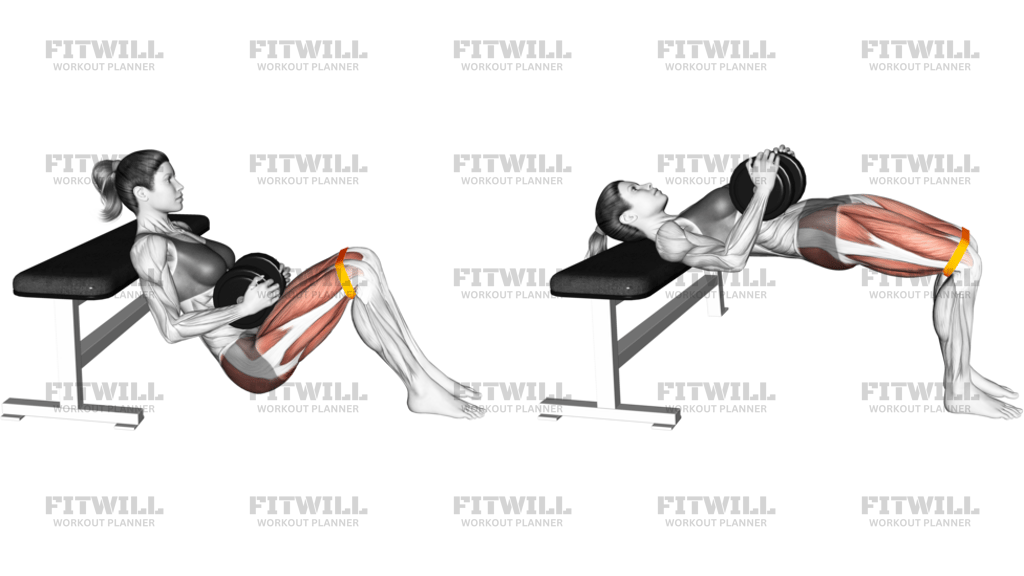
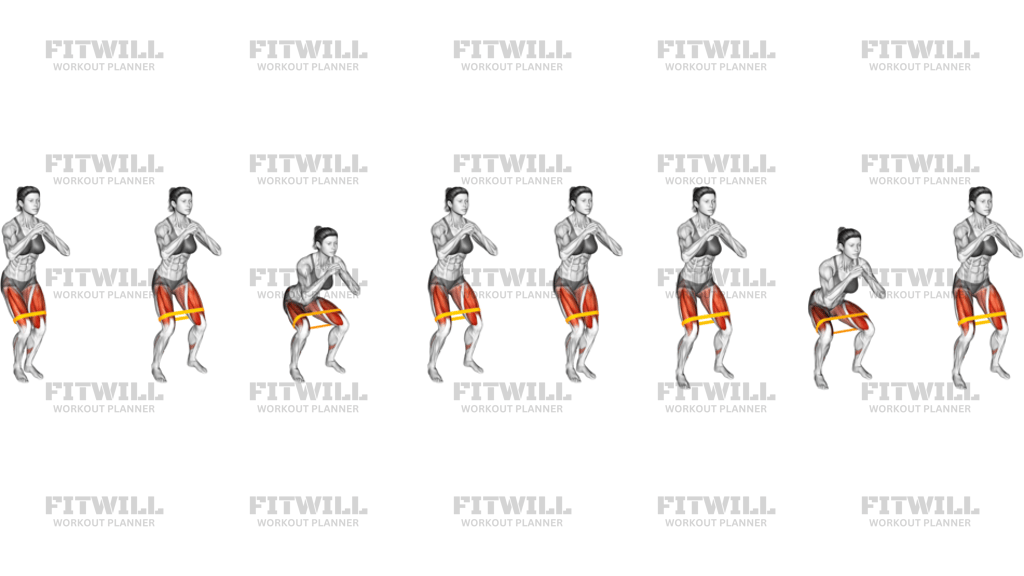
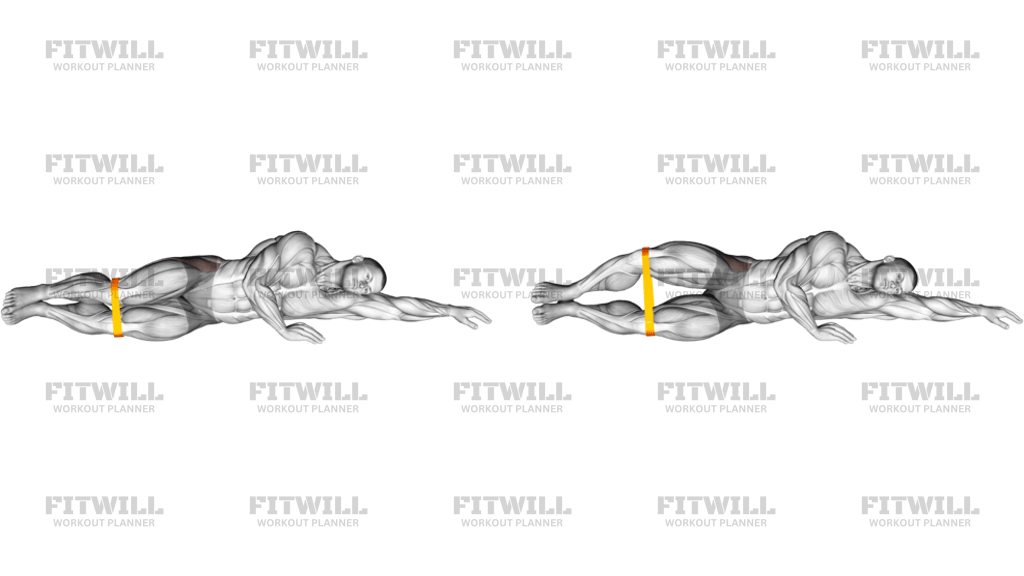
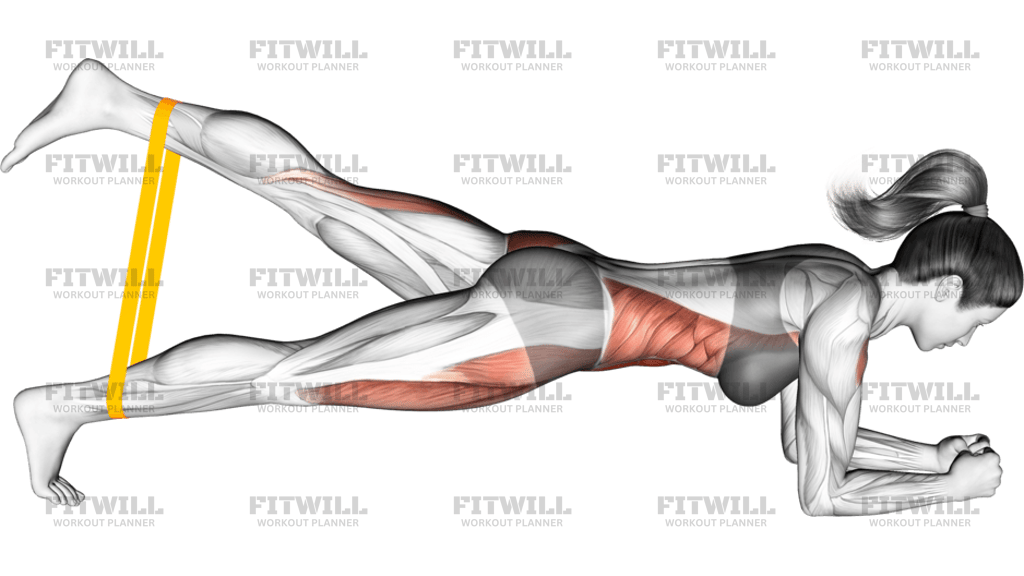
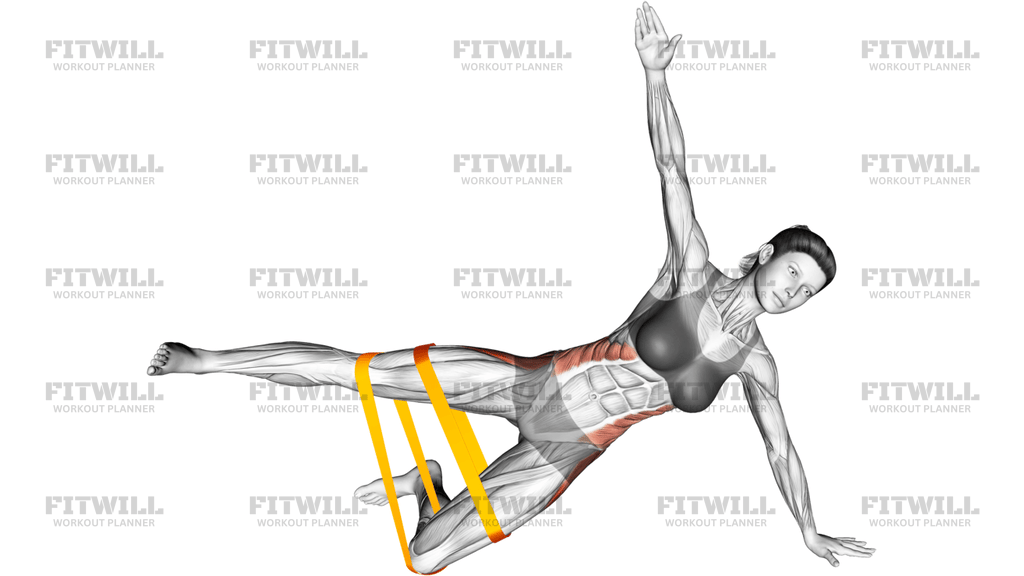
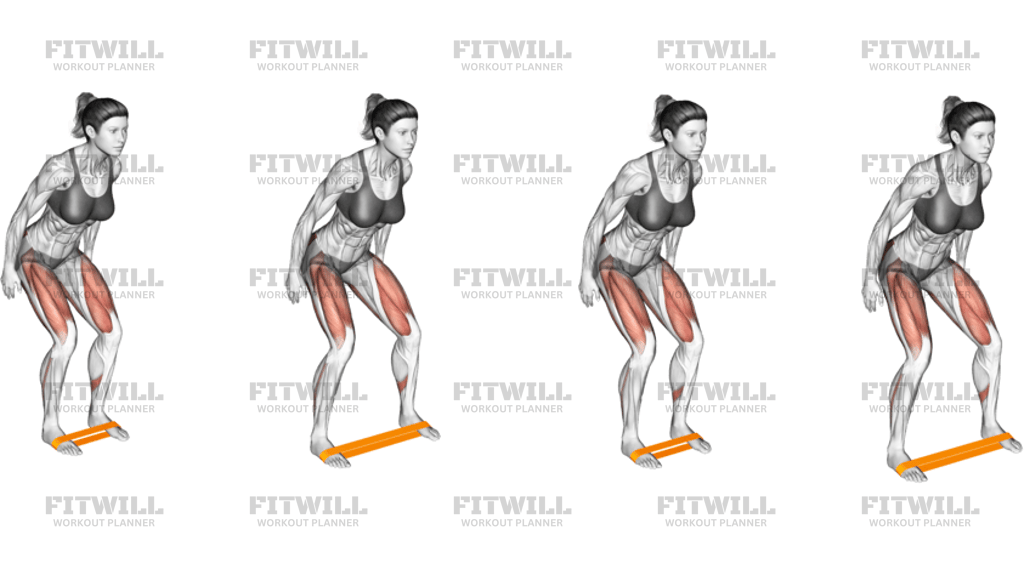
Band Hip Abduction
Band Hip Abduction is a standing hip isolation drill that uses a light loop band around the ankles and a stable hand support to train lateral hip control. The movement looks simple, but it is most useful when the pelvis stays level and the working leg moves cleanly out to the side without the torso twisting or leaning. That makes Band Hip Abduction a practical accessory exercise for people who want better glute activation, stronger hip stability, and cleaner single-leg mechanics.
The main training effect comes from the outer hip, especially the muscles that control the leg as it moves away from the body. In practice, that means the side glutes have to create the motion while the standing leg and trunk work to keep you upright. Because the band is wrapped low at the ankles, the exercise gets harder as soon as you lose alignment, which is why a controlled setup matters more than a big range.
A good repetition starts with a tall stance beside a rack, post, or wall, one hand resting lightly for balance, and both feet planted under the hips. From there, the working leg opens out to the side against the band while the standing hip stays tall and the ribs stay stacked over the pelvis. The best reps are smooth and deliberate: lift, pause, and return without letting the band snap the leg back in.
Band Hip Abduction fits well in warm-ups, activation work, rehab-style training, and lower-body accessories before squats, lunges, or running drills. It can help lifters notice weak hip control, and it can help runners or field athletes build better pelvic stability on one leg. Keep the effort in the hip rather than the lower back, and shorten the range if the pelvis hikes or the torso starts drifting toward the support hand.
This exercise is usually best loaded lightly. The goal is not to fight a heavy band; it is to create clean abduction from the hip, keep the foot tracking in a controlled line, and avoid turning the movement into a standing balance drill with momentum. If the band rolls, the torso sways, or the lower back starts taking over, the set is no longer doing what Band Hip Abduction is meant to do.
[ Workout Log & Planner ]
Put your next workout in Fitwill
Keep your plan and training log ready when you are.


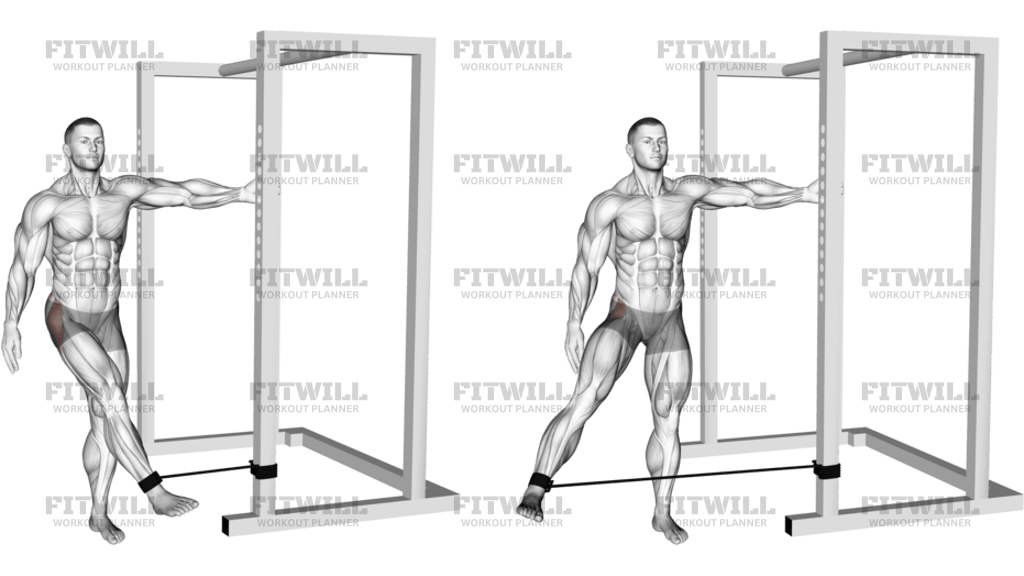
Instructions
- Stand beside a rack, post, or wall with a light loop band around both ankles and one hand resting on the support for balance.
- Set your feet under your hips, keep both toes pointing forward, and soften the knees without letting your pelvis tilt.
- Stack your ribs over your pelvis and keep your free hand relaxed at your side before the first rep.
- Shift your weight into the standing leg and let the working leg start from a neutral position under the hip.
- Drive the working leg out to the side against the band, keeping the torso tall and the standing foot flat.
- Lift only as far as you can keep both hip bones level and the standing knee from collapsing inward.
- Pause for a beat at the top and feel the outer hip do the work instead of the lower back.
- Return the leg slowly until the feet are back under the hips and the band is under tension again.
- Breathe out as the leg opens and breathe in as you bring it back in, then repeat for the planned reps.
Tips & Tricks
- Use a light band first; if you cannot keep the pelvis square, the resistance is too high.
- Keep the support hand gentle. Hanging on hard usually means the hips are no longer doing the work.
- Point the toes forward so the leg opens from the hip instead of turning the foot outward.
- A small knee bend can make the standing leg more stable and keep the band from pulling you off balance.
- Stop the lift when the pelvis starts to hike or the trunk starts leaning away from the working leg.
- Lower the leg under control. Letting the band yank the ankle back in turns the set into a swing.
- If the band rolls at the ankles, choose a flatter loop or widen the stance slightly before the next set.
- A short pause at the top helps you find the glute work without needing a huge range.
- Use this before squats, lunges, or running work when you want better hip control, not as a max-effort strength move.
Frequently Asked Questions
What muscles does Band Hip Abduction work?
It mainly targets the outer hip and side glutes, especially the muscles that move the leg away from the body and keep the pelvis level.
Do I need a rack or wall for Band Hip Abduction?
A light hand support makes the exercise much cleaner because it lets you focus on the hip instead of balancing through your whole body.
How far should I move the leg out to the side?
Only open the leg until your hips stay level. If the pelvis starts tipping or the torso leans, you have gone farther than the exercise can control.
Why do I feel Band Hip Abduction in my lower back?
Usually the rib cage is flaring or the pelvis is twisting to cheat the range. Reset taller, soften the knees, and shorten the rep until the outer hip takes over.
Can beginners do Band Hip Abduction safely?
Yes. Start with a light band, hold the support lightly, and use a short range until you can keep the standing leg and pelvis steady.
Should my toes point straight ahead or turn out?
Keep them mostly forward. If the foot turns out first, the movement usually shifts away from the hip abductors and becomes a compensation drill.
Where should I feel the effort during Band Hip Abduction?
You should feel it mostly on the side of the working hip and in the standing hip that keeps you from wobbling.
What is a good variation if the ankle band feels awkward?
Use a smaller loop band, reduce the range, or move the band slightly higher on the lower leg if your setup still keeps tension and control.