Band Bent-Over Hip Extension
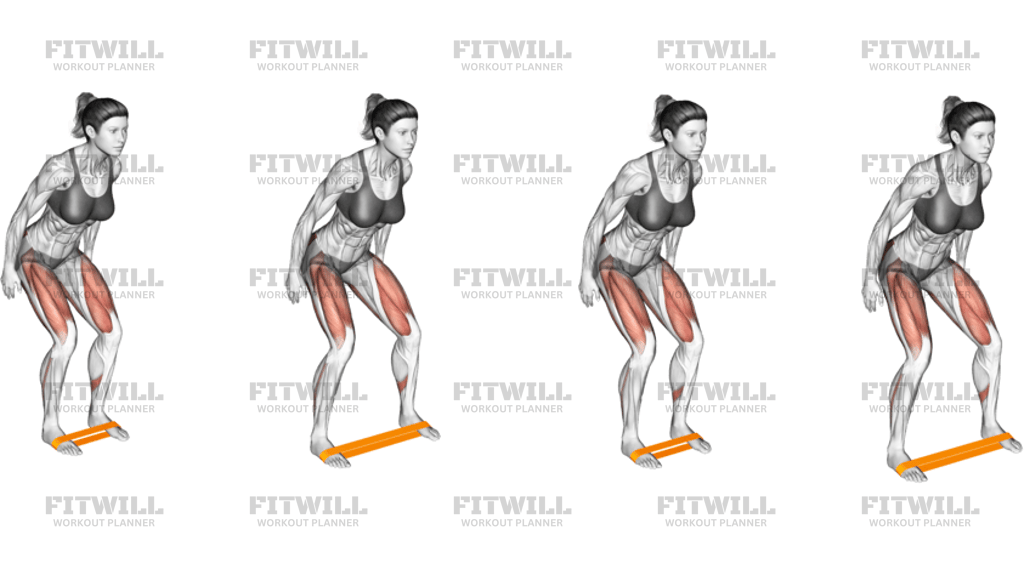
Band Bent-Over Hip Extension is a supported single-leg glute exercise that trains hip extension against steady band tension while your torso stays hinged forward. It is useful when you want direct glute work without loading the spine heavily, and it can also teach better pelvic control for running, field sports, and lower-body strength sessions.
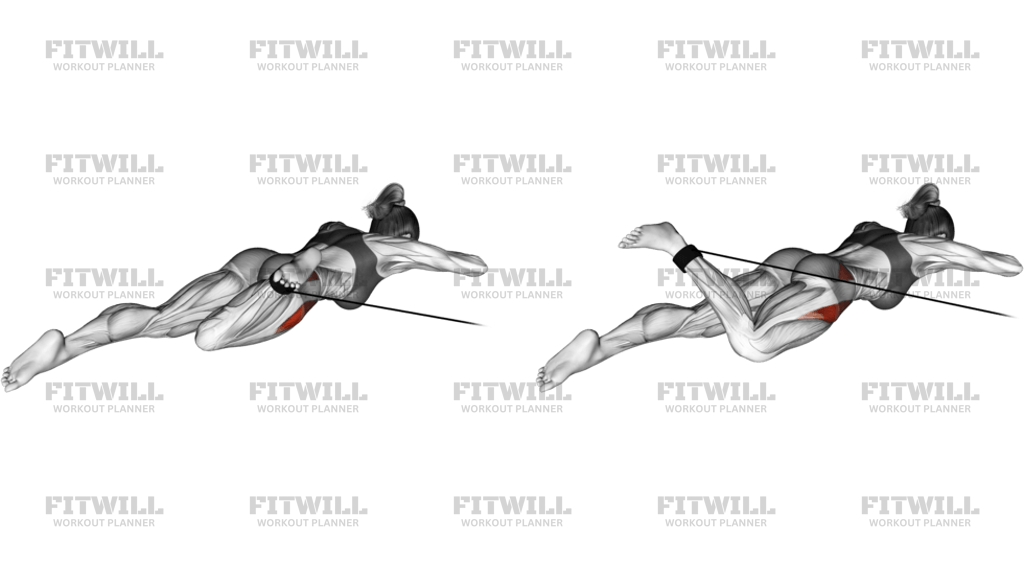
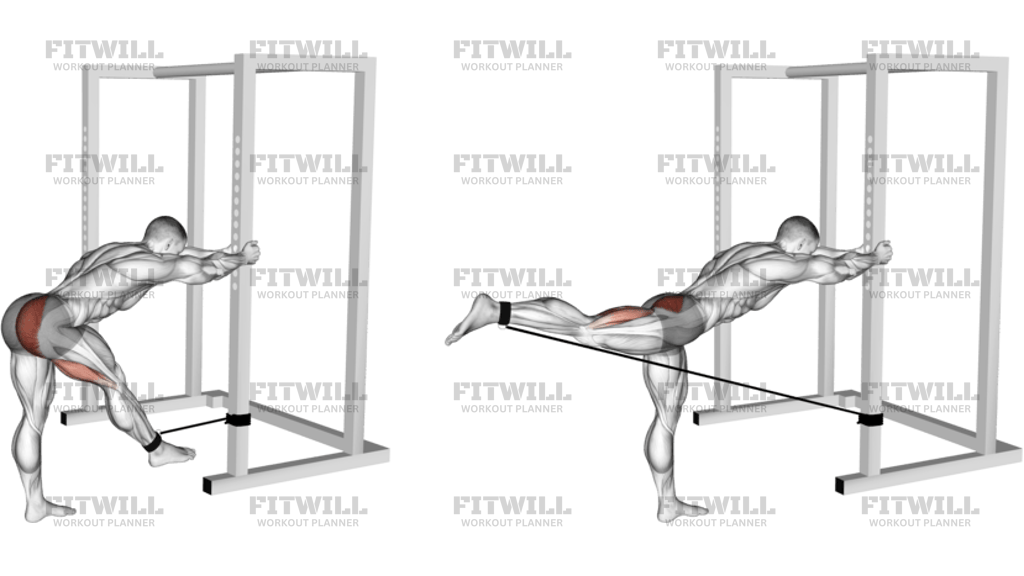
The setup matters because the band, stance, and torso angle decide whether the rep stays on the glutes or turns into a lower-back swing. Stand on one leg, hinge forward until your trunk is close to parallel with the floor, and use a rack or upright for balance so the working hip can move cleanly. The band should stay anchored low and create tension from the start, not only after the leg is already moving.
As you extend the working leg, think about driving the heel back and slightly up while keeping the pelvis square to the floor. The leg should travel from a bent, loaded position into a strong squeeze through the glute, then come back down slowly without letting the low back arch to finish the rep. Controlled breathing helps keep the brace consistent: exhale through the extension and inhale as the leg returns.
Band Bent-Over Hip Extension fits well as a warm-up activation drill, an accessory glute movement, or a lighter single-leg strength choice on lower-body days. Because the exercise is body-position dependent, it rewards precision more than load, and a smaller range with clean tension is usually better than a bigger swing that twists the torso or shifts the standing hip.
For most lifters, the safest and most productive version is the one that lets the pelvis stay level and the standing foot stay planted. If the band pulls you out of position, step closer to the anchor or use a lighter band. Beginners can learn the movement with a light band and a firm support point, while advanced lifters can slow the lowering phase or add a pause at peak contraction without changing the hip line.
[ Workout Log & Planner ]
Put your next workout in Fitwill
Keep your plan and training log ready when you are.


Instructions
- Anchor a band low behind you and hold a rack, upright post, or machine frame with both hands for support.
- Stand on the working leg, place the band around the opposite ankle or foot, and hinge forward until your torso is close to parallel with the floor.
- Keep a soft bend in the standing knee, plant the standing foot flat, and square your hips and ribs toward the floor.
- Let the band start with light tension so the working leg is already loaded before the first rep.
- Brace your midsection and keep your neck long as you begin the rep.
- Drive the working heel straight back and slightly up until the glute contracts hard without arching your lower back.
- Pause briefly at the top while keeping both hips level and your shoulders quiet.
- Lower the leg slowly against the band until you return to the stretched start position.
- Reset your hinge and foot pressure before the next rep, then switch sides when the set is complete.
Tips & Tricks
- Keep the support hand light; if you are pulling hard on the rack, the glutes are usually doing less work.
- Think about sending the heel back instead of lifting the toes higher, which helps keep tension on the glute instead of the low back.
- If your pelvis opens toward the working leg, shorten the range until the hips stay square.
- A small knee bend on the standing leg usually makes it easier to hold a stable hinge.
- Step closer to the anchor if the band is so loose that the first half of the rep has no tension.
- Use a slower lowering phase so the band does not yank you back into the start position.
- Stop the set when your torso starts rising each rep, because that usually means momentum is taking over.
- If you feel the movement in your hamstring more than your glute, slightly reduce the hip height at the top and keep the knee angle consistent.
- Choose a band that lets you hold the top position for a clean pause without twisting the standing hip.
Frequently Asked Questions
What does Band Bent-Over Hip Extension work most?
It mainly targets the glutes, with the hamstrings and core helping you keep the torso hinged and the pelvis steady.
Where should the band sit for Band Bent-Over Hip Extension?
The band should be anchored low and looped around the working ankle or foot so it pulls backward through the whole rep.
Should my torso stay upright during Band Bent-Over Hip Extension?
No. Hinge forward until your torso is close to parallel with the floor so the working leg can extend without you leaning and swaying.
Why do I feel Band Bent-Over Hip Extension in my lower back?
That usually means you are finishing the rep by arching instead of squeezing the glute. Shorten the range and keep your ribs and pelvis stacked.
Can beginners do Band Bent-Over Hip Extension safely?
Yes, if they use a light band and a solid support point. The movement is easier to learn when the torso stays fixed and the range is small and controlled.
How much range of motion should I use?
Use the range that lets you keep both hips level and the standing leg stable. A smaller, clean extension is better than a big swing that twists the body.
What is a good way to make Band Bent-Over Hip Extension harder?
Use a stronger band, pause longer at the top, or slow the lowering phase while keeping the same hinge and pelvis position.
Do I need to lock my knee on the standing leg?
No. A soft knee helps you stay balanced and keeps the load on the hip instead of shifting it into the joint or lower back.