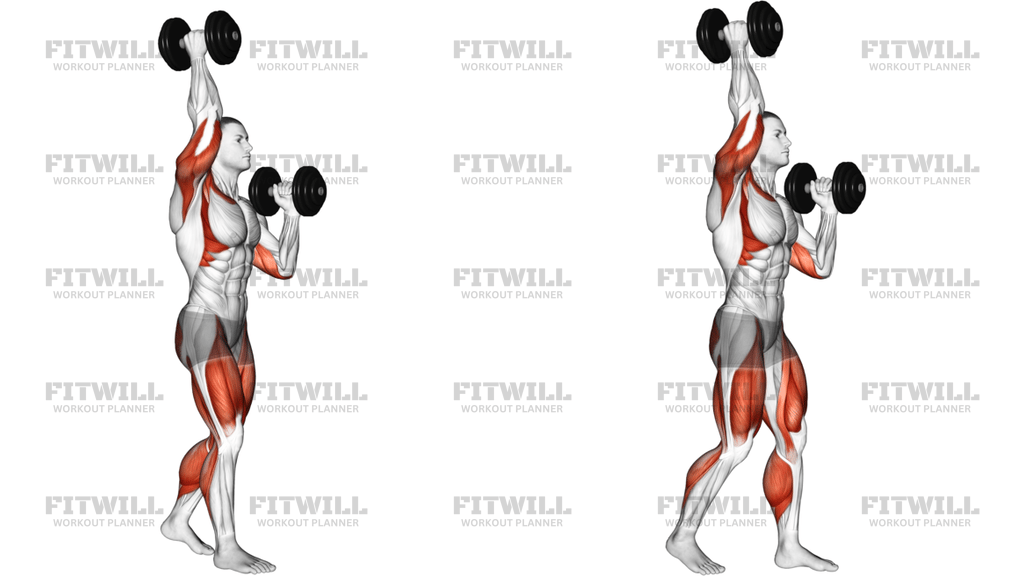
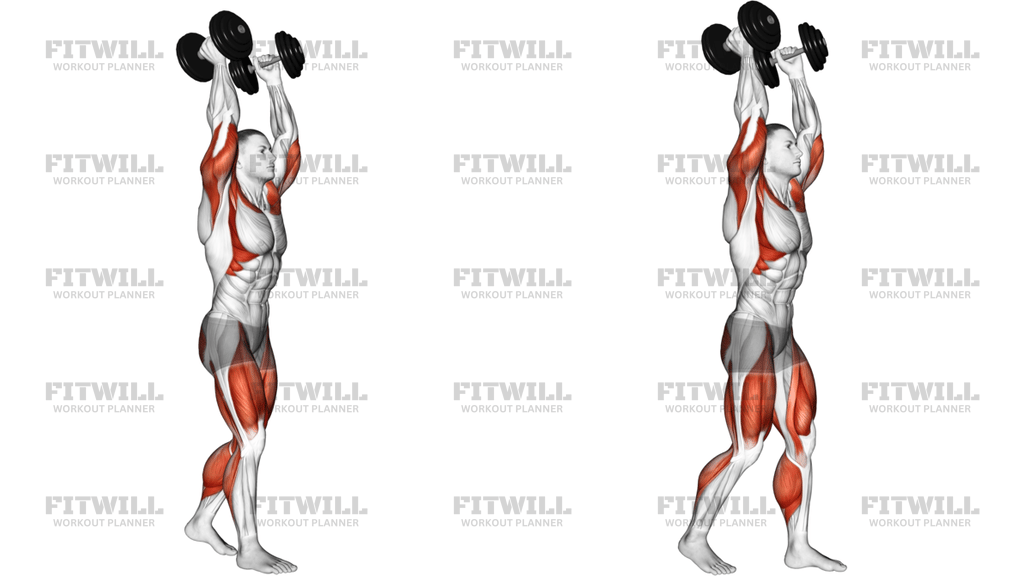
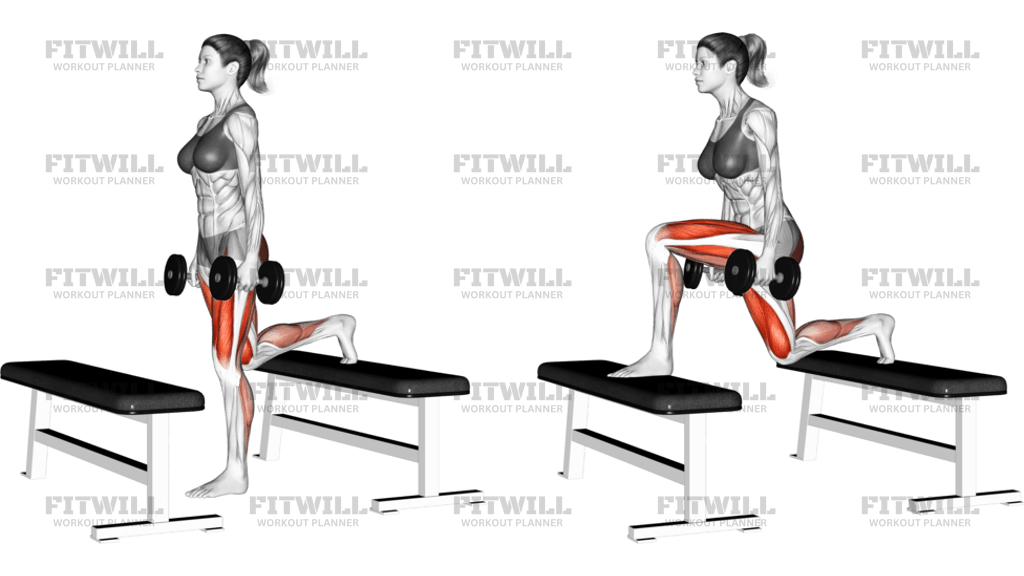
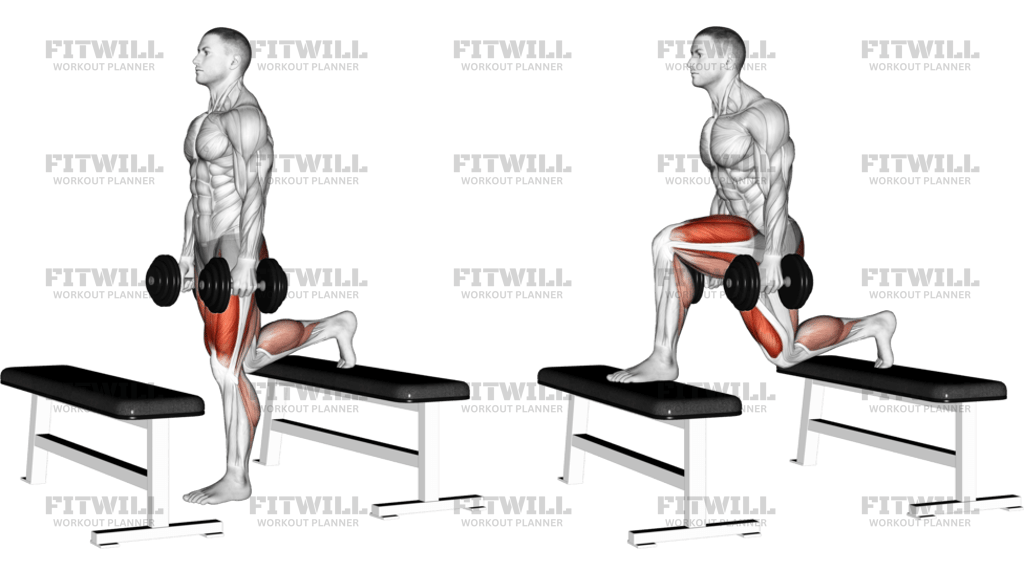
Dumbbell Ipsilateral Split Squat
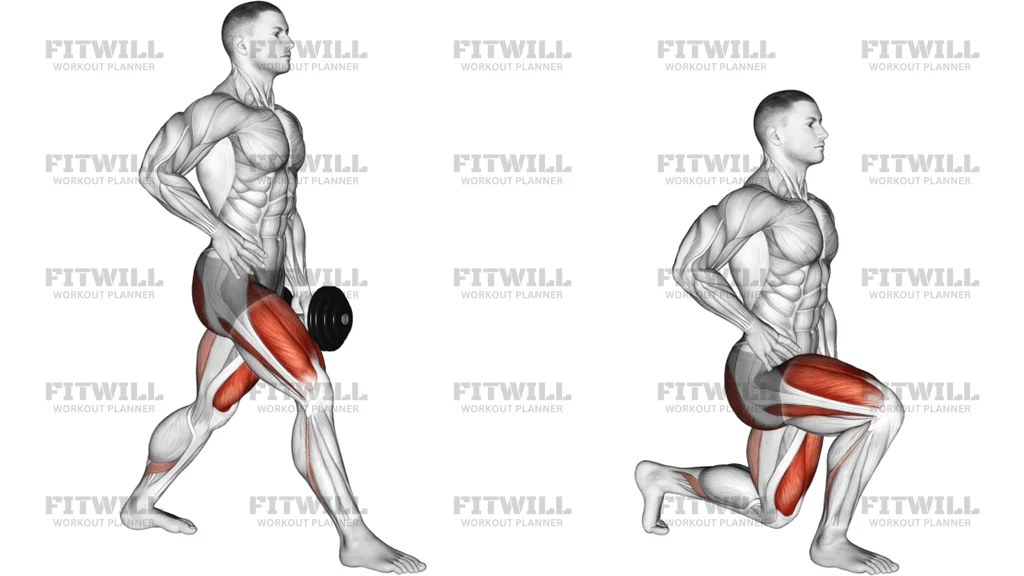
Dumbbell Ipsilateral Split Squat is a stationary single-leg lower-body exercise performed in a split stance with the dumbbell held on the same side as the front leg. It trains the front leg through a deep knee and hip bend while asking the pelvis and trunk to stay level, so it is useful when you want leg strength plus better side-to-side control.
The ipsilateral carry changes the challenge compared with a standard split squat. Because the dumbbell sits beside the working side, the body has to resist leaning, twisting, and dropping into that side as you lower. That makes the front quad and glute do the main lifting while the obliques, hip stabilizers, and adductors keep the torso stacked and the pelvis square.
A good rep starts with a stance that is long enough to let you descend straight down, not forward. Keep the front foot flat, the back heel lifted, and the dumbbell hanging quietly beside the outer thigh of the front leg. As you lower, both knees bend, the back knee travels toward the floor, and the front knee tracks in line with the toes without caving inward.
At the bottom, stay braced and avoid dumping your torso toward the dumbbell or bouncing off the back leg. Drive up through the front foot, especially the heel and big-toe mound, until the hips and front knee are fully extended. A more upright torso and shorter stance usually bias the quads, while a slightly longer stance and small forward torso angle shift more work to the glute and hip extensors.
This exercise fits well in unilateral strength work, leg accessories, and athletic training where you want one side to work hard without the extra coordination demands of a walking lunge. Load it conservatively at first: if the dumbbell pulls your torso sideways, the stance is too narrow or the weight is too heavy. Clean, balanced reps matter more here than chasing depth or speed.
Fitwill
Log Workouts, Track Progress & Build Strength.
Achieve more with Fitwill: explore over 9600 exercises with images and videos, access built-in and custom workouts, perfect for both gym and home sessions, and see real results.
Start your journey. Download today!




Instructions
- Stand in a split stance with one foot forward and the other back on the ball of the foot, holding a dumbbell in the hand on the same side as the front leg.
- Keep the front foot flat, the back heel lifted, and both hips and shoulders facing forward.
- Let the dumbbell hang beside the outer thigh of the front leg without letting it drift across your body.
- Take a breath, brace your midsection, and begin lowering by bending both knees at the same time.
- Descend straight down between your feet until the back knee moves close to the floor and the front thigh is near parallel if mobility allows.
- Keep the front knee tracking in line with the toes and avoid leaning toward or away from the dumbbell.
- Drive through the front foot to stand back up, finishing with the front knee and hip extended.
- Reset your stance and posture before the next rep, keeping the same breathing and control each time.
Tips & Tricks
- Choose a stance length that lets the front shin stay fairly vertical at the bottom instead of crowding the knee far past the toes.
- Keep the dumbbell on the same side as the front leg so it does not pull your chest across the midline.
- Think about keeping your zipper pointed straight ahead to stop the pelvis from twisting.
- If your torso keeps leaning toward the weight, reduce the load before you shorten the range of motion.
- Lower under control and let the back knee approach the floor without slamming into it.
- Press through the front heel and big-toe mound to keep the front foot stable as you rise.
- Use a more upright torso for quad bias and a slightly longer stance for more glute involvement.
- Exhale as you drive up and inhale before each descent so you do not lose your brace.
- Stop the set when the front knee caves inward, the arch collapses, or the dumbbell starts swinging.
Frequently Asked Questions
What muscles does Dumbbell Ipsilateral Split Squat train most?
It primarily trains the front quad and glute, with the adductors, calves, and trunk muscles helping keep you stable.
Why hold the dumbbell on the same side as the front leg?
That same-side position makes the torso resist leaning and twisting, so the working side has to stabilize more aggressively.
How low should I go in the split squat?
Lower until the back knee is close to the floor and the front thigh is near parallel, but only if you can keep the torso stacked and the front knee aligned.
Should the back leg do much of the work?
No. The back leg mainly provides balance and guides the descent while the front leg does most of the pushing.
Is this exercise good for beginners?
Yes, if you start with bodyweight or a very light dumbbell and keep the stance stable and short enough to control.
What is the biggest form mistake with this movement?
Leaning toward the dumbbell or letting the front knee cave inward are the most common problems.
Can I use a kettlebell instead of a dumbbell?
Yes. Any single hand-held load works as long as it stays on the same side as the front leg and does not swing.
How can I make the split squat more quad-focused?
Stay more upright, use a slightly shorter stance, and keep the front foot flat so the knee can travel forward under control.
Should the rear knee touch the floor?
It can lightly tap or hover near the floor, but do not crash into the ground or bounce out of the bottom.