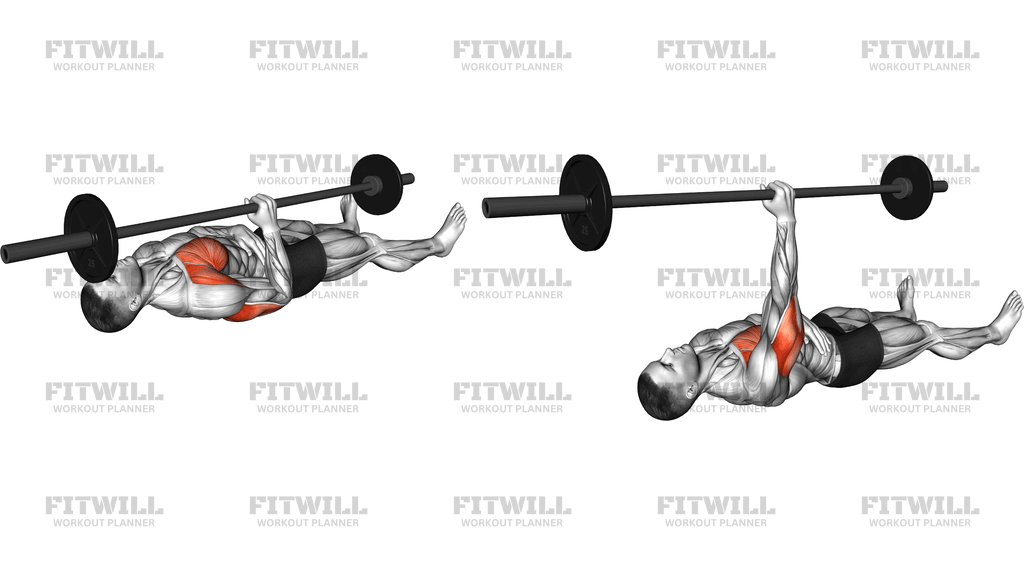
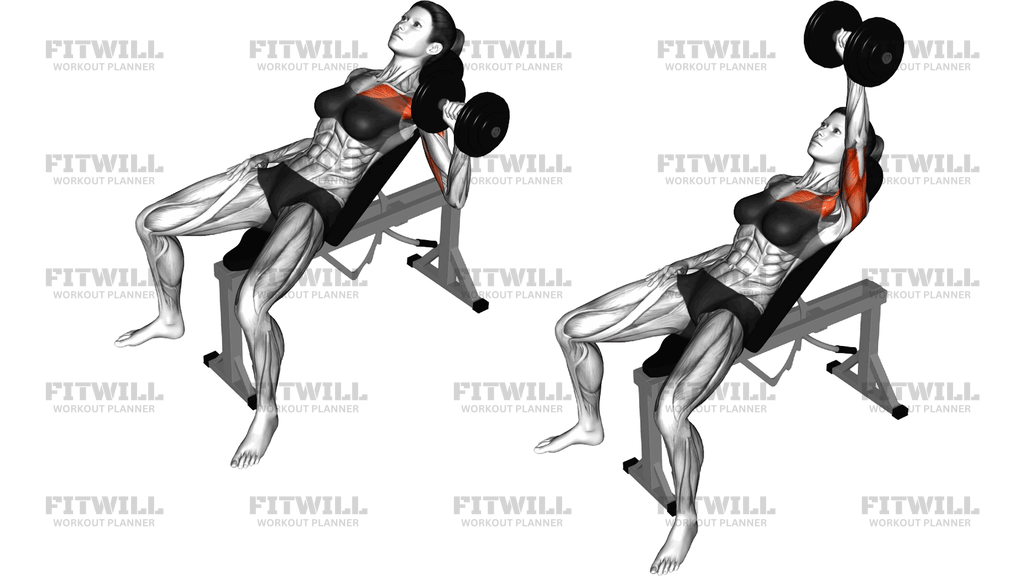
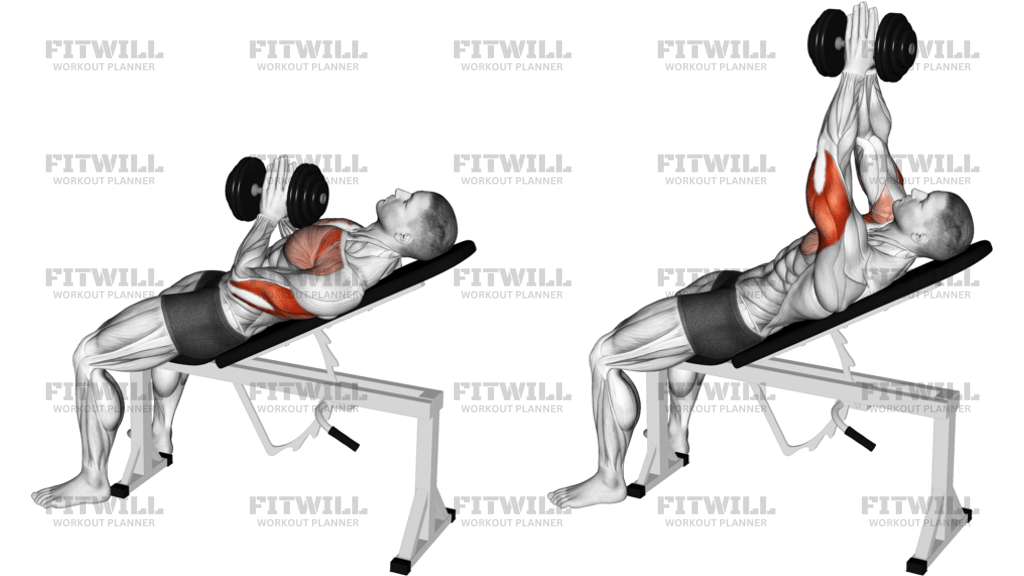
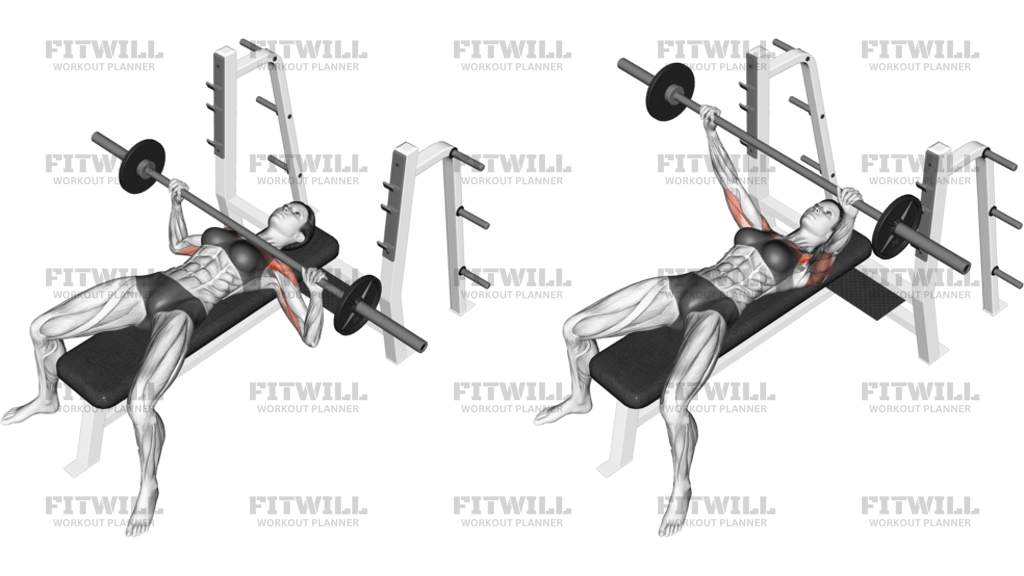
Barbell Bench Press With 1 Board
Barbell Bench Press With 1 Board is a partial-range barbell bench press that uses a one-board pad on the chest to shorten the lowering phase and focus the press on the stronger middle and top portion of the lift. The board gives you a fixed touch point, so every rep starts from the same height and you can overload the press without dropping into the deepest stretch of a full bench press.
That shorter range makes the exercise useful for lifters who want to build lockout strength, reinforce bar path, or reduce how far the shoulder travels at the bottom of the rep. Chest, front shoulders, and triceps all work, but the triceps usually feel the biggest demand because they have to drive the bar through the last half of the press. It is also a practical accessory for powerlifters who want more pressing volume without repeating full-range bench work every session.
The setup matters more than the load. Lie on a flat bench in a rack, set the board on your chest, and keep your shoulder blades pulled back and down so your upper back stays tight against the pad. Plant your feet firmly, stack your wrists over your forearms, and take the bar out with straight arms before lowering it under control to the board. The bar should touch the board softly, not crash into it, and the board should stay centered so the touch point does not drift rep to rep.
Press the bar up with a smooth leg drive and a slight back-and-up path toward the rack, keeping the elbows from flaring out early. The board limits how deep you go, so do not turn the set into a bounce off the pad or a short, sloppy half-rep. Stop the set if the bar starts shifting on the board, your shoulders lose position, or the bar path turns into a grind that forces the hips or chest to jump off the bench. Use spotter arms or a spotter when the load gets serious, because a shorter range can tempt lifters to use more weight than they can control.
Fitwill
Log Workouts, Track Progress & Build Strength.
Achieve more with Fitwill: explore over 9600 exercises with images and videos, access built-in and custom workouts, perfect for both gym and home sessions, and see real results.
Start your journey. Download today!




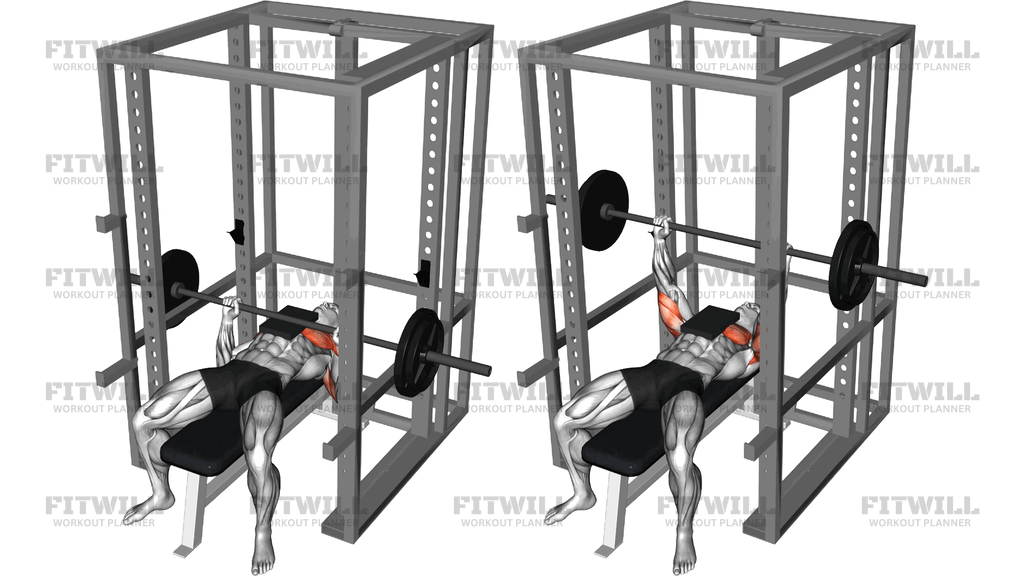
Instructions
- Place a flat bench inside a rack, set a one-board pad on your chest, and lie back with your eyes under the bar.
- Plant both feet on the floor, squeeze your shoulder blades back and down, and keep your upper back tight against the bench.
- Grip the bar slightly wider than shoulder width with wrists stacked over your forearms, then unrack it to straight arms.
- Lower the bar in a controlled line toward the board, letting the elbows bend while keeping them slightly tucked.
- Touch the board softly and keep the bar still for a brief pause without bouncing.
- Press the bar up and slightly back toward the rack, driving through the triceps and chest at the same time.
- Keep your shoulders pinned to the bench as the bar passes the sticking point and finish with locked elbows.
- Re-rack the bar under control once the rep is complete and reset your upper back before the next repetition.
Tips & Tricks
- Keep the board centered on the same spot every rep so your touch point does not drift toward the lower ribs or upper chest.
- Do not bounce off the board; a soft pause is what turns this into a strength builder instead of a shortened regular bench press.
- A slightly narrower grip usually helps the bar finish cleaner because the triceps have to do more of the lockout work.
- If your elbows flare hard off the chest, lower the load and keep the forearms closer to vertical on the way down.
- Use a handoff or spotter arms when the bar gets heavy; the shorter range often encourages bigger loads than your setup can handle.
- Keep your feet planted and your glutes on the bench so the press stays anchored instead of turning into a hip bridge.
- Breathe in before the descent, hold your brace on the board, and exhale as you drive through the sticking point.
- Choose a board height that matches the training goal: one board for a moderate partial press, not a crash pad for bouncing reps.
Frequently Asked Questions
What muscles does Barbell Bench Press With 1 Board train?
It works the chest, triceps, and front shoulders, with the triceps usually taking more of the load than in a full-range bench press.
Why use a one-board setup instead of a regular bench press?
The board shortens the bottom range and gives you a consistent touch point, which is useful for overload work and for building strength through the middle and top of the press.
Should the bar touch my chest on Barbell Bench Press With 1 Board?
No. The bar should touch the board lightly and pause there without sinking or bouncing.
Is Barbell Bench Press With 1 Board good for lockout strength?
Yes. Because the bottom range is reduced, the triceps have to work harder through the stronger finish of the rep.
Where should the board sit on my torso?
Center it on the chest where the bar will land consistently, usually around the lower sternum area.
Can beginners do Barbell Bench Press With 1 Board?
Yes, if they already know how to set the shoulders and keep the bar under control. Start light so the shorter range does not hide sloppy setup.
What is the most common mistake with this variation?
Bouncing the bar off the board or letting the elbows flare and the shoulders roll forward as the load gets heavy.
How is Barbell Bench Press With 1 Board different from a full bench press?
It reduces how deep the bar travels, so it shifts stress away from the bottom stretch and toward the midrange and lockout.