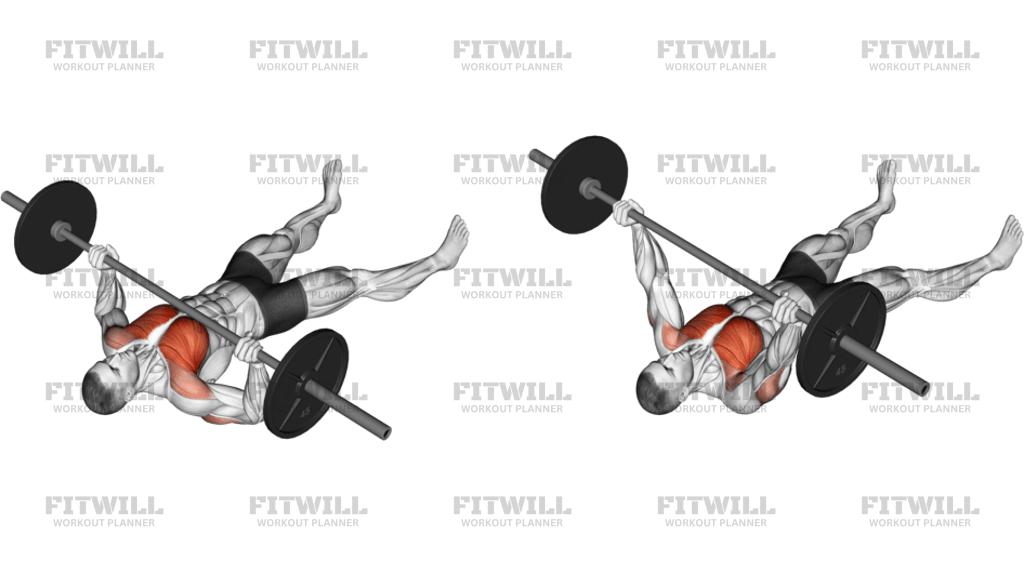
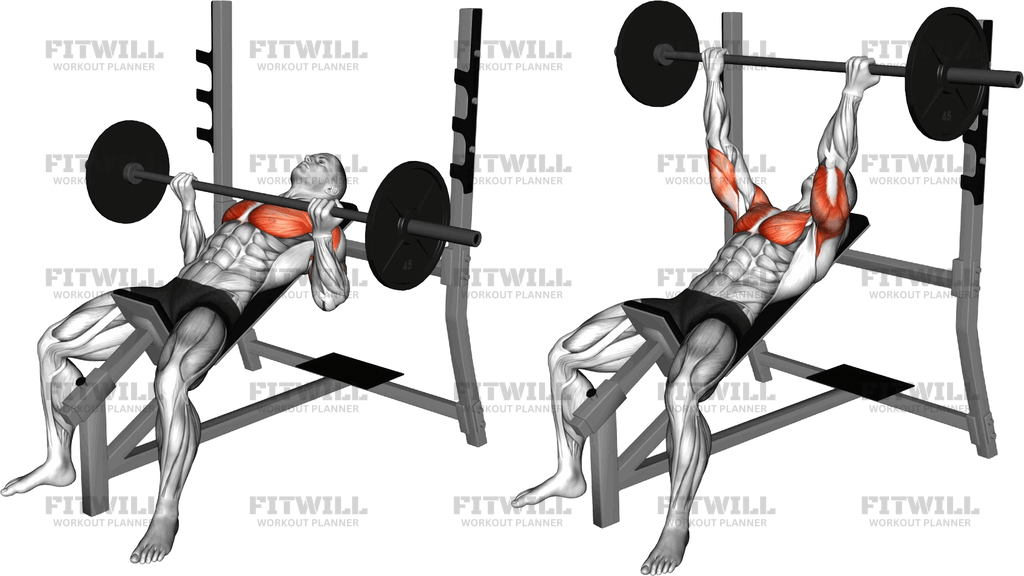
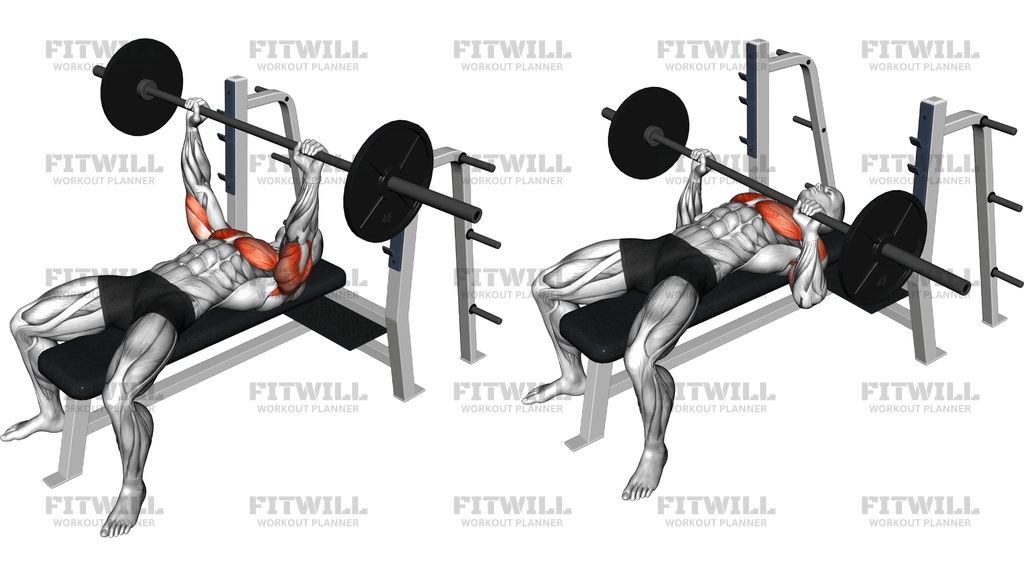
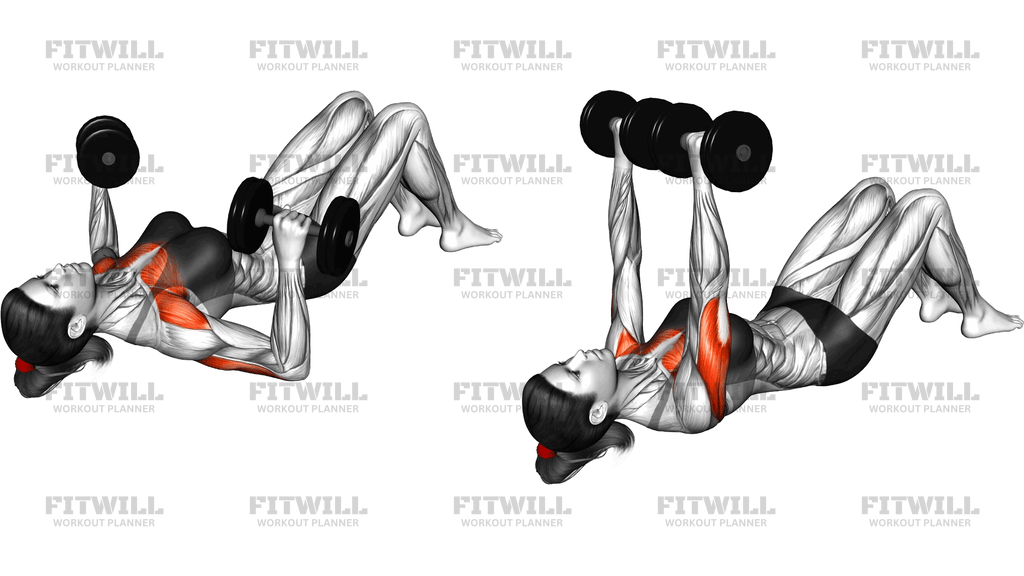
Chest Bench Press Arms WRONG-RIGHT
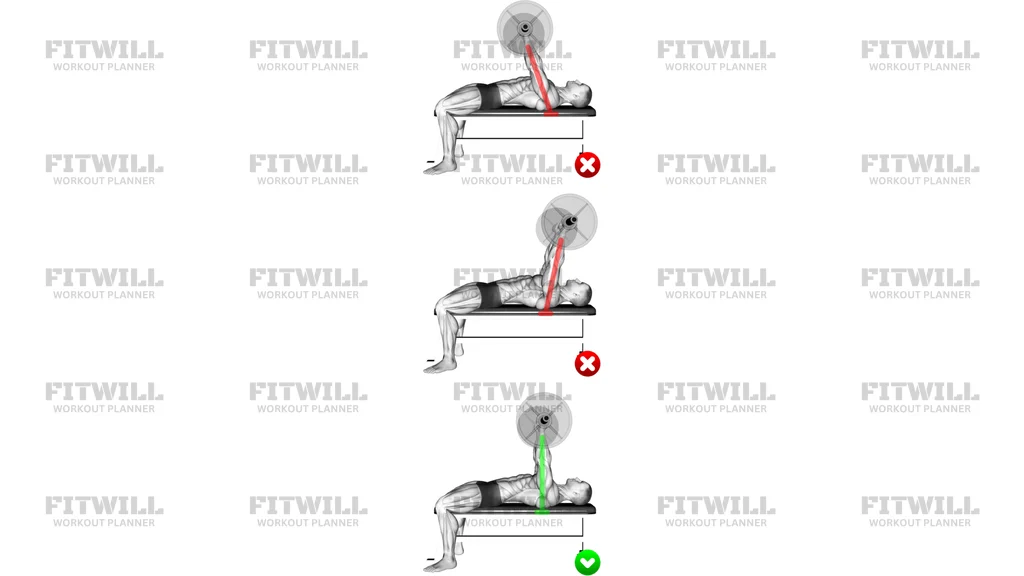
The barbell bench press is a horizontal pressing exercise that trains the chest, shoulders, and triceps while also demanding a strong upper-back position on the bench. In this variation, the lifter lies face up on a flat bench and presses the bar from the chest to straight arms, so the setup matters as much as the press itself. A good rep starts with the shoulders pinned back and down, the feet planted, and the bar unracked over the shoulder joints rather than drifting forward toward the face.
The main training effect comes from the pectoralis major, with the anterior deltoids and triceps brachii sharing the work as the bar leaves the chest and finishes near lockout. Because the movement is fixed by the bar path, small changes in wrist position, elbow angle, and touch point can change how stable and strong the press feels. Lowering the bar to the mid or lower chest with controlled forearm alignment usually gives the most efficient path for most lifters.
This exercise is a staple for building pressing strength and upper-body muscle, but it rewards patience more than speed. A controlled descent, a brief touch on the chest, and a firm press back to the start keep tension on the target muscles and reduce shoulder drift. Using leg drive is appropriate when it supports body tension, but the hips should stay on the bench and the bar should move as one smooth line, not bounce off the chest.
The bench press also exposes common errors quickly: flared elbows, loose wrists, shoulder shrugging, uneven grip width, and letting the bar drift toward the stomach or face. Those mistakes usually reduce force output and increase stress on the front of the shoulder. For safer, stronger reps, keep the chest high, the scapulae retracted, the bar over the wrist and elbow stack, and the descent under control before pressing forcefully back to full elbow extension.
[ Workout Log & Planner ]
Put your next workout in Fitwill
Keep your plan and training log ready when you are.


Instructions
- Lie on a flat bench with your eyes under the bar, feet planted firmly on the floor, and a grip slightly wider than shoulder width.
- Pull your shoulders back and down into the bench, create a small upper-back arch, and keep your glutes and upper back in contact with the pad.
- Unrack the bar to a position directly over your shoulder joints with straight wrists and stacked forearms.
- Lower the bar in a controlled path toward the mid to lower chest, keeping the elbows angled slightly below the bar rather than flared hard out to the sides.
- Lightly touch the chest or sternum area without bouncing, and keep the bar path consistent from rep to rep.
- Press the bar up and slightly back toward the starting position while keeping the chest lifted and the shoulders packed.
- Exhale through the press and inhale on the way down, keeping the torso braced so the ribcage does not collapse.
- Finish each rep with the bar over the shoulder line, then re-rack it under control when the set is complete.
Tips & Tricks
- Keep the wrists stacked over the elbows so the bar does not fold your hands back at the bottom.
- Touch the same point on the chest every rep; inconsistent touch points usually mean the bar path is drifting.
- Keep the shoulder blades pinned to the bench instead of reaching forward at the bottom, or the front of the shoulder will take over.
- Use a grip width that lets the forearms stay close to vertical near the chest; too narrow or too wide changes the press mechanics quickly.
- Lower the bar under control for about two to three seconds if you want more chest tension and less bounce.
- Drive the feet into the floor to create whole-body tension, but keep the hips on the bench.
- Stop the set when the bar starts turning into a shoulder press or when the descent becomes shaky.
- Use a spotter or safeties for heavier work so you can press with confidence and keep the bar path clean.
Frequently Asked Questions
What does the barbell bench press train most?
It primarily trains the chest, especially the pectoralis major, with strong help from the triceps and front shoulders.
Where should the bar touch on my chest?
For most lifters, the most stable touch point is the mid to lower chest, not high on the collarbone and not down on the stomach.
Should my elbows flare out wide during the press?
No. Keep them angled slightly below the bar path so the shoulders stay packed and the press feels more efficient.
Do I need to arch my back on the bench?
A small upper-back arch is normal and helpful, but the lift should stay controlled with the glutes and upper back anchored to the bench.
Is this exercise suitable for beginners?
Yes, if the load is light enough to keep the bar path, wrist position, and chest touch consistent.
Why does the bar need to stay over my shoulder joints?
Stacking the bar over the shoulder line helps the force go straight through the arms instead of drifting forward and stressing the shoulders.
What is a common mistake on the bench press?
Letting the bar bounce off the chest or letting the shoulders roll forward at the bottom are two of the most common form breakdowns.
How should I breathe while bench pressing?
Inhale and brace on the way down, then exhale as you press the bar back up.