Band Alternate Low Chest Fly
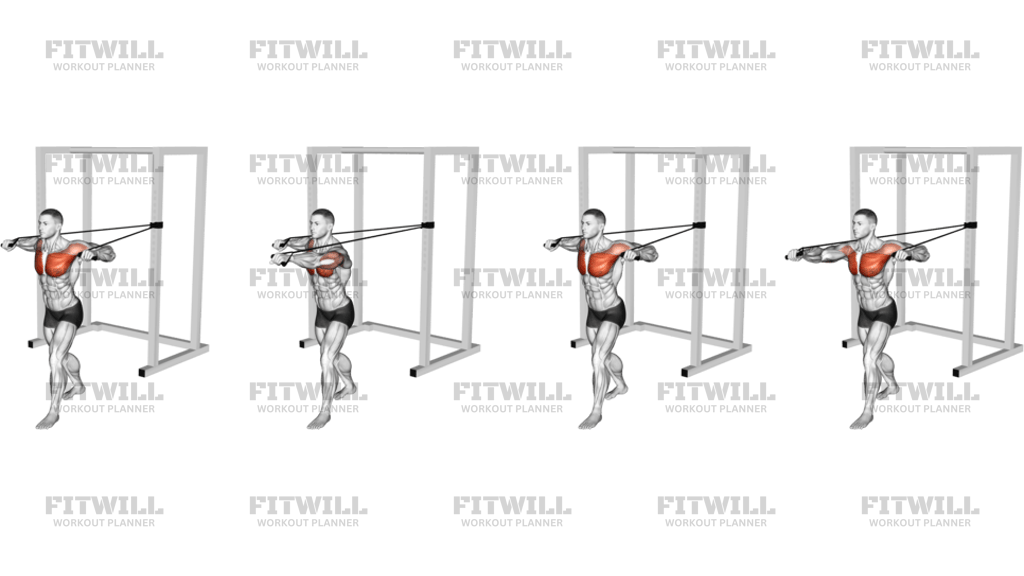
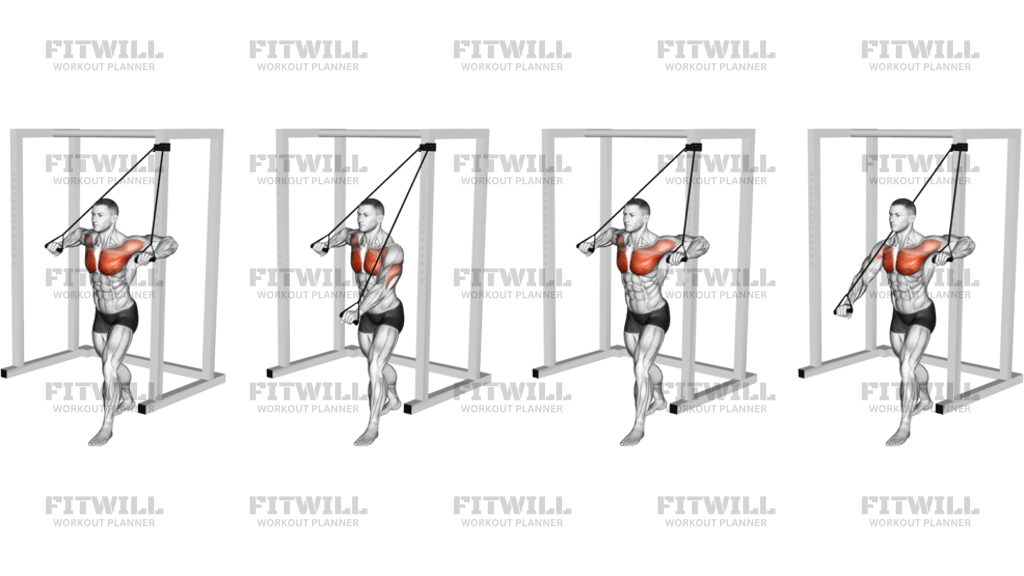
Band Alternate Low Chest Fly is a standing band fly variation that alternates one arm at a time to load the chest through an arcing, across-the-body path. The band keeps tension on the pecs as the hand moves in toward the lower chest line, which makes the exercise useful for building chest control without needing heavy weights or a long setup.
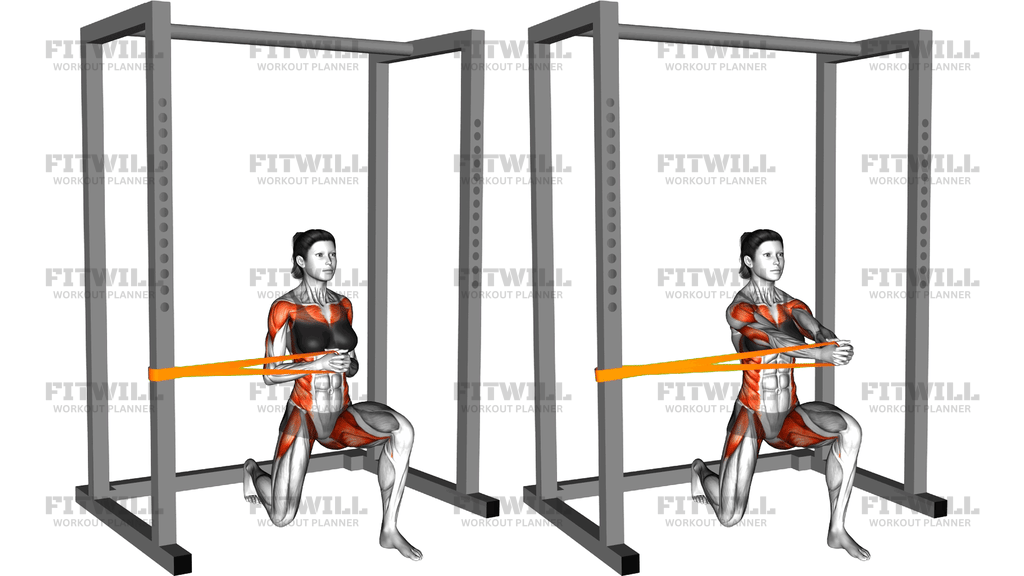
The image shows a band anchored behind the lifter and slightly above the working line of the arms, with a staggered stance used to keep the torso steady. That setup matters because the exercise is not about swinging the shoulders or twisting the rib cage to create range. It is about keeping the sternum quiet, the shoulders down, and the working arm moving through a smooth fly pattern while the opposite arm stays controlled.
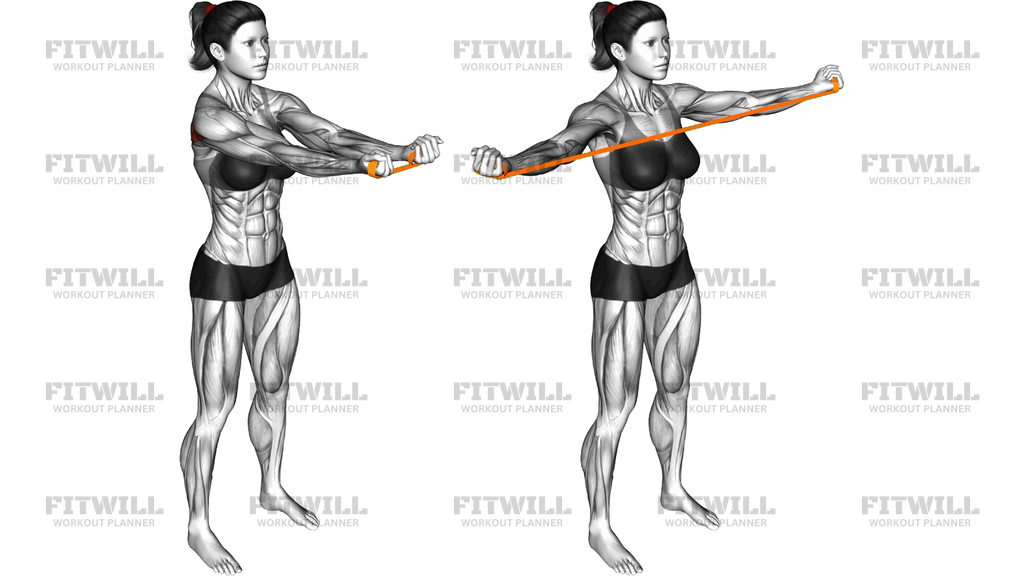
This movement usually feels strongest when the arm sweeps in a shallow arc from open to closed, with a soft elbow bend and the hand finishing around the lower-to-mid chest. The band should stay under tension on the way back as well, so the return phase is just as deliberate as the squeeze. If the shoulder starts to roll forward, the ribs flare, or the torso rocks, the band is too heavy or the range is too big.
Use Band Alternate Low Chest Fly as accessory chest work after presses, as a lighter hypertrophy movement, or as a band-based option when you want joint-friendly tension and a clear mind-muscle connection. It is most effective when each rep looks the same from the first side to the last: stable stance, quiet trunk, controlled arc, brief chest squeeze, and a slow return to the open position.
[ Workout Log & Planner ]
Put your next workout in Fitwill
Keep your plan and training log ready when you are.


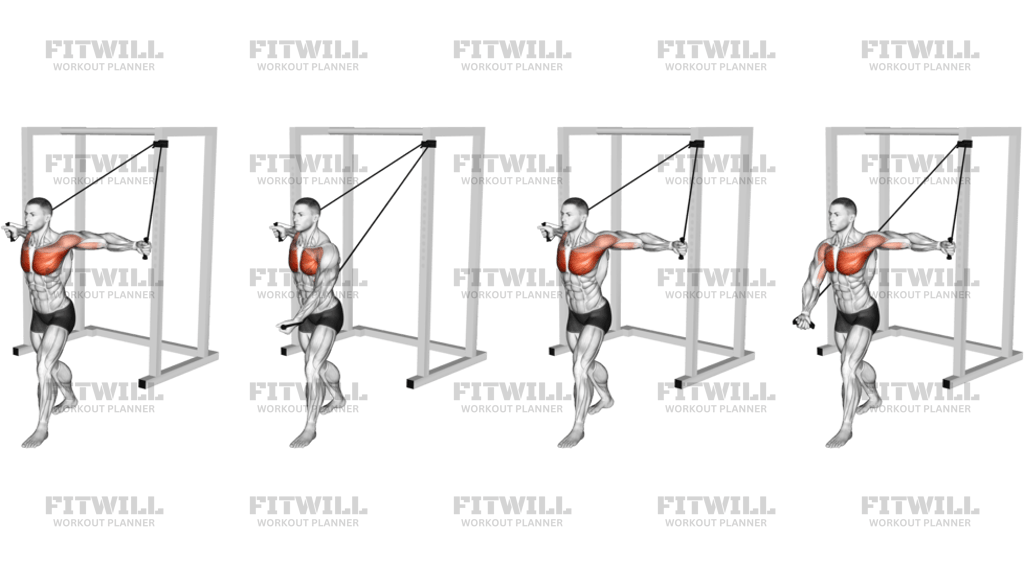
Instructions
- Face away from a high band anchor and hold the handles with light tension already in the band.
- Step into a staggered stance and lean slightly forward from the ankles and hips without rounding your back.
- Keep your shoulders down, ribs stacked, and elbows softly bent before you start the rep.
- Begin with one arm open and the other slightly lower in front of the body, matching the alternating setup.
- Sweep the working hand in a smooth arc across the body and slightly upward toward the lower chest line.
- Squeeze the chest briefly at the finish without shrugging or twisting the torso.
- Lower the working arm slowly until the band is stretched but the shoulder still feels packed and controlled.
- Alternate sides on the next rep and keep the nonworking arm steady instead of letting it float or drift.
- Finish the set by guiding both handles back to the start and stepping out of the band under control.
Tips & Tricks
- Anchor the band high enough that the pull line comes across the chest instead of straight out from the shoulder.
- Use a split stance so your hips do not swing toward the working arm on every rep.
- Keep the working elbow softly bent; turning this into a straight-arm press shifts the load away from the chest.
- Think of the hand finishing near the lower chest, not far past the midline, so the shoulder stays in front of the torso.
- Let the band open your arm back with control, but stop the return before the shoulder rolls too far behind you.
- If the front of the shoulder pinches, shorten the range and reduce the band tension immediately.
- Keep the nonworking arm quiet while the other side moves so the alternating pattern stays clean.
- Exhale as the hand sweeps inward and keep the ribs from flaring as you squeeze.
- Choose a band light enough that the last few reps are still smooth and the torso does not start to bounce.
Frequently Asked Questions
What does Band Alternate Low Chest Fly train most?
It primarily trains the chest, with the front shoulders and arms helping to stabilize the alternating fly motion.
Can beginners perform this exercise?
Yes. Beginners should use a light band, a short controlled range, and a stance that keeps the torso from rotating.
How high should the band anchor be?
A slightly high anchor works best so the band pulls across the lower chest line instead of straight out from the shoulder.
Should my elbow stay bent the whole time?
Yes, keep a soft bend in the elbow. That keeps the movement in a fly pattern instead of turning it into a press or a shoulder swing.
Why is the exercise alternated one arm at a time?
Alternating lets you focus on one side at a time while the other arm stays controlled, which makes it easier to keep the torso from twisting.
Where should I feel the working side?
You should feel the chest doing most of the work, with some front-shoulder and arm tension helping stabilize the handle.
What is the most common mistake with the handles?
Letting the handle travel too far behind the body is the big one, because that usually means the shoulder is taking over and the band is too aggressive.
Is this a good substitute for dumbbell flyes?
Yes, if you want continuous band tension and a joint-friendlier option. The path is a little shorter than a dumbbell fly, but the chest still gets strong squeeze and control work.