Resistance Band Lying Bent Knee Raise
Resistance Band Lying Bent Knee Raise is a floor-based core exercise done on your back with the band anchored so it pulls from the foot end of the movement. As you bend the knees and draw them toward the torso, the band adds tension that makes the abdominal brace and hip flexion work together. The goal is not to kick the legs or chase range, but to keep the pelvis controlled while the knees travel in and out smoothly.
This movement is especially useful when you want a low-load drill that still asks the trunk to resist arching and the hips to fold cleanly. The exercise hits the lower abdominal wall, deep core, and hip flexors, while the shoulders and upper back simply stay relaxed on the floor. Because the band changes the pull on the legs, setup matters more than speed: if the band sits poorly on the feet or the anchor is uneven, the rep quickly turns sloppy.
Set the band securely around both arches or midfeet and lie flat with your head, shoulders, and hips heavy on the mat. Start with the legs long enough to feel light tension, keep the ribs down, and gently tuck the pelvis so the low back does not flare off the floor. From there, draw the knees toward the chest with a controlled curl, then return the legs to the start without letting the band yank you open.
In training, this works well as accessory core work, a warm-up for abdominal bracing, or a finisher when you want controlled tension without spinal loading. It usually responds better to moderate or higher reps with strict tempo than to heavy resistance. A lighter band that lets you keep the pelvis quiet is more valuable than a stronger band that forces the neck, hips, or low back to compensate.
Treat each rep like a precision drill. Match the same setup, breath, and path every time, and stop the set as soon as the low back starts to arch or the band begins to slip. That keeps the exercise honest and makes it much better for core control, body awareness, and safe progression over time.
[ Workout Log & Planner ]
Put your next workout in Fitwill
Keep your plan and training log ready when you are.


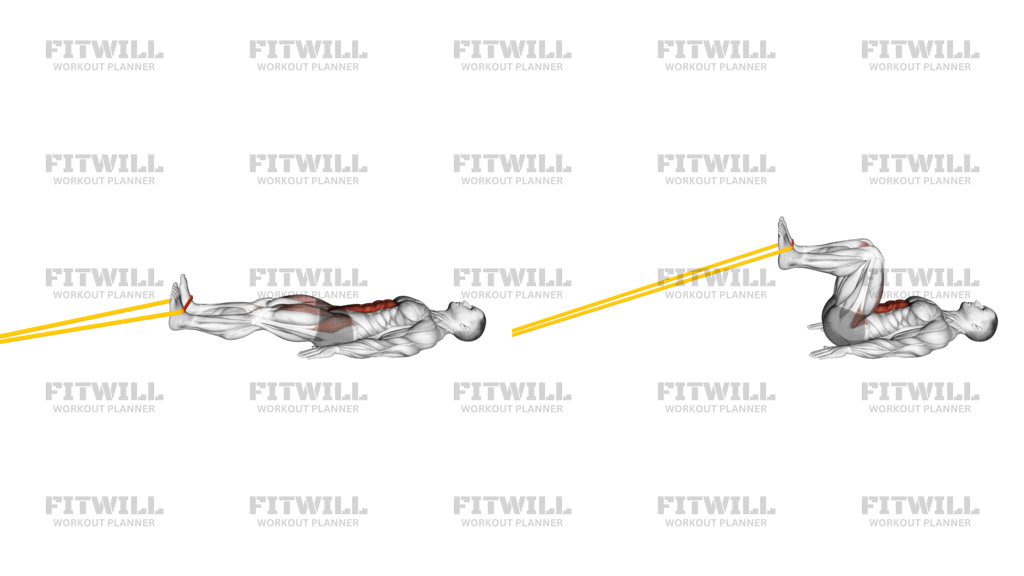
Instructions
- Lie on your back on a mat and loop the band around both arches or the midfoot, with the anchor set low at the foot end of the movement.
- Extend your legs long enough to create light band tension, then place your arms by your sides for balance.
- Keep your head, shoulders, and hips relaxed against the floor and avoid shrugging your neck.
- Brace your abs and gently tuck your pelvis so your low back stays heavy instead of arching off the mat.
- Exhale as you bend the knees and draw them toward your chest, keeping both legs moving together.
- Let the knees travel in under control until the thighs are close to your torso and the band is still stable on your feet.
- Pause briefly at the top while keeping the ribs down and the pelvis from tipping forward.
- Inhale as you extend the legs back out slowly, returning to the start without swinging or losing tension.
- Reset the band and stop the set if the band slips, the neck tightens, or your low back loses contact with the floor.
Tips & Tricks
- Keep the band on the arches or midfoot instead of the toes so it does not slide as the knees bend.
- Use a light enough band that your low back can stay quiet; if the hips pop up, the resistance is too high.
- Think about curling the pelvis slightly toward the ribs, not just lifting the feet higher.
- Keep both knees tracking together so one leg does not drift outward and twist the pelvis.
- Move slowly on the way back down so the band does not snap your legs open.
- If you feel the exercise mostly in the hip flexors, shorten the range and re-brace before the next rep.
- Keep your chin neutral and your shoulders soft; the effort should stay in the torso and hips, not the neck.
- A small pause at the top makes the core work harder and reduces momentum.
- If the anchor pulls unevenly, reset it before the next rep so both sides feel the same tension.
Frequently Asked Questions
What muscles does the Resistance Band Lying Bent Knee Raise work?
It mainly challenges the lower abs, deep core, and hip flexors, with the band adding tension against the leg curl.
Where should the band sit for this exercise?
The band should sit securely around the arches or midfoot so it stays in place as the knees bend and extend.
Can beginners do this movement?
Yes. Beginners should use a light band and keep the range small enough to keep the low back flat and the neck relaxed.
Why does my low back arch during the raise?
Usually the band is too heavy, the legs are going too low, or the pelvis is losing its tuck. Shorten the range and reduce resistance.
Should my knees stay bent the whole time?
Keep a consistent soft bend as you bring the legs in and extend them back out, instead of locking the knees or snapping them straight.
How is this different from a straight-leg raise?
The bent-knee version shortens the lever and shifts the feel toward controlled abdominal bracing and hip flexion instead of a long lever leg lift.
What are common mistakes with the band setup?
The most common problems are putting the band on the toes, letting it slip, or anchoring it unevenly so one side pulls harder than the other.
Can I replace this with a bodyweight version?
Yes. A reverse crunch or a lying knee tuck without the band is the closest substitute if you want the same floor-based pattern with less tension.