Band Standard Biceps Curl
Band Standard Biceps Curl is a standing elbow-flexion exercise that uses a resistance band anchored low in front of the body. It is a simple but very effective way to load the biceps through the full curl pattern while keeping tension on the muscle during both the lifting and lowering phases. Because the band gets harder as it stretches, this variation is useful when you want smooth resistance without the abrupt feel of a free weight.
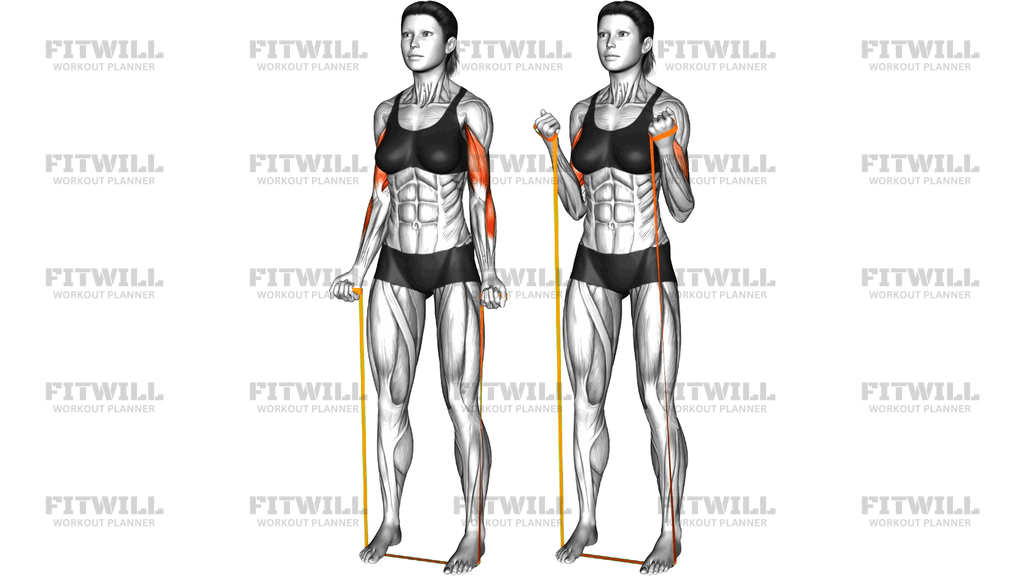
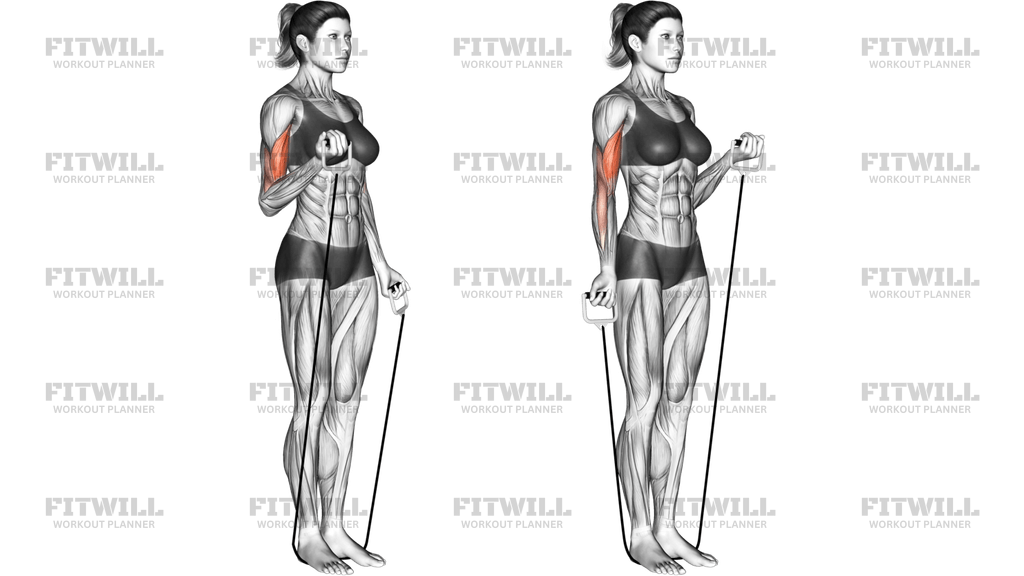
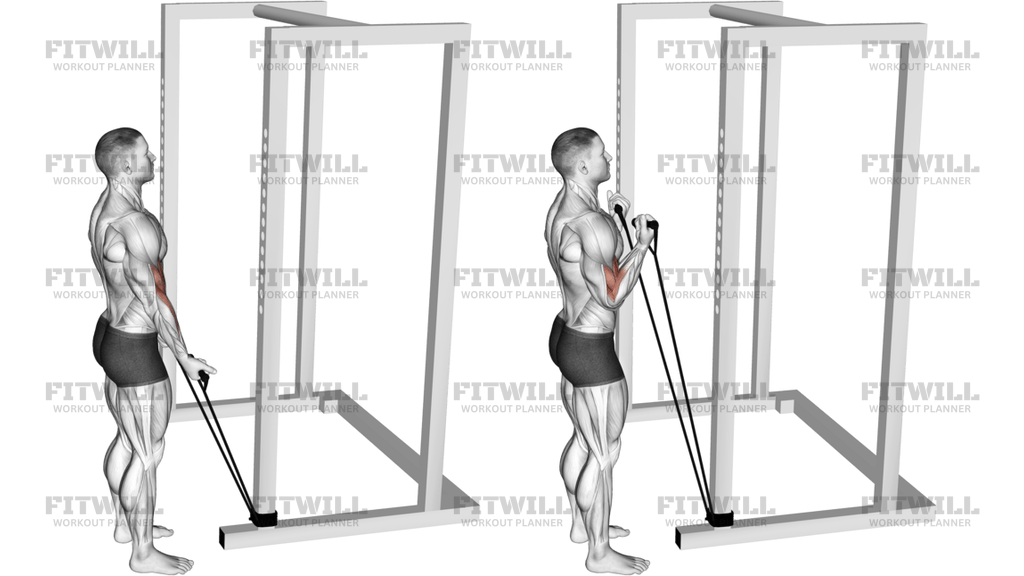
The main target is the biceps, with the brachialis, brachioradialis, and forearm flexors helping to finish the curl and stabilize the wrist and elbow. In the image, the lifter stands tall facing the anchor with the elbows close to the sides and the hands moving from a long-arm start position up toward the shoulders. That straight-ahead setup matters because it lets the biceps do the work instead of the shoulders, low back, or body momentum.
A good curl starts with tension already in the band. Step back far enough that the handles pull lightly on the arms at the bottom, then keep the ribs stacked over the pelvis, the chest relaxed, and the wrists straight. From there, curl the hands upward by bending the elbows while keeping the upper arms mostly fixed. The forearms should travel smoothly toward vertical, and the shoulders should stay down rather than rolling forward or shrugging.
At the top, squeeze the biceps briefly without jamming the elbows forward. Lower the band under control until the arms are almost straight and the band still has useful tension. That controlled return is part of the exercise, not a reset. If the anchor is too close or the band is too light, the bottom position will feel loose; if that happens, step farther back or use a harder band so the rep stays honest.
This exercise fits well in arm training, upper-body warmups, home workouts, and higher-rep accessory work. It is also a good option when you want to train the elbows with less joint impact than heavy free-weight curling. Keep the movement strict, use a load that lets you control every rep, and stop the set when the torso starts swinging or the wrists begin to bend back.
[ Workout Log & Planner ]
Put your next workout in Fitwill
Keep your plan and training log ready when you are.


Instructions
- Attach the band to a low, stable anchor in front of you and hold the handles with a palms-forward grip.
- Step back until the band has light tension at the bottom, then stand tall with feet about hip-width apart.
- Keep your elbows close to your sides and let your hands hang in front of your thighs with straight wrists.
- Set your shoulders down and brace lightly so your torso stays stacked over your hips.
- Curl the handles upward by bending the elbows only, keeping the upper arms mostly still.
- Bring the hands toward shoulder height while keeping the forearms moving smoothly and the shoulders relaxed.
- Pause briefly at the top and squeeze the biceps without leaning back or shrugging.
- Lower the handles slowly until the arms are nearly straight and the band still has tension.
- Reset your posture, inhale on the lowering phase, and repeat for the planned reps.
Tips & Tricks
- Start each rep with the band already under tension so the bottom position does not turn into a rest.
- Keep your wrists stacked over your forearms; bending them back shifts stress away from the biceps.
- If your elbows drift forward a little, that is fine, but do not let the upper arms swing away from your ribs.
- Step farther from the anchor for more tension, or closer for a cleaner setup if the band feels too jumpy.
- Use a slower lowering phase to keep the band loaded all the way back to the start.
- Keep your chest quiet and resist the urge to lean back as the handles get harder near the top.
- Choose a band that lets you finish the set without shrugging or shortening the range of motion.
- If the handles tug your shoulders forward, lighten the band and set the shoulder blades down before you curl.
Frequently Asked Questions
What does the band curl train most?
It primarily trains the biceps through elbow flexion, with the brachialis, brachioradialis, and forearm flexors helping.
Where should the band be anchored?
Anchor it low in front of you so the handles pull from below while you face the attachment point.
Should my elbows move during the curl?
Keep them close to your sides and mostly still. A small amount of natural drift is fine, but the upper arms should not swing back and forth.
Why is the band curl useful if I already do dumbbell curls?
The band keeps tension on the biceps through the whole rep and can be easier to control when you want higher-rep accessory work.
Can beginners use this exercise?
Yes. It is beginner-friendly if you start with light band tension and keep the torso from leaning back.
What if I feel it in my shoulders instead of my arms?
Step a little closer to the anchor, set the shoulders down, and make sure the movement is coming from elbow flexion rather than a front-delt lift.
How should I finish each rep?
Lower the handles under control until the elbows are almost straight, then keep tension on the band before starting the next curl.
What is the most common mistake with this curl?
Leaning back and using body swing to move the handles instead of letting the biceps do the work.