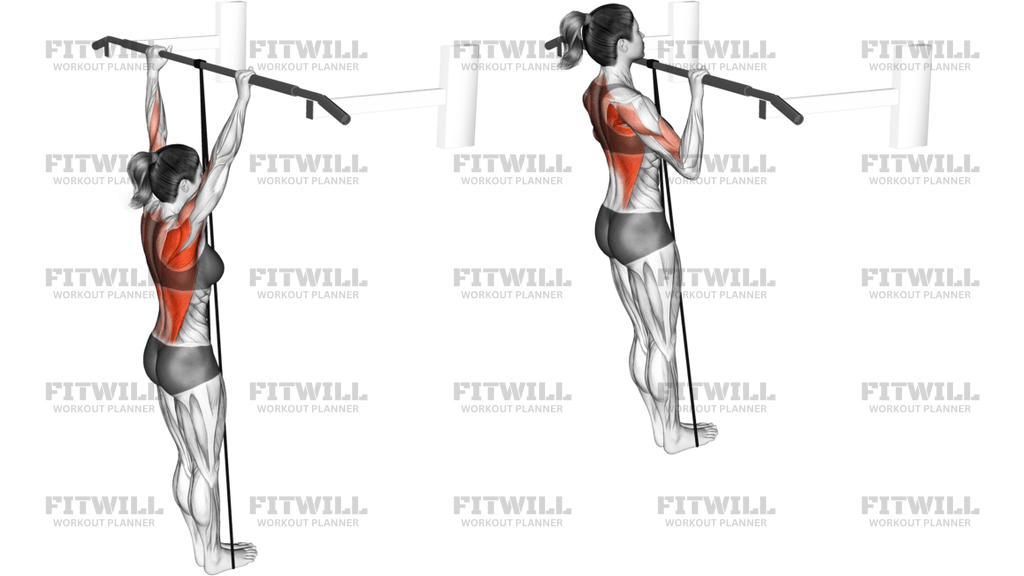
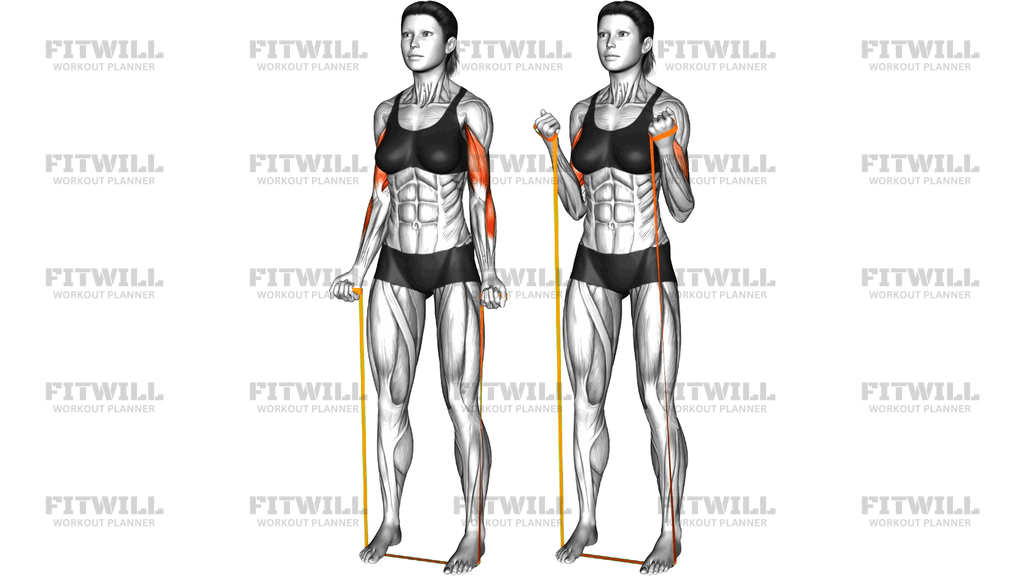
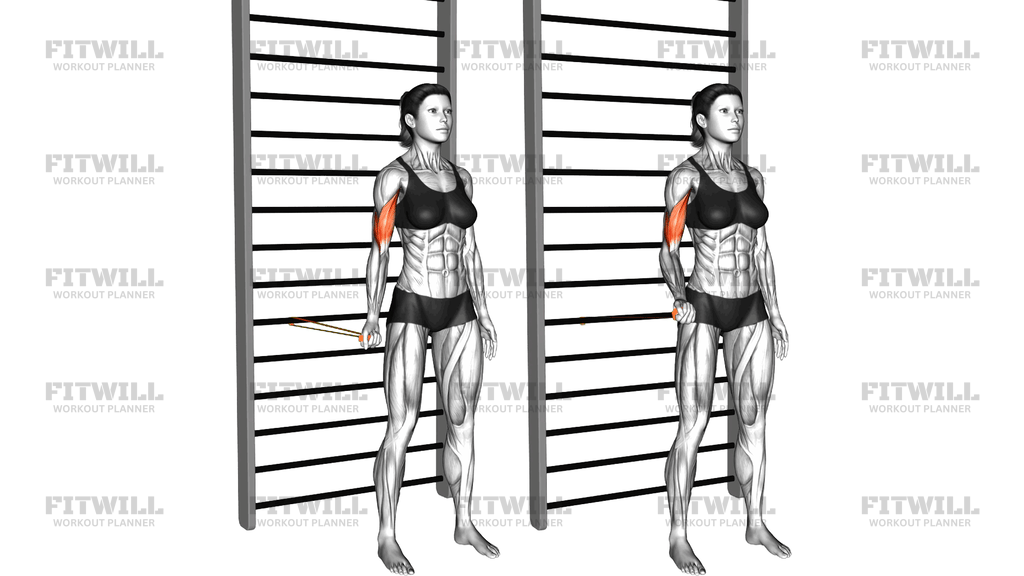
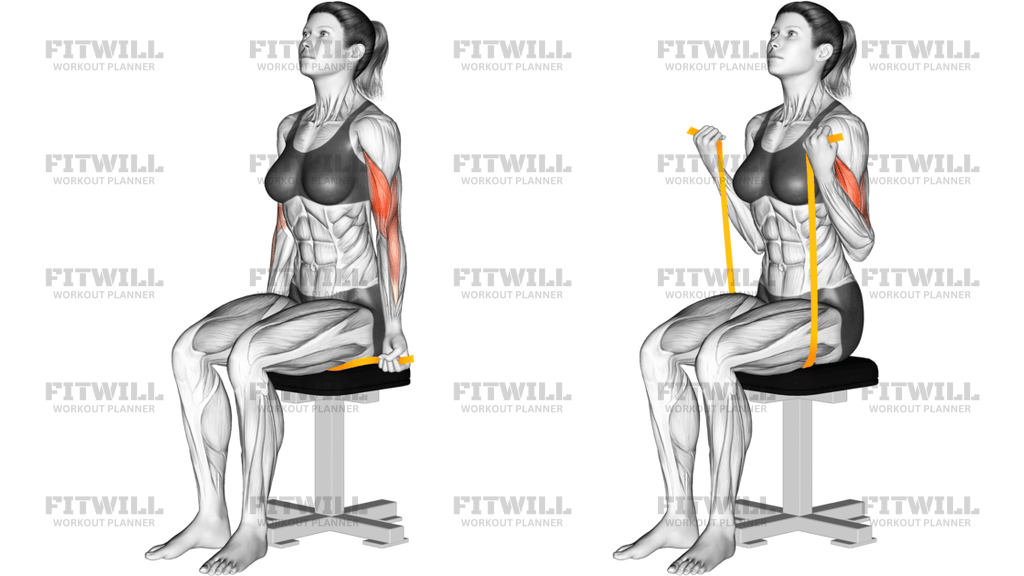
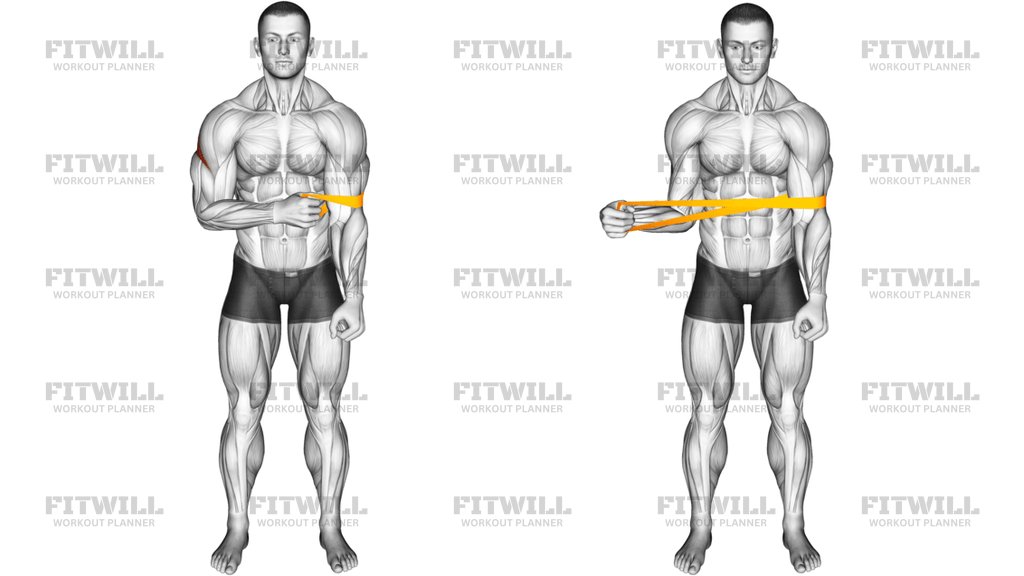
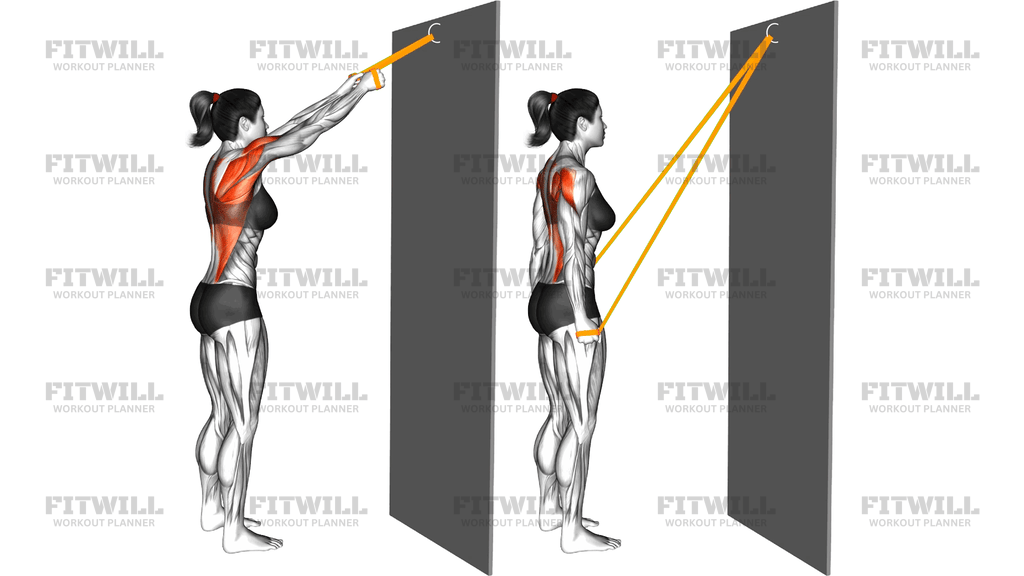
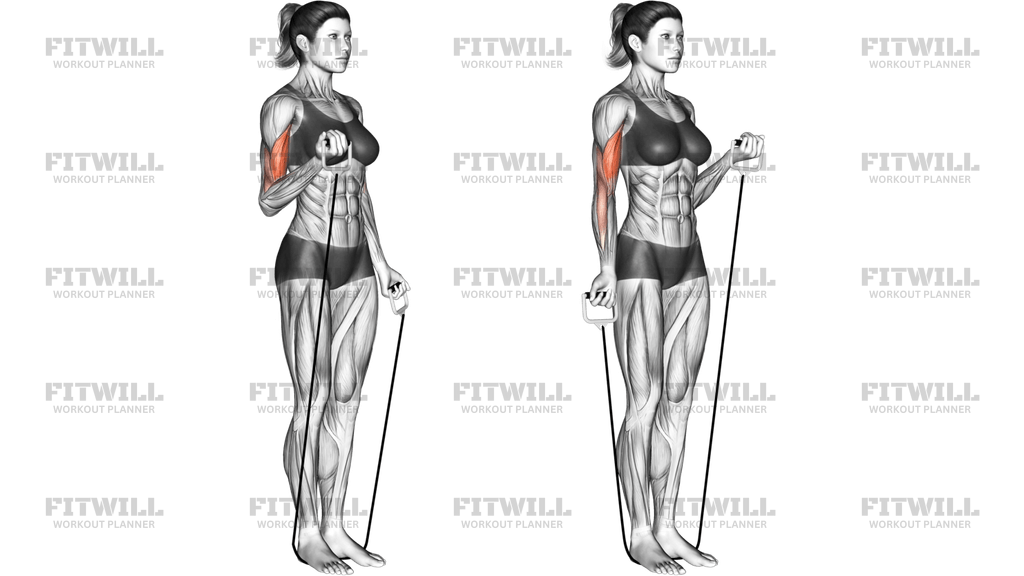
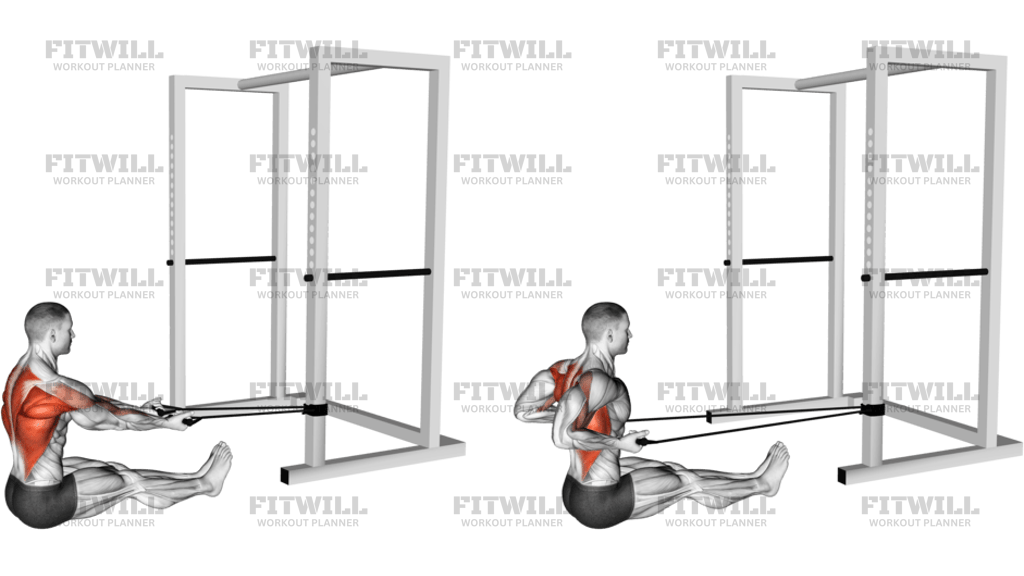
Band Cross Chest Biceps Curl
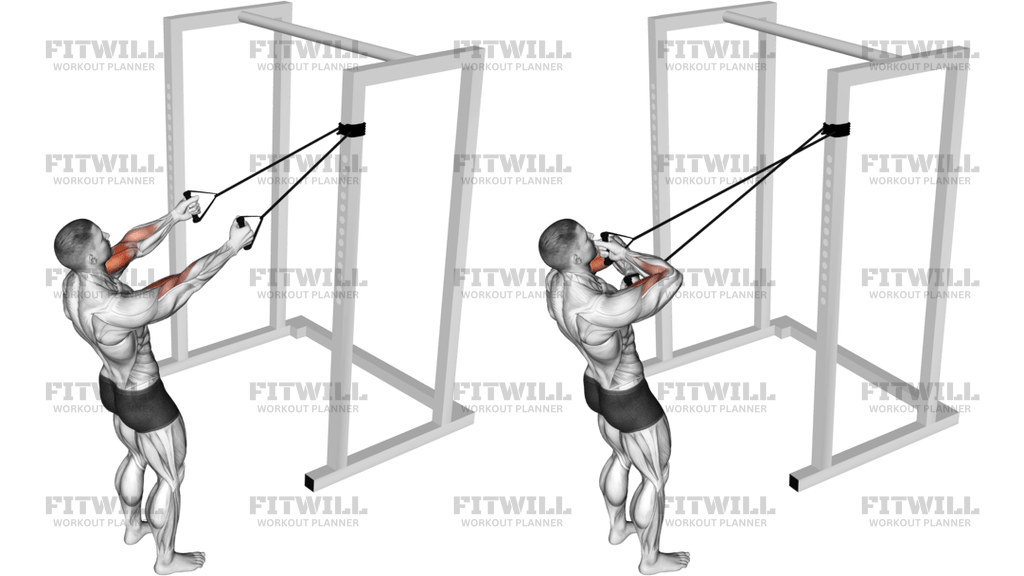
Band Cross Chest Biceps Curl is a standing band curl built around a high anchor behind you and a paired handle grip. The lifter starts with the arms extended in front of the body and curls the handles up toward the upper chest or lower face, keeping the elbows under control as the band tension increases through the top half of the rep. It is a direct biceps-focused pattern, but the crossed line of pull also asks the shoulders, forearms, and upper arms to stay organized so the curl does not turn into a lean-back or shoulder-dominant pull.
The setup matters more here than it does in many dumbbell curls because the band changes tension as you move. Standing too close to the anchor makes the movement loose at the bottom and cramped at the top; standing too far away can pull the shoulders forward and force the wrists to work harder than the biceps. A clean start keeps the hands slightly in front of the shoulders, the wrists neutral, and the chest tall so the band can track across the front of the body instead of dragging the torso out of position.
During each repetition, the elbows should bend first and the handles should travel on a smooth arc toward the shoulders. The upper arms stay mostly fixed, the shoulders stay down, and the wrists stay straight while the forearms do the work. At the top, the handles will naturally come close together across the chest line; that is the point to squeeze, not to shrug or thrust the head forward. Lower the handles slowly and keep light tension in the band so the return phase trains the same path instead of collapsing.
This exercise is useful when you want a joint-friendly biceps option with constant resistance, especially in home workouts, warm-up blocks, arm accessories, or higher-rep strength work. It is also a good choice when a dumbbell curl feels too easy near the bottom and too heavy near the top, because the band can keep the muscle working through the entire curl. The tradeoff is that sloppy setup shows up quickly, so form and stance matter as much as load selection.
Use a lighter band if the shoulders roll forward, the elbows drift behind the body, or the lower back starts to arch to finish the curl. If the top position feels cramped, shorten the range slightly or step a little closer to the anchor. If the wrists complain, switch to a cleaner neutral grip and keep the handles in line with the forearms. The best reps look smooth, symmetrical, and controlled from the first pull to the final return.
[ Workout Log & Planner ]
Put your next workout in Fitwill
Keep your plan and training log ready when you are.


Instructions
- Face away from a high anchor point and hold one handle in each hand with a neutral grip, then step forward until the bands are taut and your arms are extended in front of your shoulders.
- Set your feet hip-width or in a slight stagger and stack your ribs over your pelvis so you can curl without leaning back.
- Start with your hands just in front of chest height, your wrists straight, and your elbows slightly in front of your sides.
- Curl both handles upward by bending at the elbows, letting the bands travel across the front of your chest as your forearms rise.
- Keep your upper arms mostly quiet and let the handles come toward the upper chest or lower face instead of yanking the shoulders forward.
- Squeeze the biceps briefly at the top without shrugging, then keep the neck long and the shoulders down.
- Lower the handles slowly on the same path until the elbows are nearly straight and the band still has tension.
- Repeat for the planned reps, exhaling as you curl and inhaling as the handles return.
Tips & Tricks
- Choose a band tension that lets you finish the last rep without leaning your torso backward to help the curl.
- Keep the handles in line with your forearms; if the wrists bend back, the forearms will take over before the biceps do.
- Let the elbows stay slightly forward of the ribs so the curl stays in front of the body instead of turning into a shoulder raise.
- Step farther from the anchor if the top position feels too easy, but do not step so far that the shoulders round forward.
- Slow the lowering phase to keep tension on the biceps as the elbows open back up.
- Stop the rep before the handles crash into the face or shoulders; the top should be controlled, not forced.
- Keep the shoulders down and wide so the traps do not steal the last few inches of the curl.
- If one handle rises faster than the other, reset the stance and match both arms before adding more resistance.
Frequently Asked Questions
What does the Band Cross Chest Biceps Curl train most?
It primarily trains the biceps, with support from the brachialis, brachioradialis, and forearm flexors.
Why do I face away from the anchor on this curl?
Facing away from a high anchor keeps the band pulling from behind and above, which creates the cross-chest line of resistance shown in the exercise.
How far should I stand from the band anchor?
Stand far enough away that the bands are already taut at the start, but close enough that you can finish the curl without the shoulders rounding forward.
Should my palms face up or stay neutral?
The pictured version works well with a neutral or hammer-style grip, which usually keeps the wrists happier and matches the handle position better.
What is the most common mistake with this movement?
Leaning back or letting the elbows drift behind the body usually turns the curl into a bodyweight pull instead of an arm exercise.
Can I do this with one arm at a time?
Yes. A single-arm version can help you match sides more closely, but the two-handle version is useful when you want symmetrical tension.
Is this exercise suitable for beginners?
Yes, as long as the band is light enough that the curl stays strict and the shoulders do not get pulled out of position.
What should I do if the top of the curl feels cramped?
Shorten the range slightly or step a little closer to the anchor so you can finish the rep without jamming the handles into your face or shoulders.