Weighted Straight Leg Toe Touch Crunch
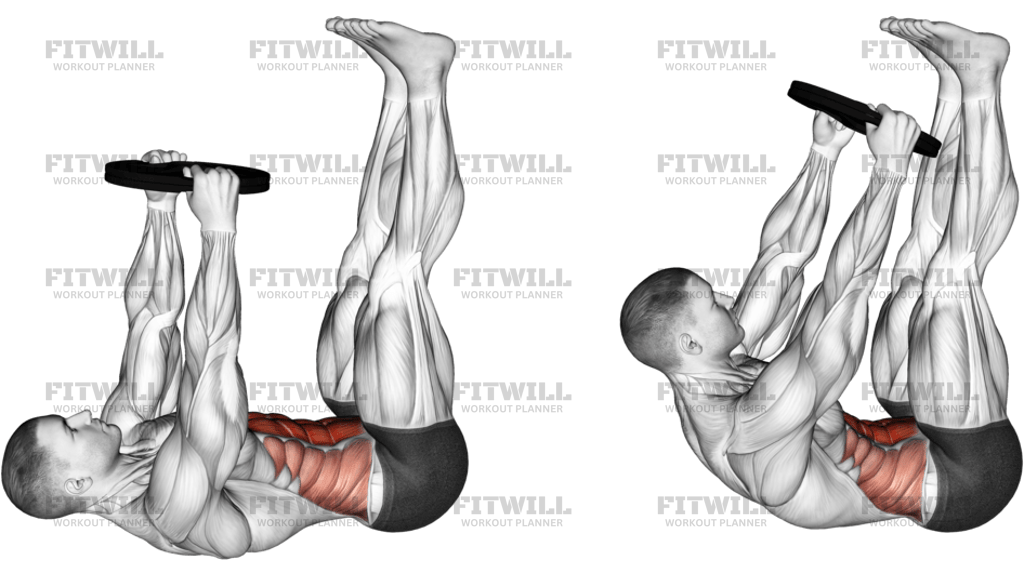
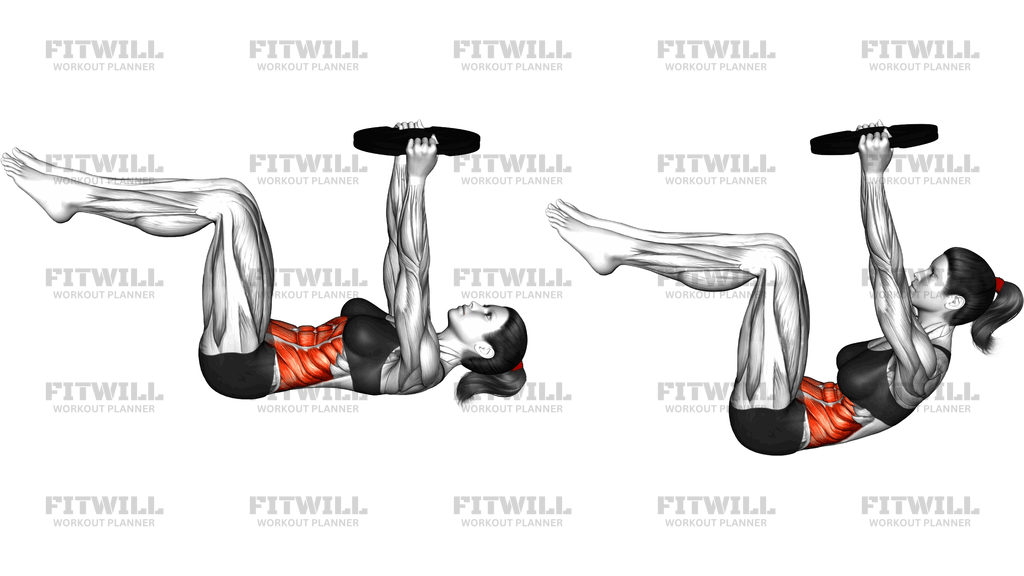
Weighted Straight Leg Toe Touch Crunch is a supine core exercise where you lie on your back with both legs held straight up and a weight held between the hands while you reach toward the feet. The movement is simple, but the position is demanding: the trunk has to curl off the floor while the legs stay stacked and still, so the abs do the work instead of the hips or lower back taking over.
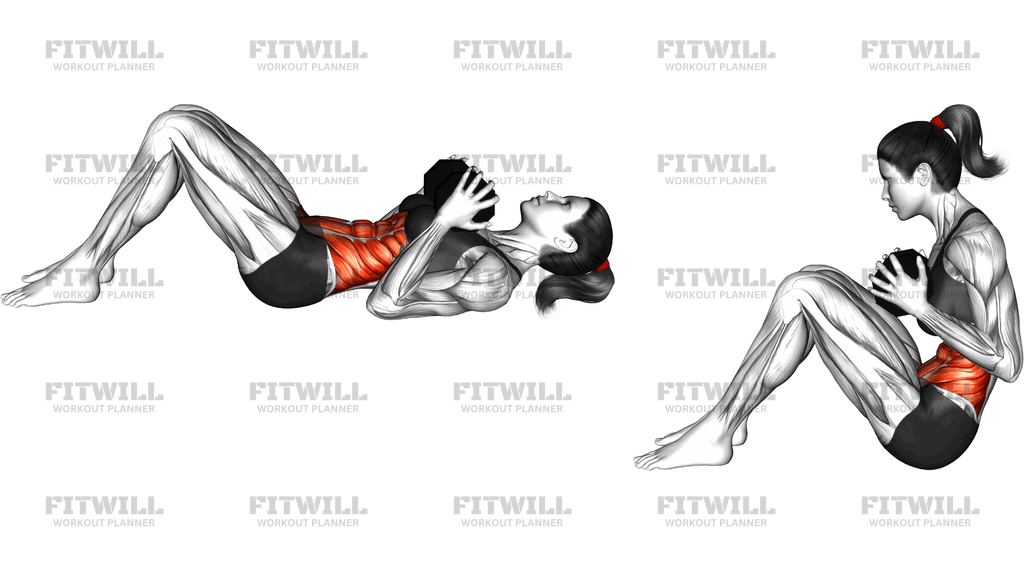
The image shows the classic toe-touch position, not a sit-up or V-up. Your shoulders start on the floor, the legs stay long and vertical, and the ribs need to knit down as you lift. That setup matters because any bend in the knees or swing in the arms turns the rep into momentum work. A light plate, dumbbell, or other handled load can make the top range more challenging, but only if you can still keep the neck relaxed and the lower back from arching off the floor.
This exercise mainly trains the rectus abdominis through spinal flexion, with the hip flexors and deep core muscles helping to stabilize the raised legs. It is useful for athletes and gym-goers who want direct ab work without loading the spine in a standing position. It also exposes common control issues quickly: if the hips rock, the feet drift, or the chin juts forward, the set is usually too heavy or the range is too aggressive.
Use a smooth reach to the toes, then lower the shoulders until the shoulder blades touch down again before the next rep. Keep the movement crisp and short enough that you can repeat it without straining your neck or yanking on the weight. The best version looks controlled from the first rep to the last, with the legs staying vertical, the pelvis quiet, and the abs doing the majority of the lifting.
For most lifters, this works best as accessory core work after the main lifts or as part of an abdominal circuit. Start with a light load and earn range before adding resistance. If the straight-leg position pulls hard on the hip flexors or low back, reduce the rep range first, then adjust the load only after the position feels stable.
Fitwill
Log Workouts, Track Progress & Build Strength.
Achieve more with Fitwill: explore over 9600 exercises with images and videos, access built-in and custom workouts, perfect for both gym and home sessions, and see real results.
Start your journey. Download today!




Instructions
- Lie on your back and hold the weight with both hands over your chest, then raise both legs straight up until they are vertical.
- Keep your knees extended but not locked hard, and press your lower back gently toward the floor before the first rep.
- Set your head and shoulders lightly off the floor only if you can keep your neck long and relaxed.
- Brace your abs, exhale, and curl your ribs toward your pelvis as you reach the weight toward your toes.
- Lift the shoulder blades off the floor and keep the legs stacked vertically instead of letting them drift over your face.
- Touch or aim toward the toes at the top without swinging the weight or jerking the torso.
- Lower the shoulders back to the floor under control while keeping the legs fixed in the same vertical line.
- Reset your breath and repeat for the planned number of reps with the same range and tempo.
Tips & Tricks
- Choose a weight you can hold steady above the chest without bending the wrists back or drifting the arms behind the head.
- If the legs cannot stay vertical, lower the load or shorten the range before you chase more reps.
- Think of curling the rib cage up instead of throwing the shoulders forward toward the feet.
- Keep the chin slightly tucked so the neck does not lead the rep.
- Do not let the lower back arch hard off the floor on the way down; the reset should be controlled, not floppy.
- A small pause near the toes makes the top contraction more honest than a fast tap-and-drop rep.
- Exhale as you reach up and inhale as you return to the floor.
- If hip flexors take over, reduce how high the torso comes up and emphasize the crunch rather than a leg lift.
Frequently Asked Questions
What does the Weighted Straight Leg Toe Touch Crunch mainly work?
It mainly targets the rectus abdominis, with the hip flexors and deep core muscles helping to stabilize the legs and torso.
Do my legs need to stay perfectly straight the whole time?
They should stay long and mostly vertical, but a soft knee is better than locking hard or letting the legs drift.
Where should the weight be held in the starting position?
Hold the weight with both hands over the chest so the arms can reach upward without pulling the shoulders out of position.
What is the most common mistake on this exercise?
The biggest mistake is swinging the torso or using the momentum of the arms instead of a controlled crunch.
Should I feel this more in my abs or my hip flexors?
You should feel the abs doing the main work, although the hip flexors will assist because the legs stay lifted.
Can I bend my knees if the straight-leg position is too hard?
Yes. A slight bend can reduce strain and help you learn the crunch pattern before progressing back to straighter legs.
Is this a good warm-up exercise?
It is usually better as accessory ab work after the main lifts, not as a general warm-up.
How do I make the set harder without losing form?
Use a slightly heavier load, slow the lowering phase, or add a brief pause at the top while keeping the legs still.