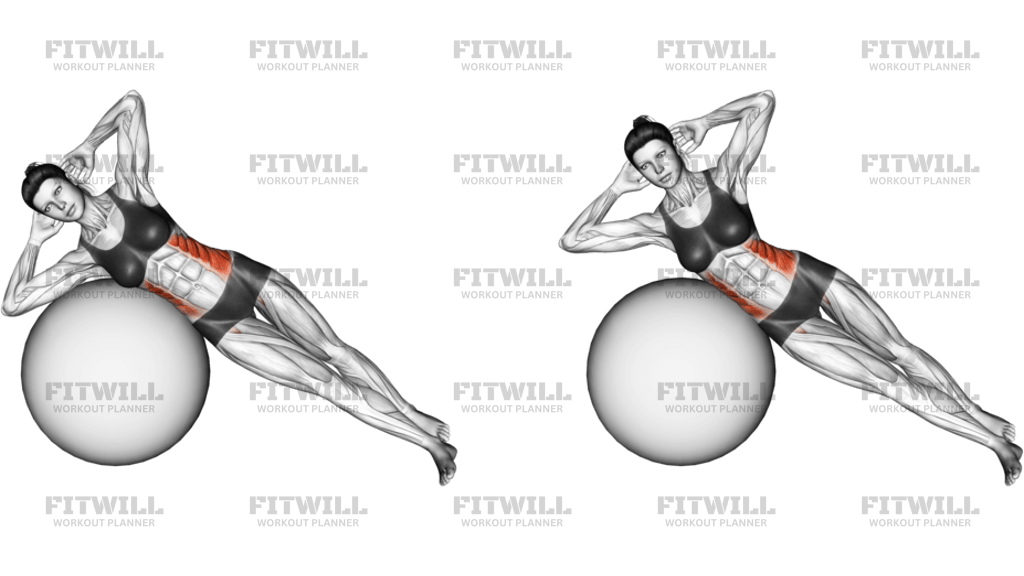
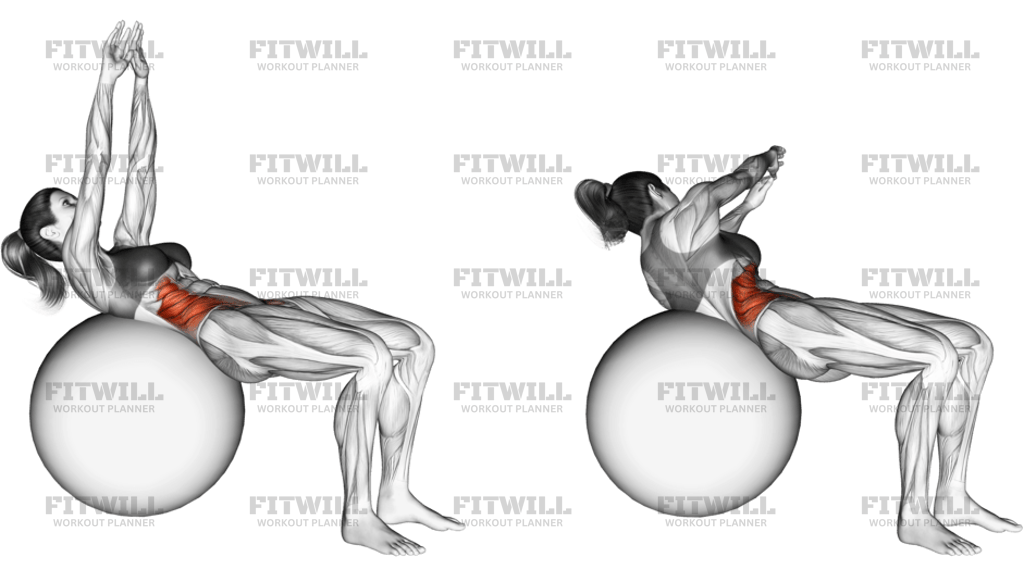
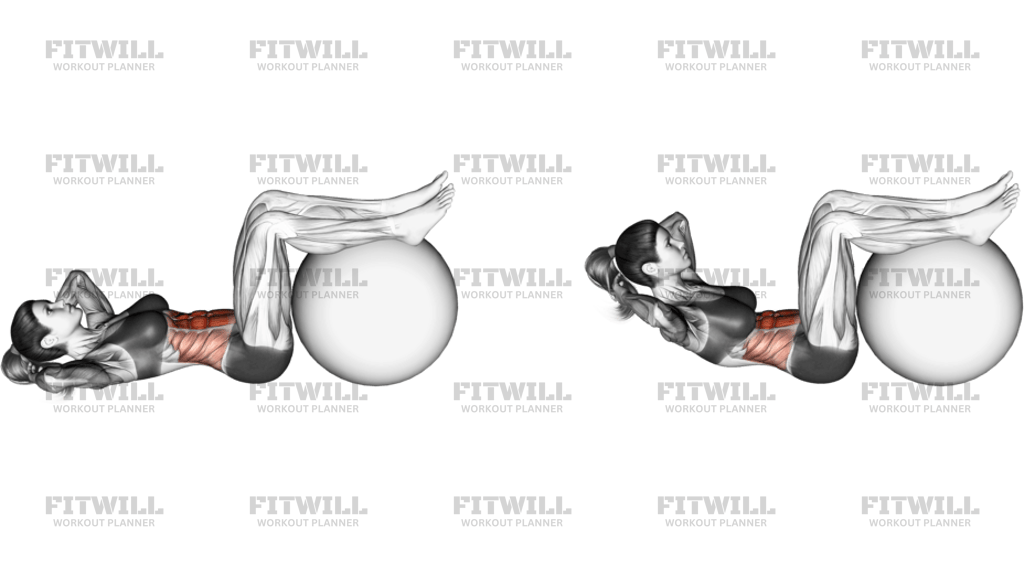
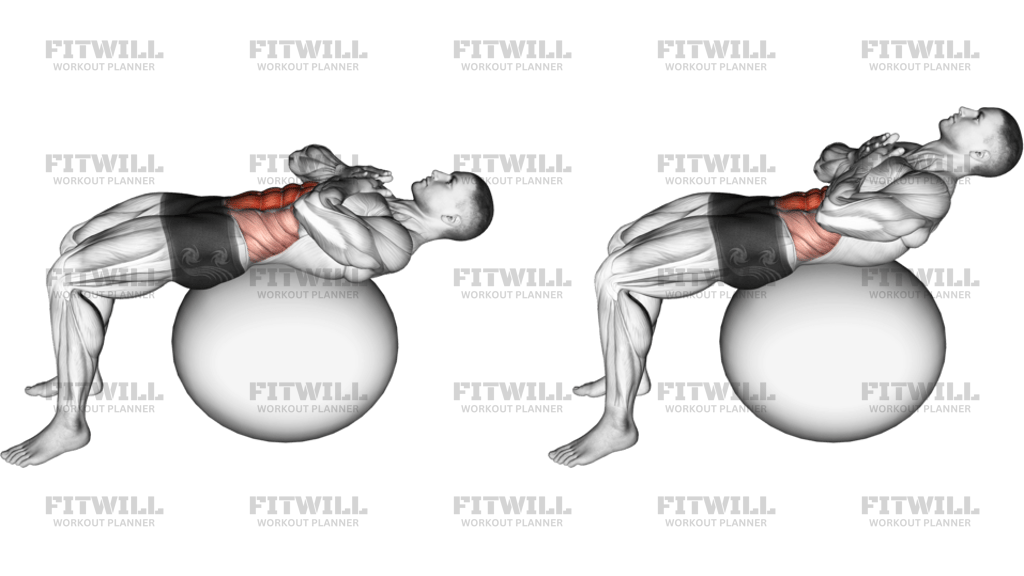
Weighted Lying Twist
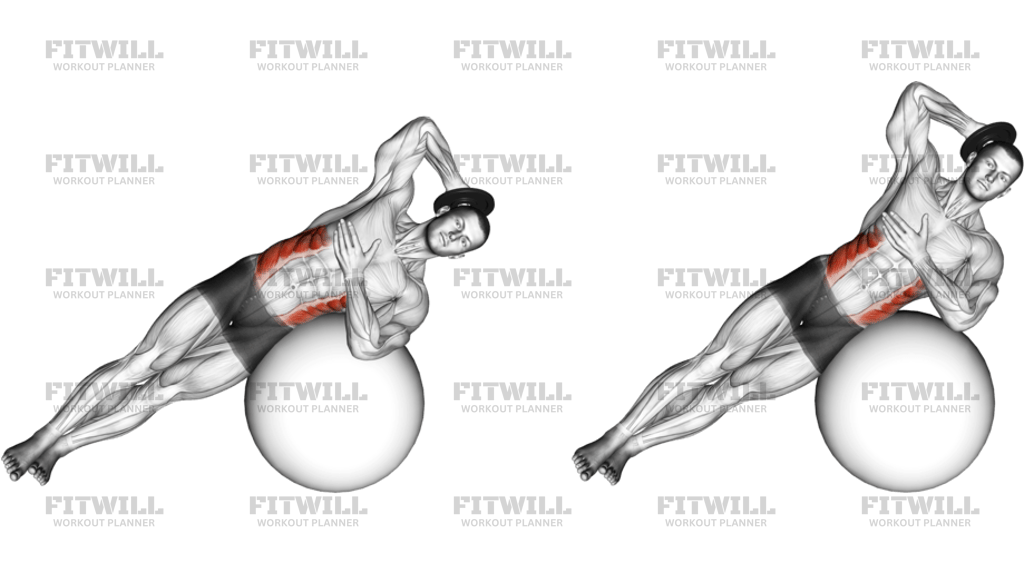
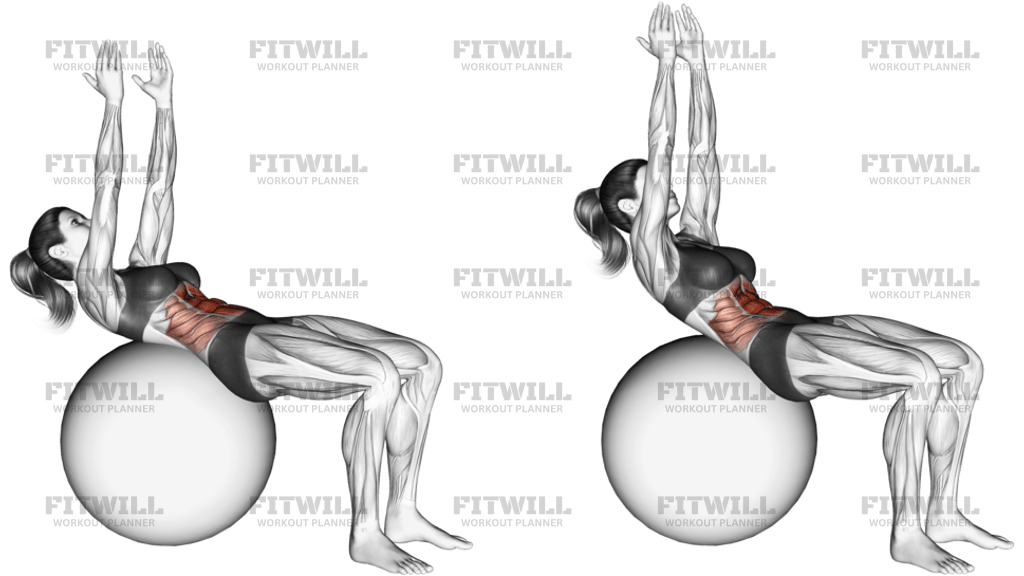
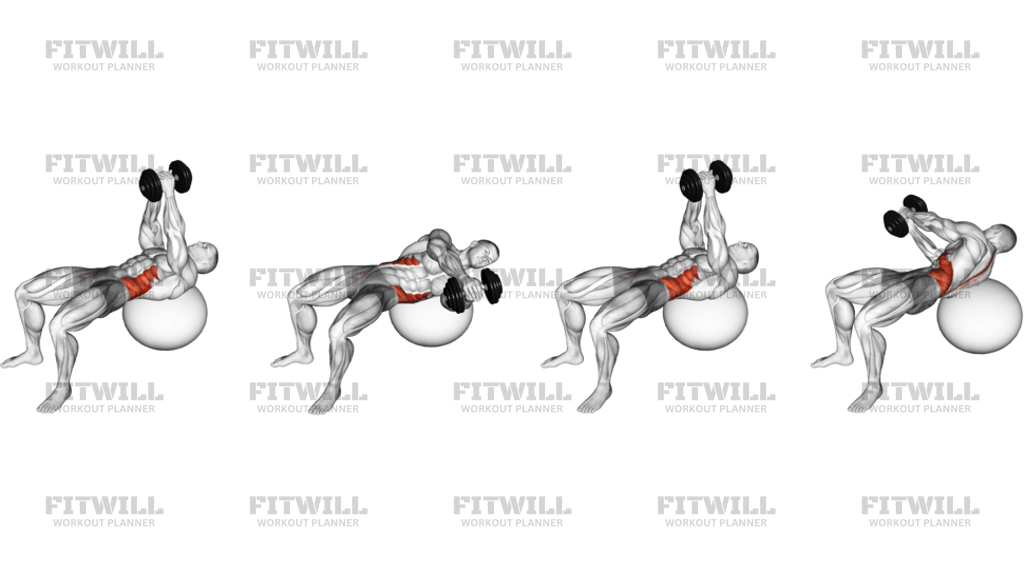
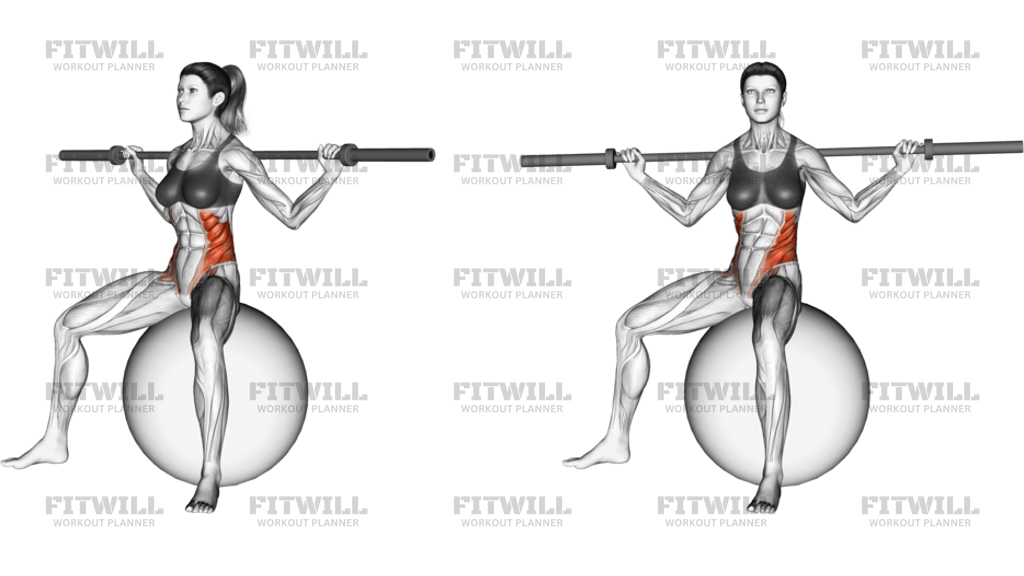
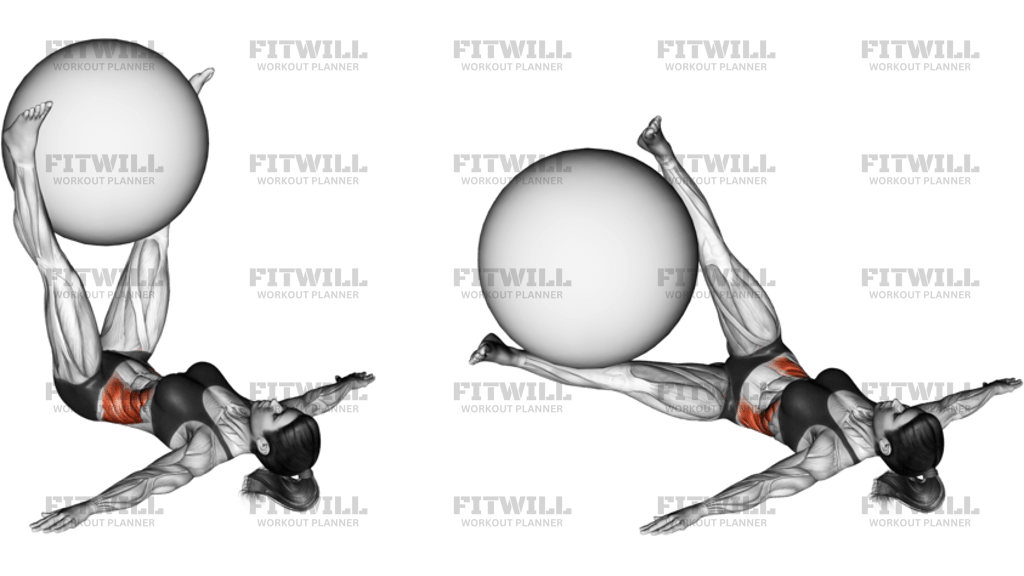
Weighted Lying Twist is a floor-based oblique exercise performed on your back with the stability ball held between your feet or ankles. The load changes how hard your torso has to resist the leg drop, so the movement becomes a controlled anti-rotation and trunk-stability drill instead of a loose side-to-side swing. In the image, your arms are spread wide to help you stay anchored while the legs and ball rotate together.
The main work comes from the obliques, with the rectus abdominis, deep core, and hip stabilizers helping to keep the rib cage and pelvis stacked. Because the weight is carried by the lower legs, the exercise also asks your lower abdominals and hip flexors to stay organized while the twist happens. That makes this a useful accessory movement for core control, waist strength, and rotational stability.
The setup matters. Lie flat, open the arms for balance, and squeeze the ball firmly between the feet or lower legs before you lift the legs. Keep the knees straight or only slightly bent, then bring the legs up over the hips so the pelvis feels controlled before the first rep starts. If the ball drifts or the low back arches hard off the floor, the range is too large or the load is too heavy.
Each repetition should feel deliberate. Lower both legs together toward one side until the obliques take over, then bring the ball back through center under control and repeat to the other side. The shoulders stay heavy on the floor, the head stays quiet, and the movement finishes when your torso still feels braced rather than twisted out of position. This is a tempo-driven core exercise, not a momentum drill.
Use Weighted Lying Twist as a core accessory after your main lifts, in a trunk-stability circuit, or anywhere you want a strict rotation pattern with low joint impact. It works well for lifters and athletes who need better control when the torso and hips move in different directions. Keep the range pain-free, reduce the lever by bending the knees if needed, and stop the set when the back starts to lift or the ball no longer feels stable between the legs.
[ Workout Log & Planner ]
Put your next workout in Fitwill
Keep your plan and training log ready when you are.


Instructions
- Lie on your back on the floor and open both arms out to the sides for balance, palms down if that feels steadier.
- Place the stability ball between your feet or lower ankles and squeeze it so it cannot slip during the set.
- Extend your legs up over your hips so the ball is stacked above your pelvis and your low back feels supported.
- Set your ribs down, brace your abs, and keep your shoulders pinned to the floor before you start the first rep.
- Lower both legs together toward one side in a slow arc, keeping the ball and knees moving as one unit.
- Stop the twist when your opposite shoulder still stays down and your low back does not arch off the floor.
- Pull the legs back through center with your obliques, then repeat the same path to the other side.
- Keep the neck relaxed, breathe out through the side drop, and breathe in as you return to center.
Tips & Tricks
- Keep the ball clamped between the feet or ankles the entire set; if it shifts, the rep is getting sloppy.
- Use a smaller range than you think you need if your low back starts peeling off the floor.
- Let the shoulders act like dead weight on the floor instead of chasing the legs as they twist.
- Move the legs and pelvis as one piece instead of letting the knees bend and drift independently.
- A slower lowering phase makes the obliques work harder than swinging the legs side to side.
- If the hip flexors take over, bend the knees a little to shorten the lever and regain core control.
- Keep the chin neutral and look straight up so you do not crank your neck while the legs move.
- Choose a ball position and range that let you repeat clean side-to-side reps instead of fighting the setup.
Frequently Asked Questions
What muscles do Weighted Lying Twist target?
The obliques are the main target, with the rectus abdominis and deep core helping keep the torso controlled while the legs twist.
Where should the stability ball go in this exercise?
Hold it between your feet or lower ankles, then squeeze it firmly so the load stays locked in as the legs move.
How far should my legs lower to each side?
Only as far as you can keep both shoulders down and your low back from arching. The range should be controlled, not maximal.
Should my knees stay straight?
Straight or slightly bent both work. A small bend shortens the lever and can make the exercise easier to control.
Why are my hip flexors doing most of the work?
Usually the lever is too long, the range is too big, or the ball is drifting. Bend the knees a little and slow the descent.
Can beginners do this movement?
Yes, if they start with a short range, light load, and a strong squeeze on the ball. The set should feel stable rather than strained.
What is the most common mistake?
Letting the legs swing too far and losing contact between the low back, ribs, and floor. That turns the drill into momentum instead of trunk control.
How is this different from a windshield wiper?
The side-to-side pattern is similar, but this version keeps the ball loaded between the feet, which makes the obliques work harder to control the legs.