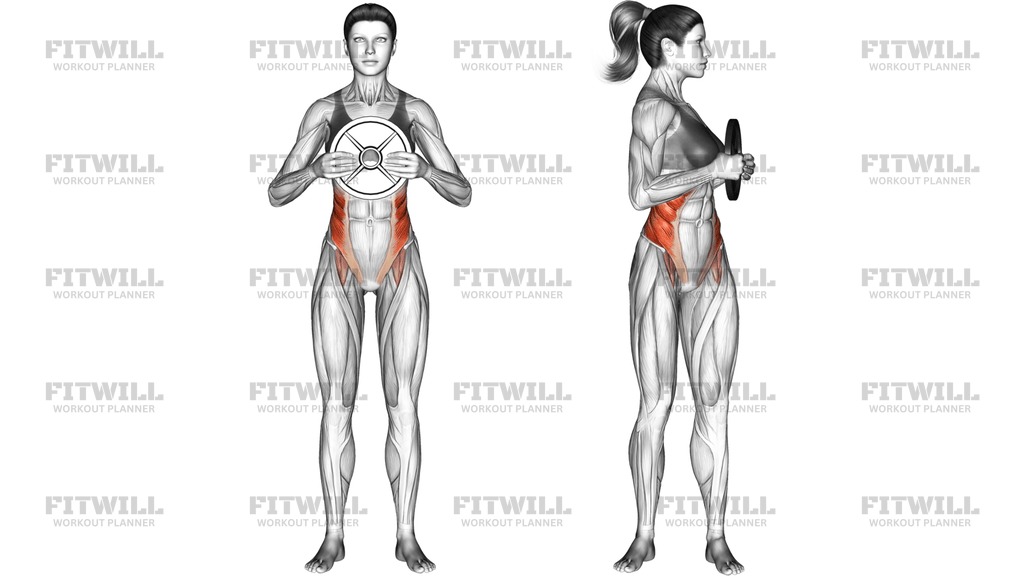
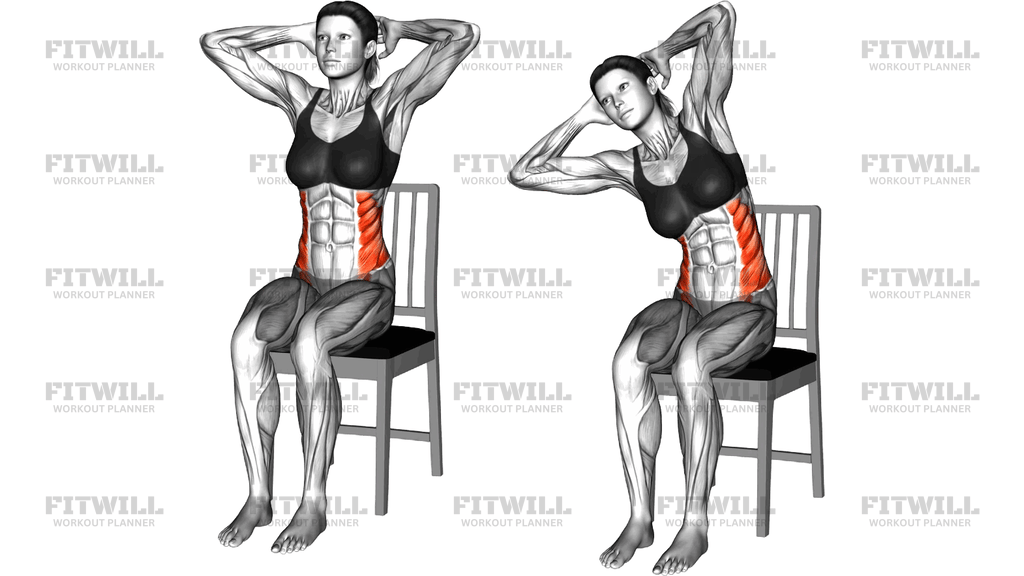
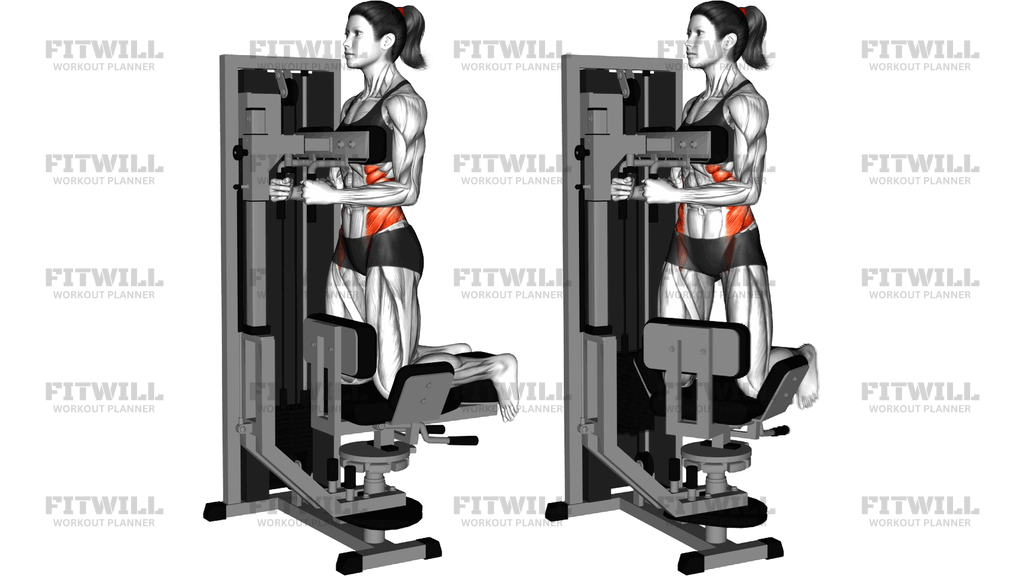
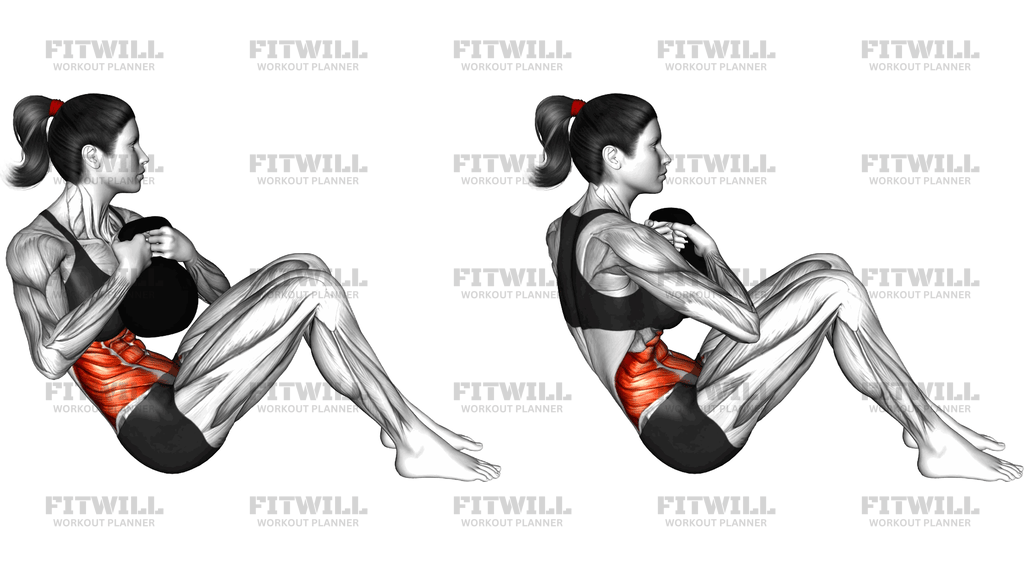
Weighted Russian Twist Version 2
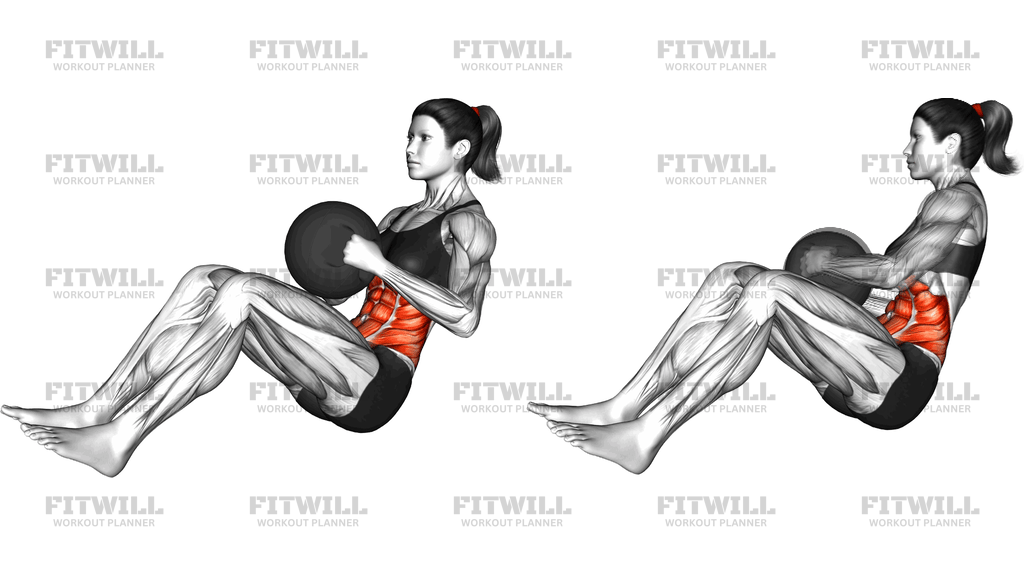
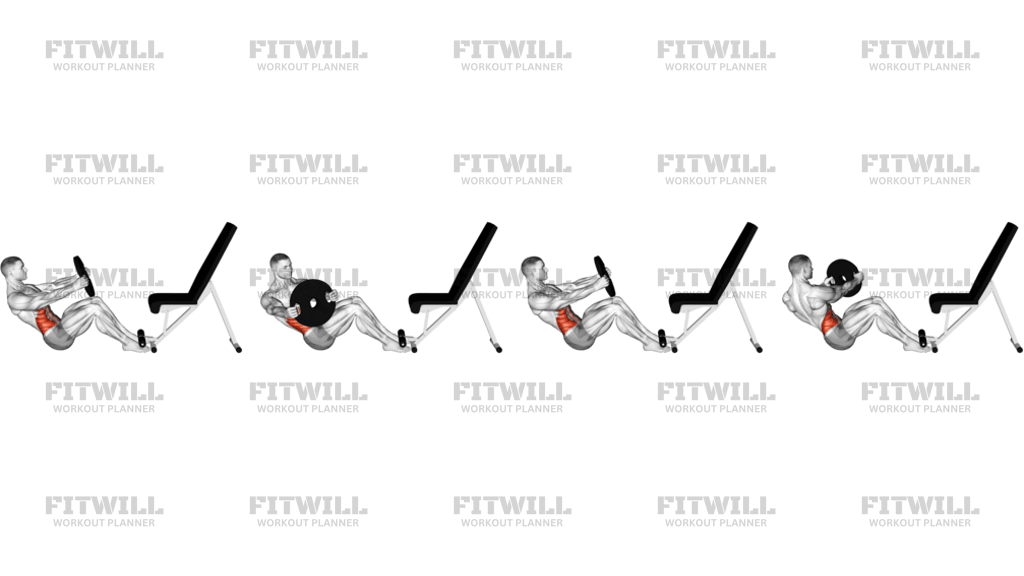
Weighted Russian Twist Version 2 is a decline-bench rotational core exercise built around a controlled side-to-side turn of the torso while the feet stay anchored and the hips stay steady. In this version, the body is supported on the bench instead of sitting upright on the floor, which makes setup and body angle more important. The goal is not to fling the weight from side to side, but to create clean trunk rotation that the obliques can control from the first rep to the last.
This movement mainly targets the obliques, with the rectus abdominis, transversus abdominis, and spinal stabilizers helping keep the torso organized as you rotate. Because the shoulders, rib cage, and pelvis all have to stay coordinated, the exercise trains more than just twisting strength. It also challenges anti-extension control, postural endurance, and the ability to keep tension through the middle of the body while the upper body moves.
The decline-bench setup matters. Sit back far enough that your torso can lean into a stable V shape, secure your feet under the rollers, and hold the weight close to the chest or just in front of it before you start twisting. That anchored lower body makes it easier to rotate from the waist and rib cage instead of rocking through the hips. If the bench angle is too aggressive or the load is too heavy, the movement quickly turns into a swing, and the lower back takes over.
Each repetition should look deliberate: rotate to one side, pause long enough to feel the obliques shorten, then return through the middle and turn to the other side with the same control. Keep the chest lifted, the neck relaxed, and the rib cage stacked over the pelvis so the twist comes from the trunk rather than from jerking the arms. Exhale through the turn if it helps you stay braced, and keep the descent smooth on every rep.
Weighted Russian Twist Version 2 is useful as accessory work on chest, core, or full-body days, especially when you want rotational strength without needing a large amount of equipment. It also works well as a higher-rep core finisher if the torso stays steady and the range stays honest. Beginners can use a very light plate or medicine ball, but the priority is always control of the bench position, rotation speed, and torso angle rather than chasing a big load.
[ Workout Log & Planner ]
Put your next workout in Fitwill
Keep your plan and training log ready when you are.


Instructions
- Sit on a decline bench and secure your feet under the rollers so your lower body stays locked in place.
- Lean your torso back into a strong V shape and keep your hips planted on the pad.
- Hold the weight plate with both hands in front of your chest, elbows slightly bent and shoulders relaxed.
- Brace your midsection before you twist so your rib cage and pelvis stay organized.
- Rotate your torso to one side, letting the plate move with your chest instead of yanking with your arms.
- Pause briefly at the end of the turn and feel the obliques on the side you just shortened.
- Return through the center with control, then twist to the opposite side without bouncing.
- Keep the motion smooth and even on both sides for the planned number of reps.
- When the set is done, lower the plate carefully and sit up without jerking your back.
Tips & Tricks
- Use a lighter plate than you think you need; once the torso starts swinging, the obliques stop driving the rep.
- Keep the twist coming from the rib cage, not from lifting and dropping the elbows.
- If your feet slide or your hips drift forward on the decline bench, shorten the range before adding load.
- A small pause at each side makes the obliques work harder than faster, sloppy reps.
- Do not let the shoulders lead the movement while the hips stay dead still; the torso should rotate as one unit.
- Hold the weight close to the chest if the longer lever makes your lower back feel stressed.
- Keep your chin neutral and eyes level so you do not crank the neck as you rotate.
- If one side feels much easier, slow the return through center and match the twist angle on both sides.
- Stop the set when the decline angle starts to pull you into a fast swing or the low back takes over.
Frequently Asked Questions
What does Weighted Russian Twist Version 2 work most?
It mainly targets the obliques, with the abs and deep core helping you keep the torso from collapsing as you twist on the decline bench.
How should I sit on the decline bench for Weighted Russian Twist Version 2?
Sit back into the pad, secure your feet under the rollers, and keep your hips anchored so the twist comes from the torso instead of a loose seated position.
Should I hold the weight plate at my chest or arms' length?
Chest height is usually the safer place to start. Holding it farther away increases the lever and makes it easier for the lower back and hip flexors to take over.
What is the biggest mistake in Weighted Russian Twist Version 2?
The most common error is swinging side to side with the arms while the torso barely rotates. Keep the movement deliberate and let the rib cage turn with the plate.
Is this exercise hard on the lower back?
It can be if you lean too far back, rotate too fast, or use too much load. A smaller range and a lighter plate keep the stress on the obliques instead of the lumbar spine.
Can beginners do Weighted Russian Twist Version 2?
Yes, but they should start with a very light plate and a short, controlled range. The decline bench adds leverage, so the exercise becomes challenging quickly.
What should I do if I feel this more in my hips than my waist?
Shorten the twist and keep your pelvis fixed against the bench. If the hips keep leading, lower the load and focus on rotating the rib cage.
What is a good tempo for Weighted Russian Twist Version 2?
Use a controlled turn, a brief pause at each side, and a smooth return through center. Fast reps usually turn this into momentum instead of core work.