Barbell Sumo Deadlift From Blocks
Barbell Sumo Deadlift from Blocks is a partial-range deadlift built around a wide stance, turned-out feet, and a bar that starts elevated on blocks or risers. The shorter pull changes the leverage of the lift and usually makes it easier to keep the chest tall, the spine organized, and the bar close to the body. It is commonly used to build hip and leg strength while letting you handle more load than a floor sumo deadlift.
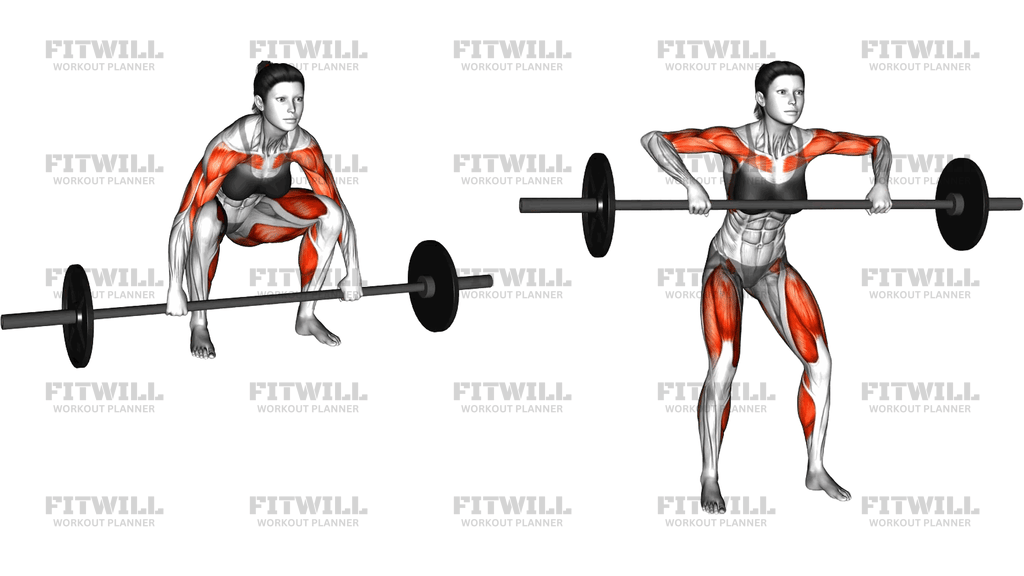
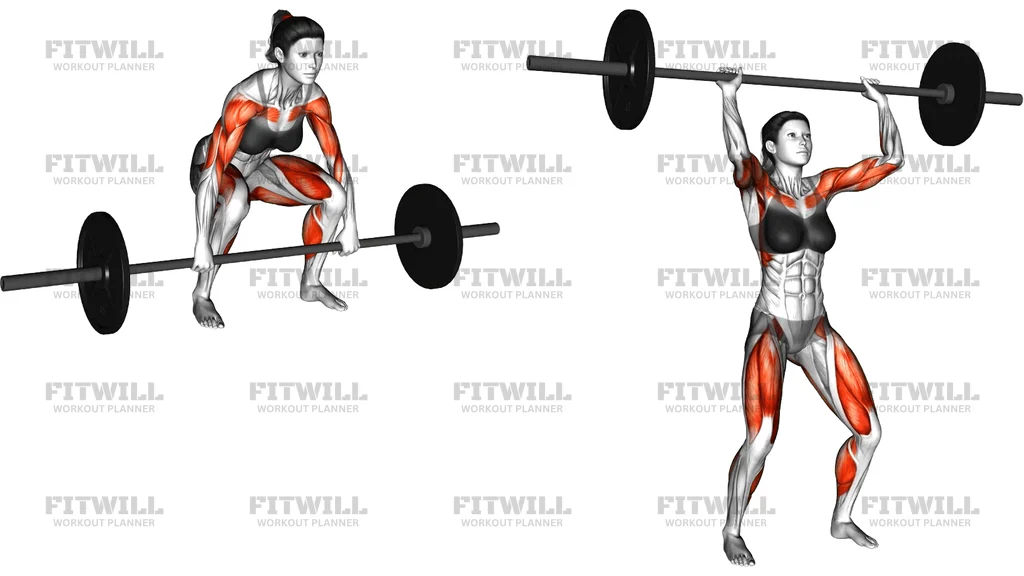
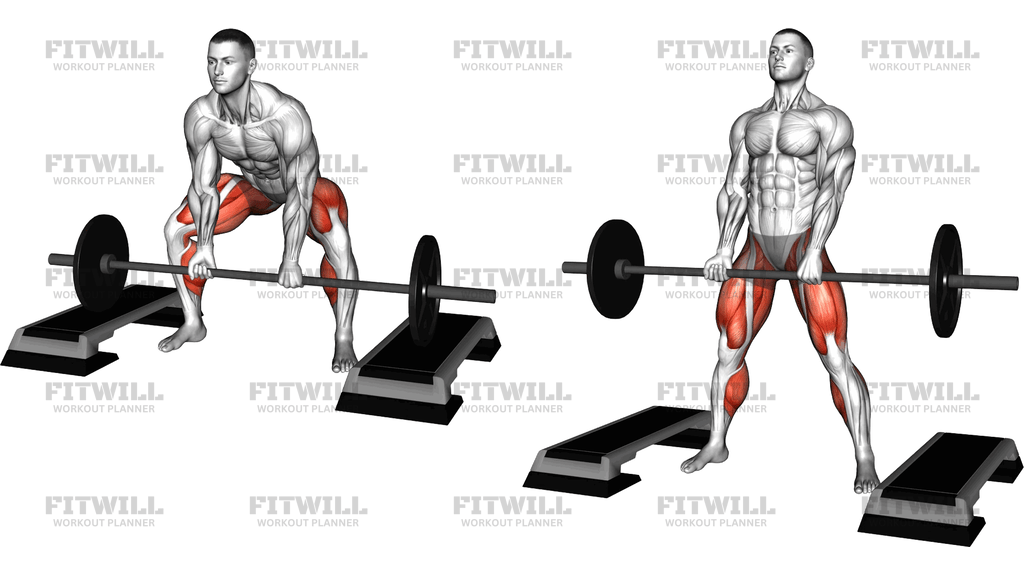
The setup matters because the blocks determine the starting height and the stance determines how well your hips can find the bar. In the image, the lifter stands well outside shoulder width with the toes angled out, shins close to vertical, and the hands inside the knees. That position lets the hips drop into a loaded starting posture without collapsing the torso forward. If the bar is too high, the movement becomes more of a shruggy partial. If it is too low or the stance is too narrow, the lift turns into a harder and less stable pull.
This exercise is usually aimed at the glutes, adductors, hamstrings, quadriceps, spinal erectors, and upper back, with the blocks shifting some emphasis toward a strong top-end hip drive. Because the range is shorter, the rep should still look crisp from the first inch off the blocks to the lockout. Drive the floor apart, keep the bar skimming the legs, and finish by standing tall instead of leaning back hard. The shoulders should rise with the hips, not shoot ahead of them.
Use Barbell Sumo Deadlift from Blocks when you want a deadlift variation that is easier to position than the floor version and more specific to the upper half of the pull. It fits well in strength blocks, overload work, or technique practice when you want to reinforce a clean lockout without the same depth demand as a full deadlift. Choose a load you can control from the blocks, reset each rep deliberately, and stop the set if your knees cave, your hips rise faster than your chest, or the bar drifts away from your thighs.
[ Workout Log & Planner ]
Put your next workout in Fitwill
Keep your plan and training log ready when you are.


Instructions
- Place the barbell on stable blocks or risers so the plates start above the floor, then stand with a very wide sumo stance and toes turned out.
- Step in until the bar is over the middle of your foot, then lower your hips and bend your knees until your shins are close to vertical and your hands can reach inside your knees.
- Grip the bar just inside shoulder width, lock your arms straight, and set your chest up so your back stays long rather than rounded.
- Take a breath into your belly and brace hard before the pull so your torso feels tight from ribs to pelvis.
- Push your feet into the floor and drive your knees out as you pull the bar straight up from the blocks.
- Keep the bar close to your legs and let your hips and shoulders rise together instead of letting the hips shoot up first.
- Finish by standing tall with the glutes tight and the bar against your thighs, without leaning back at the top.
- Lower the bar under control to the blocks, reset your stance and breath, and repeat for the planned reps.
Tips & Tricks
- Use the block height to train the part of the pull you actually want. Higher blocks reduce the range more, while lower blocks make the lift closer to a full sumo deadlift.
- If the bar drifts forward, shorten the setup and bring your shins closer to the bar before you start.
- Think about spreading the floor apart with your feet rather than just standing up; that cue usually helps the knees stay open and the hips stay under control.
- Keep the chest proud without overextending the lower back. The goal is a long spine, not a hard lean-back finish.
- Let the arms hang like straps. Bending the elbows turns the movement into an arm pull and can stress the biceps.
- If your hips rise immediately and the bar feels glued to the blocks, your stance is probably too narrow or the setup is too far away from the bar.
- Use chalk and a controlled reset between reps, especially when the blocks are high and the load gets heavy.
- Match the breathing to each rep: brace before the pull, then reset your air before the next descent.
Frequently Asked Questions
What does the block setup change in this sumo deadlift?
The blocks shorten the range of motion and make the upper half of the pull more prominent. That usually lets you overload the lockout and keep the torso more upright.
Which muscles work hardest in Barbell Sumo Deadlift from Blocks?
The lift mainly loads the glutes, adductors, hamstrings, quads, and spinal erectors, with the upper back helping keep the bar close and the torso organized.
How wide should my stance be?
Wide enough that your hands fit inside your knees and your shins stay fairly vertical at the start. Your exact width should let your hips drop without forcing the torso to collapse.
Should the bar start on one solid platform or separate blocks?
It should start on stable, even support so both ends are level. The image shows the plates elevated on blocks, which is the key feature, not the exact style of platform.
Do I pull the bar like a squat or a conventional deadlift?
It sits between the two, but the wide stance and turned-out feet make it feel more hip- and leg-driven than a conventional pull. Keep the bar close and drive the knees out from the floor.
Can beginners use this variation?
Yes, if they can set the stance correctly and keep the spine neutral. The raised start can actually make it easier to learn than a floor sumo deadlift.
What is a common mistake on the lockout?
Leaning back hard at the top is the usual mistake. Finish by standing tall with the glutes locked in, not by turning it into a lower-back extension.
How should I lower the bar between reps?
Lower it under control back to the blocks, keep the bar close, then fully reset your breath and stance before the next repetition.