Resistance Band Bent-Over Rear Delt Fly
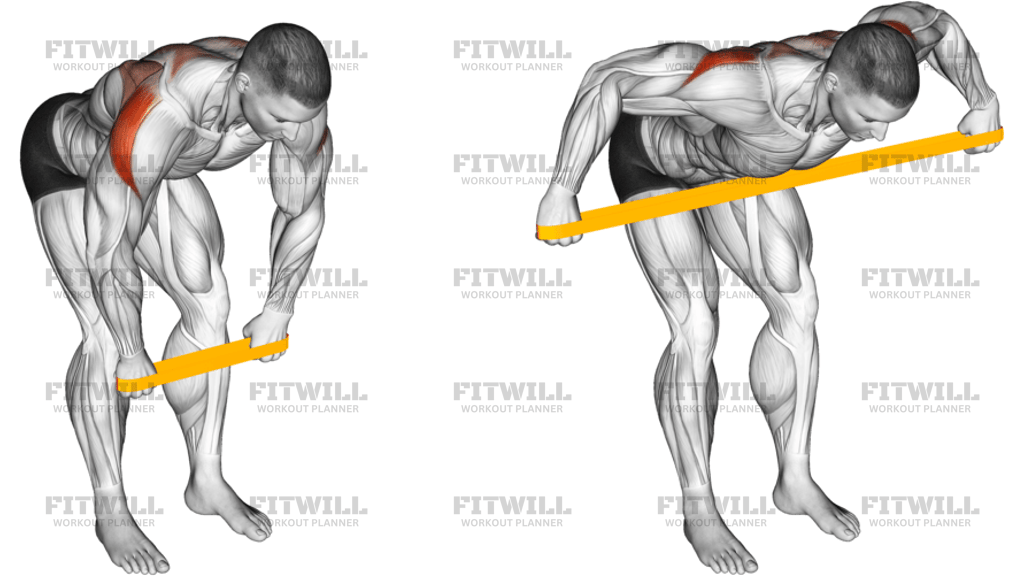
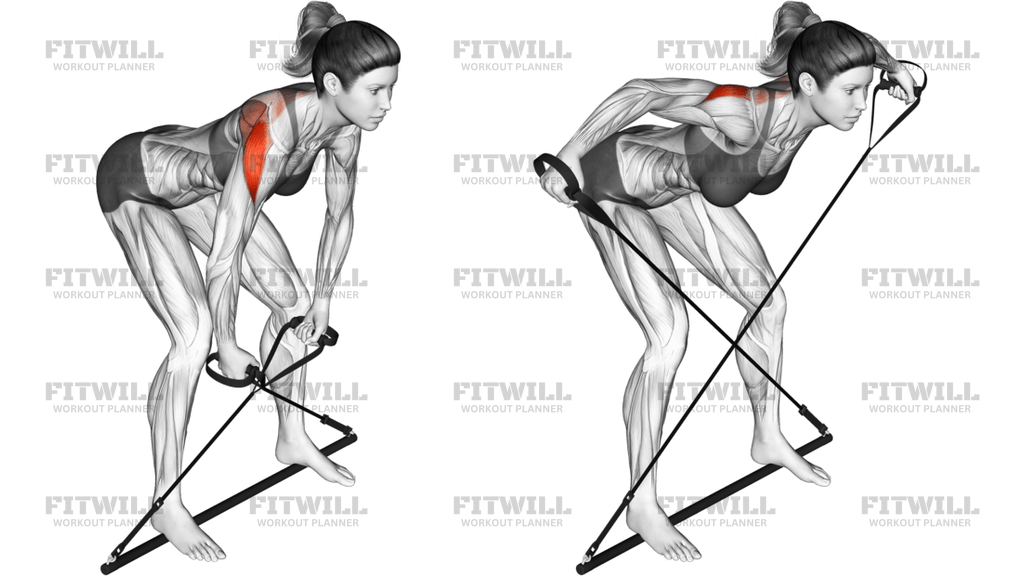
Resistance Band Bent-Over Rear Delt Fly is a bent-over shoulder accessory that loads the back of the shoulders and upper back with constant tension from the band. The hinge position makes the rear delts work against gravity and the band at the same time, so the movement is most useful when you want clean scapular control, better posture work, or a low-joint-stress shoulder exercise.
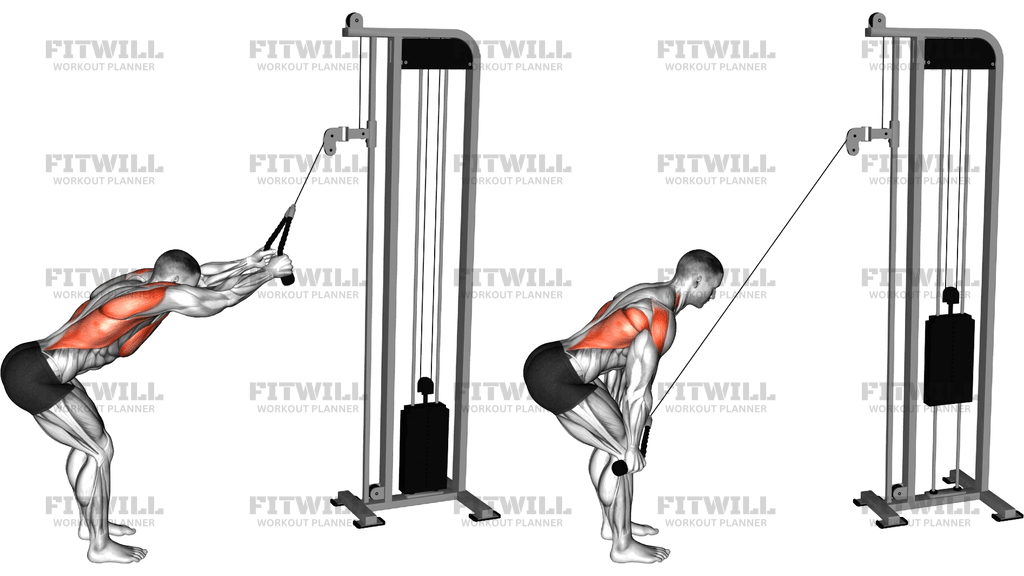
The setup matters more here than in many isolation drills. A solid hip hinge keeps your torso nearly parallel to the floor, your knees softly bent, and your spine long so the band can move in a true arc instead of turning into a shrug or a back swing. Because the band starts low and the hands travel out and slightly back, even a small change in torso angle or grip width can shift tension away from the rear delts and into the traps, lower back, or momentum.
At the top of each rep, the hands should open out to roughly shoulder height while the elbows stay softly bent and slightly behind the line of the torso. Think about spreading the band apart and driving the upper arms wide, not yanking the hands high. The shoulder blades should move naturally without pinching hard together, and the neck should stay long so the head does not crane forward as fatigue builds.
The band’s resistance rises as you separate your hands, which makes this exercise especially useful for controlled hypertrophy work and warm-up sets before pressing or pulling sessions. It also works well as a corrective accessory when the goal is to give the rear delts more attention without loading the spine heavily. Slow returns are important because the eccentric phase is where the shoulders stay under tension longest and where many people lose position.
Use a light-to-moderate band that lets you keep the hinge, keep the shoulders level, and repeat the same arc on every rep. If the torso starts bouncing, the arms turn into rows, or the lower back is doing the lifting, the band is too heavy or the setup is too loose. When done well, this is a precise rear-delt movement that should feel controlled, balanced, and repeatable from the first rep to the last.
[ Workout Log & Planner ]
Put your next workout in Fitwill
Keep your plan and training log ready when you are.


Instructions
- Stand on the middle of the band with feet about hip-width apart and hinge forward until your torso is nearly parallel to the floor.
- Hold the band with both hands below your knees, palms facing in, and keep a small bend in your elbows.
- Brace your trunk, keep your neck in line with your spine, and let your arms hang with tension in the band before the first rep.
- Lift both arms out and slightly back in a wide arc until your hands reach about shoulder height.
- Keep your elbows softly bent and lead the rep with the upper arms instead of shrugging the shoulders upward.
- Pause briefly at the top while the band is stretched and your shoulders stay down and wide.
- Lower the hands slowly back toward the start under control without letting the torso rise or sway.
- Reset the hinge and breathing before the next rep, then repeat for the planned set.
Tips & Tricks
- Choose a band that lets you reach shoulder height without straightening the elbows or popping out of the hinge.
- If the band feels too short at the bottom, step wider on it rather than rounding your upper back to get a stronger start.
- Keep the hands moving on the same plane as your shoulders so the rep stays a rear-delt fly instead of turning into a high row.
- Let the upper arms travel, but do not turn the finish into a hard scapular squeeze; the rear delts should own the top position.
- A soft bend in the elbows should stay nearly the same from start to finish so the band load stays on the shoulders.
- Exhale as you sweep the band outward and inhale as you lower back into the hinge.
- If your lower back starts taking over, shorten the range slightly and re-lock the torso angle before continuing.
- Slow eccentrics work well here because the band gets easier as you come down and harder as you open up.
Frequently Asked Questions
What does the band rear delt fly train most?
It mainly targets the rear delts, with the upper back helping to stabilize the shoulder blades and keep the arms on path.
How bent over should I be during the rep?
Your torso should stay hinged forward and close to parallel with the floor so the arms can sweep wide without turning the movement into an upright raise.
Should my elbows stay straight?
No. Keep a small, fixed bend in the elbows and hold it steady so the rear delts, not the elbow joint, drive the motion.
Why do I feel this in my traps instead of my shoulders?
That usually means you are shrugging the shoulders or lifting the hands too high. Keep the shoulders down and think about sweeping the upper arms out wide.
Where should the band start on the bottom of the rep?
It should start low beneath your knees or shins with enough tension that the first inch of motion already feels engaged, but not so much that you lose your hinge.
Is this a good warm-up before pressing?
Yes. Light sets can wake up the rear delts and upper back before benching, overhead pressing, or rowing.
What if I cannot keep my torso still?
Use a lighter band, reduce the range slightly, and reset your hip hinge so the lower back is not trying to finish each rep.
Do I need to squeeze my shoulder blades hard at the top?
No. Let them move naturally, but keep the chest from collapsing and avoid forcing an exaggerated pinch between the shoulder blades.