Kneeling Scapular Push-Up
Kneeling Scapular Push-Up is a bodyweight shoulder-blade control drill performed from a kneeling plank. It keeps the elbows straight while you let the shoulder blades glide together and then spread apart, so the movement trains the muscles that stabilize the upper back and shoulders rather than a full push-up pattern. That makes it useful for warming up pressing sessions, cleaning up scapular control, or building better awareness of how the shoulder girdle moves under load.
The kneeling position lowers the difficulty and makes it easier to keep the ribs stacked over the pelvis. With the knees on the floor, hands under the shoulders, and arms locked out, you can focus on the motion of the shoulder blades instead of fighting for balance. The torso should stay long and quiet while the upper back does the work. If the elbows bend, the low back sags, or the head reaches forward, the set stops being a scapular drill and turns into a loose push-up.
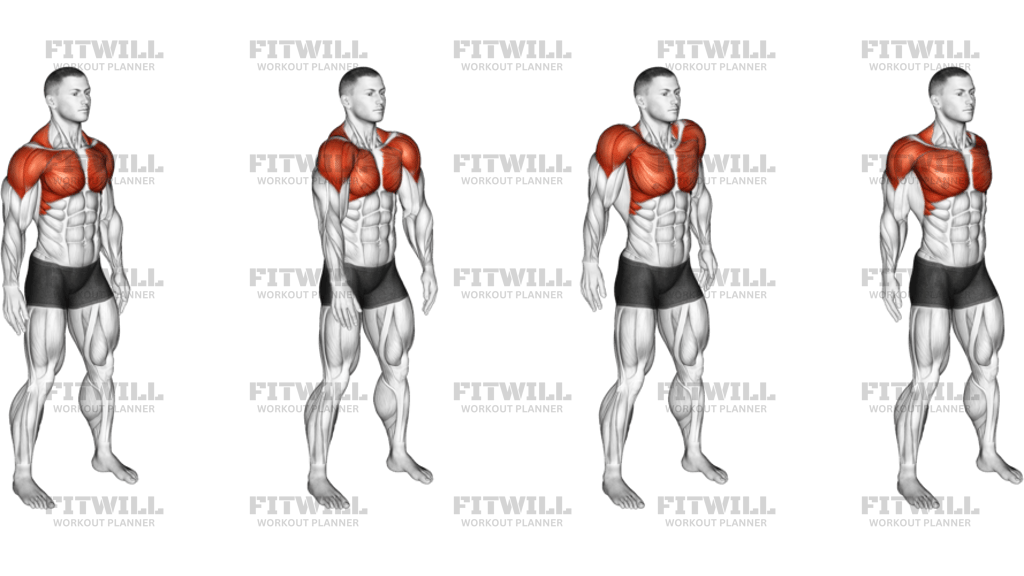
At the bottom of each rep, allow the chest to sink slightly between the shoulders as the shoulder blades retract. Then press the floor away and round the upper back gently as the shoulder blades protract. The range is small on purpose: the goal is crisp control, not a dramatic dip. Exhale as you press away, inhale as you return, and keep the neck in line with the spine so the shoulders can move without extra strain.
This exercise is often used as an activation or accessory movement before bench pressing, overhead work, or pulling sessions because it teaches the shoulders to stay organized. It also works well when you want a low-fatigue drill that still gives clear feedback about scapular control, wrist comfort, and rib position. Done well, it should feel smooth, precise, and repeatable from rep one to rep last.
Use a reduced range if the shoulder blades wing, the wrists complain, or the lower back starts to arch. The best reps are controlled enough that you can pause briefly at both ends without losing alignment. That consistency matters more here than speed or volume, especially if the goal is cleaner pressing mechanics and better upper-back stability.
Fitwill
Log Workouts, Track Progress & Build Strength.
Achieve more with Fitwill: explore over 9600 exercises with images and videos, access built-in and custom workouts, perfect for both gym and home sessions, and see real results.
Start your journey. Download today!




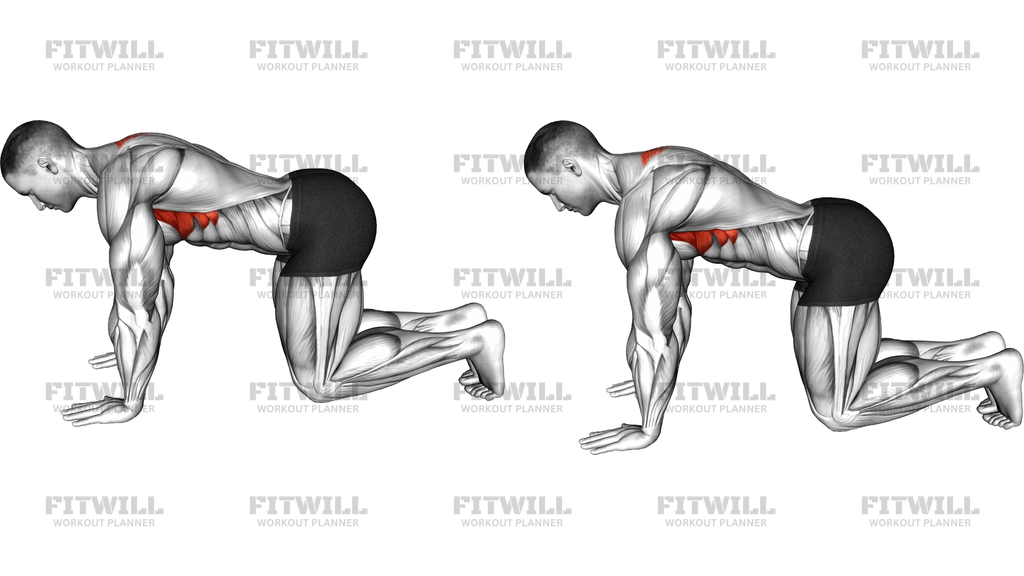
Instructions
- Kneel on the floor with your hands under your shoulders, fingers pointing forward, knees under your hips, and your body forming a straight line from head to knees.
- Lock your elbows without hyperextending them, press through the whole hand, and keep your neck long so the head stays in line with the spine.
- Brace your ribs and glutes, then let the chest lower slightly as the shoulder blades move toward each other.
- Keep the movement small and controlled; only lower far enough to feel the upper back open without losing torso tension.
- Exhale and press the floor away so the shoulder blades spread apart and the upper back rounds gently.
- Finish each rep with the arms still straight and the shoulder blades fully protracted, not with a bend in the elbows.
- Pause briefly at the top and bottom if needed to confirm that the torso stays quiet and the shoulders are doing the work.
- Repeat for the planned number of reps, then reset the kneeling plank before the next set.
Tips & Tricks
- Think about moving the shoulder blades, not doing a miniature push-up.
- Keep the elbows locked the entire time; any bend turns the drill into a different exercise.
- If your low back arches, shorten the range and squeeze the glutes harder before you move.
- A small protraction at the top is enough; do not force a hard shrug toward the ears.
- Keep the ribs down so the chest does not dump toward the floor.
- Use a folded pad under the knees if the kneeling position distracts you from the shoulder work.
- Press evenly through both hands so one side does not collapse or wing out.
- Breathe out on the press-away phase and inhale as the shoulder blades come back together.
Frequently Asked Questions
What does Kneeling Scapular Push-Up train most?
It trains shoulder-blade control, especially the muscles that stabilize and move the upper back and shoulder girdle.
Is this the same as a regular push-up?
No. In this drill the elbows stay straight and the only real motion comes from the shoulder blades.
Why do it on the knees?
Kneeling reduces the load enough to make the scapular motion easier to feel while you keep the ribs and pelvis stacked.
Where should I feel the movement?
You should feel it across the upper back and around the shoulder blades, with the arms staying mostly quiet.
How far should I lower my chest?
Only as far as you can keep the elbows straight and the torso braced; the range is small by design.
Can beginners use this exercise?
Yes. It is a good beginner-friendly drill because the kneeling setup makes the scapular motion easier to control.
What mistake shows up most often?
People usually bend the elbows, shrug the shoulders, or let the lower back sag instead of keeping the trunk quiet.
When is this most useful in a workout?
It works well in a warm-up or accessory block before pressing, overhead work, or any session that needs better shoulder mechanics.