Weighted Counterbalanced Skater Squat
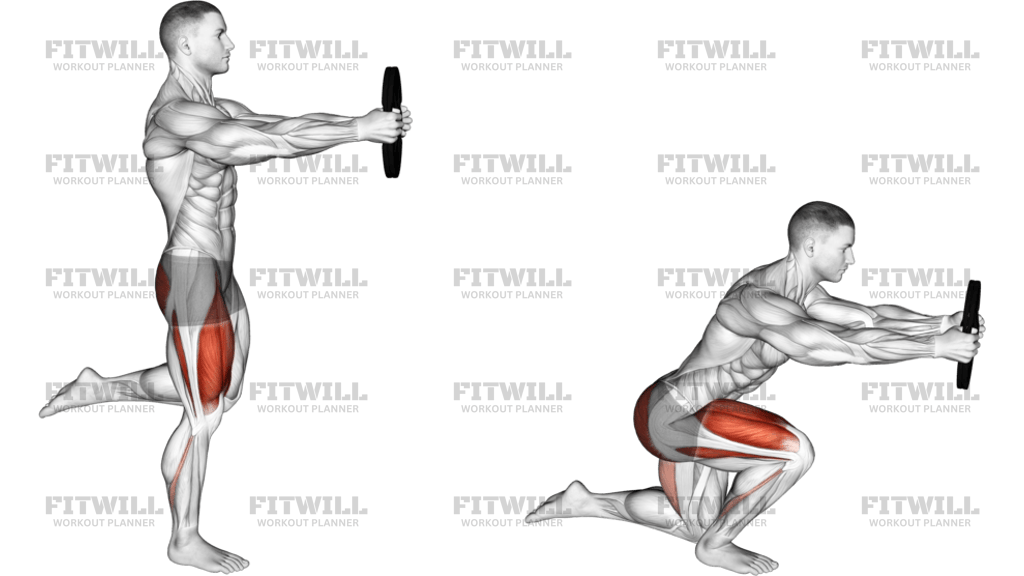
Weighted Counterbalanced Skater Squat is a single-leg squat variation that uses a plate or similar load held straight out in front of the body to make balance and depth easier to control. The forward counterweight shifts the center of mass away from the working leg, which helps many lifters stay upright, reach a cleaner bottom position, and keep the front foot planted as they descend. It is especially useful when you want unilateral leg work without turning the set into a high-momentum lunge pattern.
This exercise places the main demand on the thighs, especially the working leg’s quads, while the glutes, hamstrings, adductors, calves, and trunk help keep the pelvis level and the knee path organized. The free leg trails behind and folds under the body as you lower, so the lift trains not only leg strength but also single-leg balance and control through the hip and ankle. Because the load is held in front rather than on the back or at the sides, the torso can stay more honest and the squat pattern is easier to monitor.
The setup matters more here than in many bilateral squats. Stand tall on one working leg, extend the opposite leg behind you, and hold the weight with both hands at arm’s length in front of the chest. Before you descend, root the whole foot of the stance leg into the floor, brace lightly through the trunk, and keep the chest reaching forward just enough to let the hips sit back while the knee bends.
On each rep, lower under control until the back knee brushes the floor or comes close, then drive through the planted foot to stand without bouncing off the bottom. The free leg should stay relaxed and trail behind rather than helping you spring upward. Keep the arms long, the plate steady, and the torso angled slightly forward as needed so the working leg does the lifting instead of the hips twisting or the upper body swinging.
Weighted Counterbalanced Skater Squat fits well in lower-body strength sessions, accessory work, or unilateral training blocks when you want a hard but technically clean squat pattern. It can be a very good option for lifters who struggle to stay balanced in a bodyweight skater squat or who want more load without losing depth. Stop the set if the knee caves inward, the heel lifts, or the weight starts to drift as you rise, because those are signs that the rep is no longer being driven by the working leg.
[ Workout Log & Planner ]
Put your next workout in Fitwill
Keep your plan and training log ready when you are.


Instructions
- Stand on one foot with the other leg extended slightly behind you, and hold a plate or similar weight with both hands straight out in front of your chest.
- Set your stance foot flat, point the working knee in the same direction as your toes, and keep the arms fully extended so the load acts as a counterbalance.
- Brace your trunk lightly, lengthen through the crown of your head, and begin lowering by bending the stance knee and sitting the hips back.
- Let the free knee travel down and back behind you while the torso leans forward just enough to keep the weight centered over the planted foot.
- Continue descending until the back knee touches the floor or comes very close without collapsing the torso or losing the foot tripod.
- Pause briefly at the bottom, then drive through the whole stance foot to stand up, keeping the plate steady at arm’s length.
- Finish the rep by squeezing the standing glute, straightening the hip and knee together, and avoiding a push off the back leg.
- Reset your balance before the next rep, breathe in on the descent, and exhale as you stand.
- Switch sides after the planned reps, and stop if you can no longer keep the knee tracking cleanly.
Tips & Tricks
- Hold the plate high enough that your elbows stay nearly straight and the load can actually help you balance.
- Keep the standing heel glued down; if it starts floating, shorten the depth or reduce the load.
- Let the free leg drift behind you instead of tucking under the body too early, which helps the squat stay skater-like rather than turning into a split squat.
- If the torso collapses forward, use a lighter counterweight and think about reaching the plate straight ahead instead of down.
- A small pause on the floor makes the rep cleaner; bouncing off the bottom usually hides a loss of control.
- Track the standing knee over the middle toes so the thigh does not cave inward as you rise.
- Keep the plate from swinging; any swing usually steals tension from the working leg and makes balance worse.
- Use a controlled eccentric of about two to four seconds if you want more thigh and glute work without adding load.
- If you cannot reach the floor with the back knee, use a target such as a pad or box and lower the height gradually.
- End the set when your pelvis starts twisting toward the free leg, because that usually means the stance leg has stopped doing the work.
Frequently Asked Questions
What does Weighted Counterbalanced Skater Squat train most?
It mainly trains the quads and glutes of the standing leg, with the adductors, calves, and core helping you stay balanced and aligned.
Why hold the weight out in front in Weighted Counterbalanced Skater Squat?
The forward hold counterbalances your body and makes it easier to stay upright and reach depth without falling backward.
How low should I go in Weighted Counterbalanced Skater Squat?
Lower until the back knee lightly taps the floor or comes very close while the standing foot stays flat and the knee stays controlled.
Should the free leg touch the floor first?
No. The free leg trails behind and stays relaxed while the standing leg controls the descent and the rise.
Is Weighted Counterbalanced Skater Squat good for beginners?
Yes, if the counterweight is light and the range is shortened at first. The plate position can actually make it easier to learn than a bodyweight skater squat.
What is the most common mistake with the plate hold?
Letting the plate drift or swing usually throws off balance and reduces tension on the standing leg.
Can I use a dumbbell instead of a plate?
Yes. Any small load held straight out in front can work, as long as it stays stable and does not pull you off line.
How is Weighted Counterbalanced Skater Squat different from a split squat?
In this movement the rear leg stays off the floor and the body lowers more like a single-leg squat, rather than resting on a long split stance.