Barbell Banded Romanian Deadlift
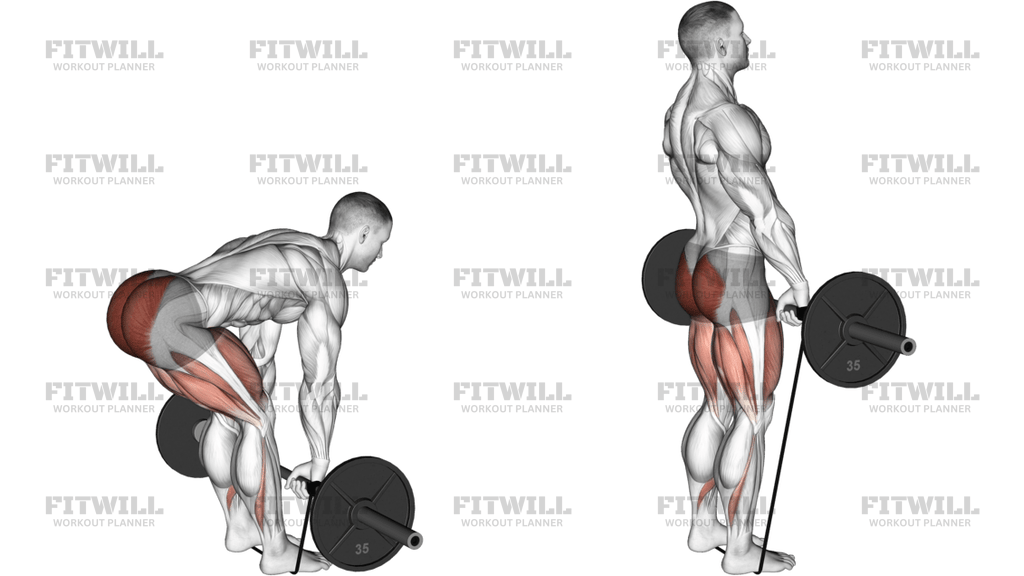
Barbell Banded Romanian Deadlift is a loaded hip-hinge that trains the posterior chain with a band adding extra resistance as you stand up. It is built around a controlled hinge pattern, not a deep squat or a floor pull, so the hamstrings, glutes, and spinal erectors can work through a long, tension-heavy range while the core keeps the torso organized. The band changes the feel of the rep by making the top half harder, which is useful when you want stronger lockout control and more deliberate glute tension.
The setup matters because the whole exercise depends on where the bar travels and how the band is loaded. Stand on the band with a hip-width stance, then grip the barbell in front of your thighs with the bar centered over midfoot. Unlock the knees slightly, stack the ribs over the pelvis, and set the shoulders so the lats keep the bar close to the legs. A good start feels balanced and rooted before the first hinge begins.
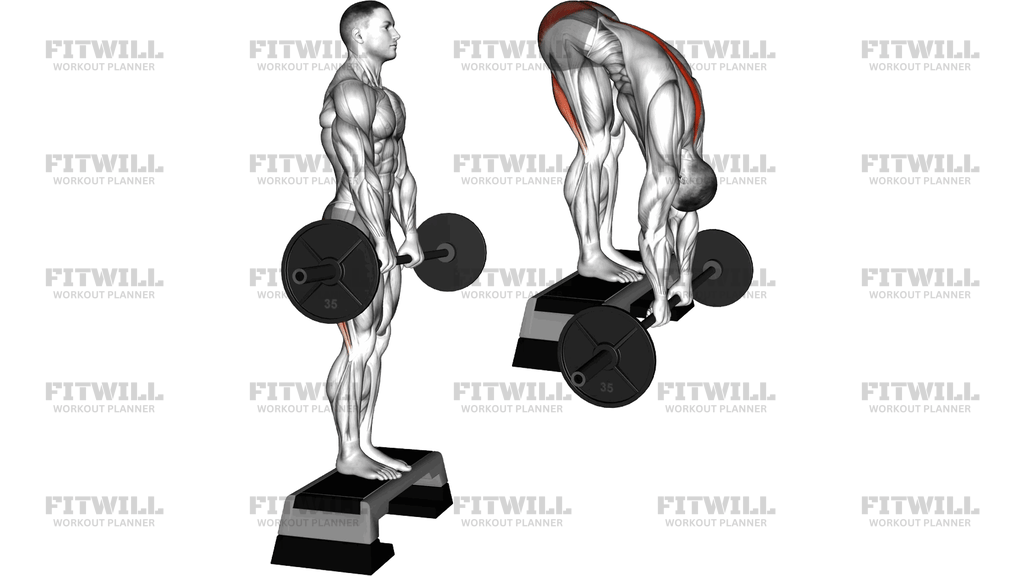
From there, push the hips back and let the torso tip forward as a single unit while the bar slides down the thighs and shins. The knees stay softly bent but do not keep drifting forward; the shins should stay nearly vertical as the hips travel back. Lower only until the hamstrings are fully loaded and the spine can stay neutral, then reverse the motion by driving the feet into the floor and bringing the hips forward. The bar should stay close enough to brush the legs on the way up, and the band should stay under tension the entire rep.
This exercise works well as accessory strength work for glutes and hamstrings, posterior-chain conditioning, or a hinge pattern in lower-body sessions where you want less knee bend than a conventional deadlift. Because the band increases resistance as you approach lockout, it is usually best to use a lighter barbell load than you would for a straight Romanian deadlift. Keep the reps smooth, stop the set when the hinge pattern starts to break, and avoid forcing extra range just to lower the bar farther. Clean positions matter more here than chasing the deepest possible descent.
When the movement is done well, you should feel the hamstrings lengthen on the way down and the glutes finish the rep without a hard backward lean. The core should brace to keep the torso from folding, and the lower back should stay stable rather than taking over the lift. That makes the barbell banded Romanian deadlift a practical option for lifters who want more posterior-chain tension, more lockout demand, and a hinge pattern that reinforces control from start to finish.
[ Workout Log & Planner ]
Put your next workout in Fitwill
Keep your plan and training log ready when you are.


Instructions
- Stand on the band with feet hip-width apart and place the barbell over the midfoot.
- Grip the bar just outside your thighs, keep your arms long, and unlock the knees slightly.
- Brace your torso, pull the shoulders down, and keep the chest and ribs stacked.
- Push the hips back to start the hinge while the bar stays close to the front of the thighs.
- Lower the bar along the legs until the hamstrings are fully loaded and the back can stay neutral.
- Pause only if you can keep tension, then drive the feet into the floor to reverse the hinge.
- Squeeze the glutes to stand tall at the top without leaning back or shrugging.
- Lower the bar under control along the same close path and reset your breath before the next rep.
Tips & Tricks
- Use less total load than a straight Romanian deadlift, because the band adds tension near lockout.
- Keep the bar brushing the thighs and shins; if it drifts forward, your lower back will take more of the work.
- Think of the knees as softly unlocked, not bent and driving forward like a squat.
- Stop the descent when the hamstrings limit the hinge, even if the plates are still above the floor.
- Keep pressure through the heels and midfoot so the bar does not pull you onto the toes.
- Finish by driving the hips through, not by leaning backward to fake a bigger lockout.
- Exhale as you stand up and re-brace at the top before the next descent.
- If your grip fades before your posterior chain does, use straps so the hinge stays the limiting factor.
Frequently Asked Questions
What muscles does the barbell banded Romanian deadlift work?
It primarily targets the hamstrings and glutes, with the spinal erectors, core, and grip helping keep the hinge stable.
Why add a band to a Romanian deadlift?
The band makes the top of the lift harder, which increases lockout tension and keeps the glutes working as you finish each rep.
How low should the bar go on this movement?
Lower it only as far as you can keep a neutral spine and strong hamstring tension, usually to around mid-shin.
What is the biggest technique mistake?
Letting the bar drift away from the legs is the most common error, because it turns the movement into a back-dominant pull.
Is this the same as a conventional deadlift?
No. A Romanian deadlift starts from the top, keeps the knees only slightly bent, and emphasizes the hinge instead of pulling from the floor.
Can beginners use this exercise?
Yes, if the barbell and band are very light and the hinge pattern is learned before adding more resistance.
Should I feel my lower back working?
Your lower back should brace and stabilize, but the main effort should stay on the hamstrings and glutes.
What should the top of the rep look like?
Stand tall with the glutes squeezed, ribs stacked over the pelvis, and no backward lean to finish the rep.