Hanging Scapular Shrug
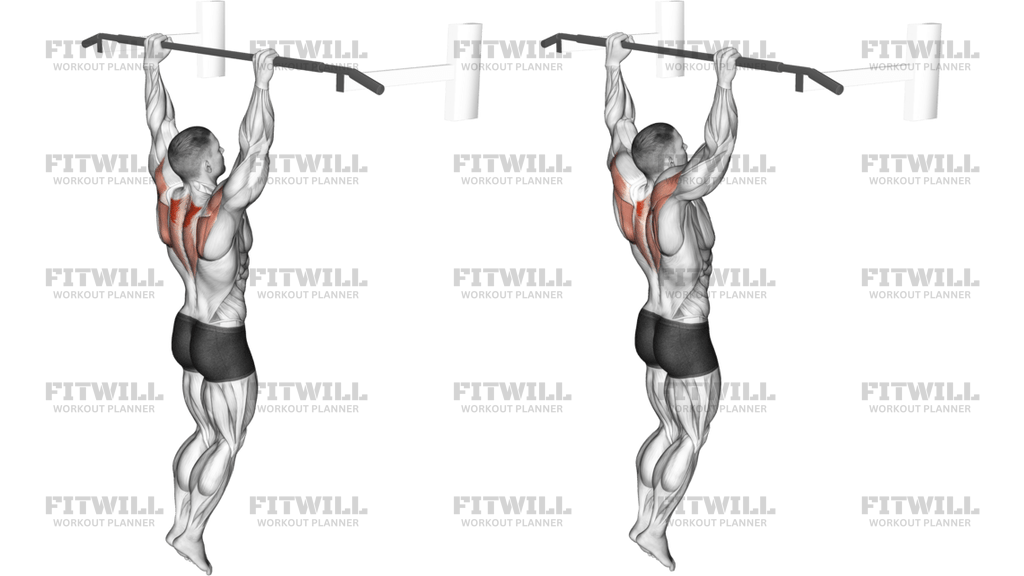
Hanging Scapular Shrug is a straight-arm hanging drill that teaches the shoulder blades to move cleanly on the rib cage while the hands stay fixed overhead. It is a small-range bodyweight exercise, but it can feel demanding because you are controlling your entire body from the pull-up bar while keeping the elbows locked and the torso quiet.
The movement is useful when you want better control for pull-ups, chin-ups, lat pulldowns, climbing, or any overhead hanging work. Hanging Scapular Shrug trains the lower traps, lats, serratus, rhomboids, and grip in a way that emphasizes shoulder positioning rather than elbow bending, which makes it a good accessory for building better pulling mechanics.
The setup matters more than the range. Grip the bar overhead, hang tall, and let the shoulders settle without losing control of the ribs or swinging through the legs. A good rep starts from a calm hang, then the shoulder blades pull down and slightly back so the chest rises a little and the neck stays long. If the elbows bend, the rep stops being a Hanging Scapular Shrug and turns into a partial pull-up.
The return should be just as deliberate. Lower back to the full hang with control, letting the shoulder blades travel upward again without collapsing into a sloppy swing. That controlled rhythm is what builds useful strength in the upper back and teaches the body how to initiate a pull from the shoulder blades first, not the arms.
Hanging Scapular Shrug is often best used early in a session as a warm-up or as accessory work between heavier pulling sets. Beginners can use it if they can support their bodyweight comfortably and keep the movement small and strict. If the shoulders feel pinchy, shorten the range, slow the tempo, or use an assisted setup until the hanging position feels stable and pain-free.
Fitwill
Log Workouts, Track Progress & Build Strength.
Achieve more with Fitwill: explore over 9600 exercises with images and videos, access built-in and custom workouts, perfect for both gym and home sessions, and see real results.
Start your journey. Download today!




Instructions
- Grip the pull-up bar overhead with both hands about shoulder-width apart and hang with your arms fully straight.
- Let your feet hang clear of the floor or cross your ankles behind you, then settle into a quiet dead hang without swinging.
- Set your ribs down and keep your neck long so the hang starts from a stable torso, not a flared lower back.
- Pull your shoulder blades down and slightly back, as if you are trying to put them in your back pockets.
- Keep your elbows locked and let the chest rise only a few centimeters as the shoulder blades depress.
- Pause briefly at the top while keeping the legs still and the grip firm.
- Slowly reverse the motion and let the shoulders glide back up until you are hanging long again.
- Reset the body after any swing, then repeat for the planned number of repetitions.
Tips & Tricks
- Think shoulder blades first, not elbows first; any arm bend means the rep is drifting toward a pull-up.
- Keep the range short and clean. A few controlled centimeters is enough for this exercise.
- If your legs swing, cross the ankles and lightly squeeze the glutes to quiet the hang.
- Use a 2-3 second lowering phase so the shoulder blades do not drop suddenly back into the hang.
- Do not shrug toward your ears at the top; the goal is to pull the shoulders away from the ears.
- Keep the chin neutral instead of looking up at the bar, which often makes the neck tense.
- A small chest lift is fine, but a big rib flare usually means the lower back is taking over.
- Stop the set when you can no longer keep the elbows straight and the body still.
- If the bar grip is limiting the set before the shoulder blades do, shorten the set or use chalk.
- Exhale as the shoulders depress and inhale as you return to the dead hang.
Frequently Asked Questions
What does Hanging Scapular Shrug train?
It trains the muscles that control scapular motion, especially the lower traps, lats, rhomboids, serratus, and grip.
Is Hanging Scapular Shrug the same as a pull-up?
No. In Hanging Scapular Shrug, the elbows stay straight and the movement comes from the shoulder blades, not from pulling with the arms.
How far should I move during Hanging Scapular Shrug?
Only a small amount. Your torso may rise slightly as the shoulder blades depress, but you should not be doing a full pull-up.
Why do my biceps take over during Hanging Scapular Shrug?
That usually means the elbows are bending. Keep the arms straight and focus on pulling the shoulders down instead.
Can beginners do Hanging Scapular Shrug?
Yes, if they can hang from the bar comfortably. Start with short sets and stop before grip or shoulder control breaks down.
What if Hanging Scapular Shrug hurts my shoulders?
Shorten the range, slow the return, or use an assisted setup. The hang should feel controlled, not pinchy or forced.
Where should I feel Hanging Scapular Shrug most?
You should feel it around the shoulder blades and upper back, with the grip working as a limiter, not a biceps exercise.
Can I use a band for Hanging Scapular Shrug?
Yes. A light band can help if full bodyweight is too hard, as long as you keep the same straight-arm scapular motion.