Weighted Overhead Press Step-Up
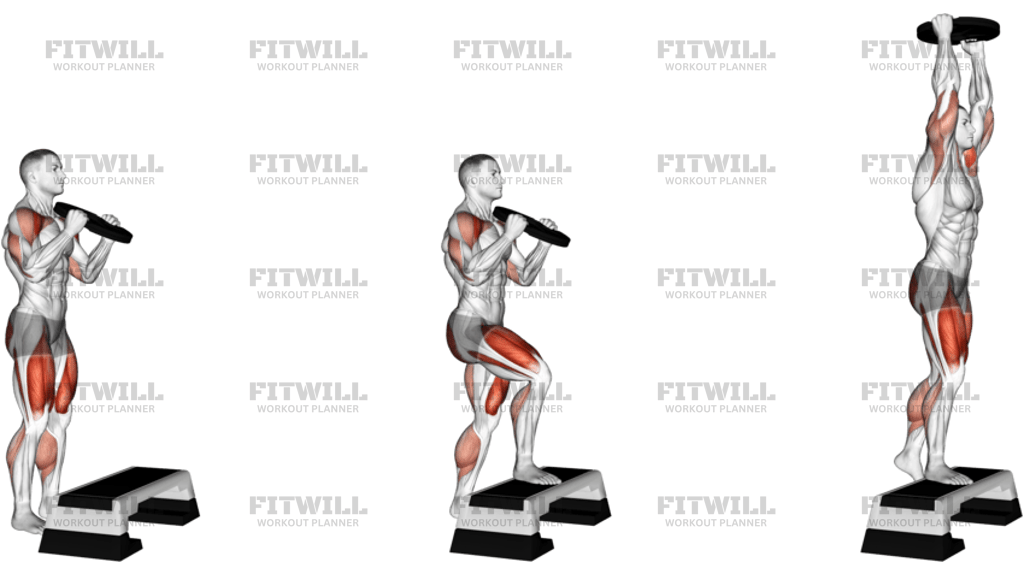
Weighted Overhead Press Step-Up is a compound lower-body and shoulder exercise built around a controlled step onto a platform while pressing a load overhead. The visible movement combines a single-leg drive, a stable standing position, and a vertical press, so the exercise trains the thighs first and then asks the shoulders, triceps, and trunk to keep the body organized through the top position. Because the load changes position as you rise, the quality of the rep depends on balance, timing, and a clean line from the floor to the locked-out press.
This exercise is useful when you want more than a basic step-up. The step challenges the lead leg to produce force without letting the pelvis twist or the trailing leg take over, while the overhead press adds a coordination demand that exposes weak bracing and sloppy posture. In practice, that makes it a strong accessory for leg strength, unilateral control, overhead stability, and general athletic coordination. The working side should feel like it is driving the entire rep rather than being pulled upward by momentum.
The setup matters more here than in a simple step-up because the press can easily turn into a back arch or a rushed lift if the box is too high or the load is too heavy. Use a platform that lets the lead foot plant flat and keeps the knee tracking in a comfortable line. Hold the weight close and start with the shoulders stacked over the hips before you step. As you climb, keep the rib cage down, stand tall at the top, and finish the press without leaning backward or shrugging the shoulders into the ears.
For the best result, move with a deliberate rhythm: step, drive, press, lower, and step down under control. The lowering phase should be just as tidy as the lift, because a sloppy descent usually shows up as a wobbling knee, a soft trunk, or a hurried foot placement. This is a good exercise for accessory strength work, conditioning circuits, and sports preparation when you want the legs and upper body to coordinate under light to moderate load. If the image or equipment setup on your version looks slightly different, keep the same principle: one leg drives the step while the upper body stays stacked and the press finishes in a stable overhead position.
Fitwill
Log Workouts, Track Progress & Build Strength.
Achieve more with Fitwill: explore over 9600 exercises with images and videos, access built-in and custom workouts, perfect for both gym and home sessions, and see real results.
Start your journey. Download today!




Instructions
- Set a stable step or box in front of you and stand tall with the load held at shoulder height, elbows slightly forward and wrists stacked over the handles or plate.
- Brace your midsection, keep your ribs down, and focus your eyes straight ahead before you initiate the first rep.
- Place the lead foot fully on the platform so the heel and forefoot are both supported.
- Drive through the lead leg to step up, keeping the trailing leg light instead of using it to push off the floor.
- As your body rises, press the load overhead in a straight line until the arms are fully extended.
- Keep the torso tall at the top so the press finishes over the shoulders instead of behind your head.
- Lower the load back to shoulder height with control while keeping the standing leg steady.
- Step back down in the same controlled order you used to go up, then reset before the next rep.
- Complete all reps on one side before switching legs if you are performing the movement unilaterally.
Tips & Tricks
- Choose a step height that lets the lead foot stay flat; if the knee collapses inward or the pelvis twists, the box is too high.
- Keep most of your pressure through the lead heel and midfoot so the working leg, not the floor leg, drives the rise.
- Hold the load close to the shoulders at the bottom so the press starts from a stacked, balanced position.
- Press up only after the hips have started to come over the platform; if you press too early, the torso usually leans back.
- Keep the ribs from flaring at lockout so the overhead finish stays controlled rather than turning into a lower-back arch.
- Use a lighter load than you would for a strict overhead press because the step-up adds a balance demand.
- Lower yourself quietly and deliberately; a loud or dropping descent usually means the knee and hip are losing control.
- If the shoulders fatigue before the legs, reduce the press load or use a lower platform so the rep stays clean.
Frequently Asked Questions
What muscles does Weighted Overhead Press Step-Up work?
It mainly trains the thighs and glutes, with the shoulders, triceps, calves, and core helping stabilize the overhead finish.
Should I press as I step up or after I reach the top?
The press should finish as you come tall on the box, with the torso stacked and the weight moving straight overhead.
What is the most common mistake with the step-up portion?
Most people push too much off the trailing leg or let the lead knee cave inward instead of driving cleanly through the front foot.
Can beginners do this exercise safely?
Yes, but start with a low box and a light load so you can learn the step and the press without losing balance.
Why does my lower back feel it more than my legs?
That usually means the ribs are flaring and the press is turning into a lean-back instead of staying stacked over the hips.
What height should the step or box be?
Use a height that lets the lead foot sit fully on the platform and still lets you stand up without bouncing or twisting.
What kind of load works best?
A plate, dumbbell, or other secure weight that you can keep close to the shoulders and press smoothly overhead works well.
How do I progress this movement?
Increase the load only after you can step up without using momentum and finish the overhead press without leaning back.