Weighted Plate Standing Lateral Raise
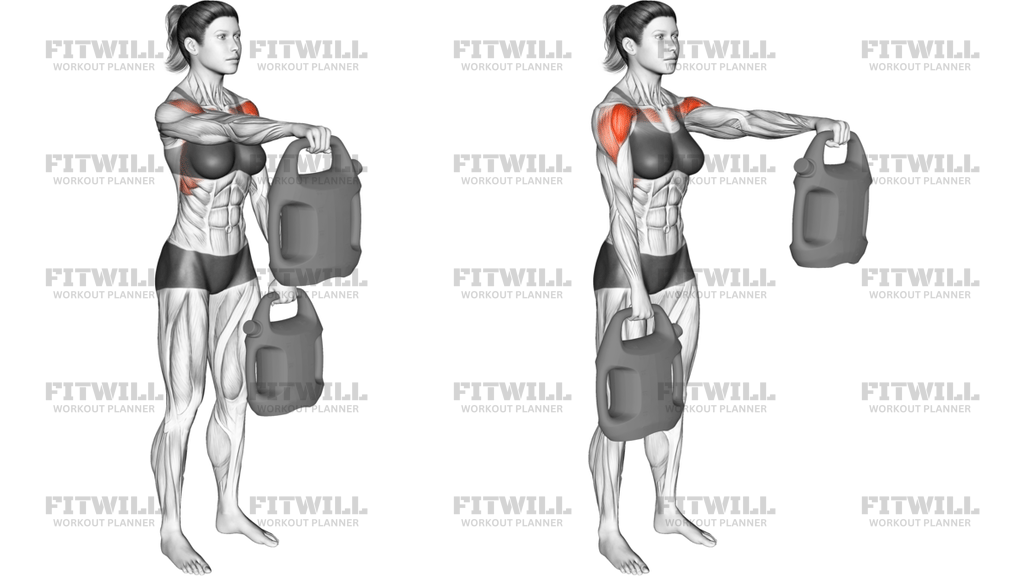
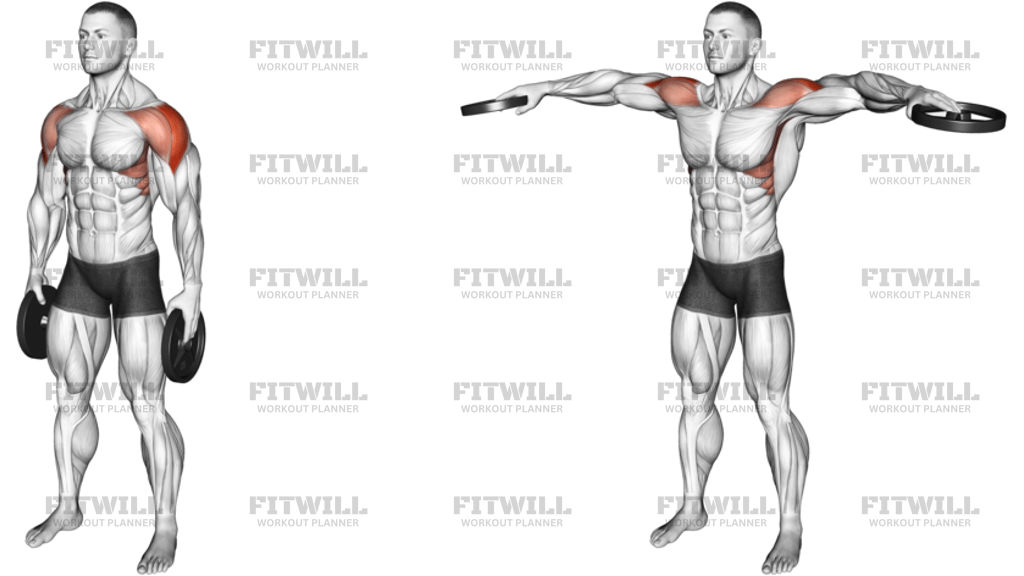
Weighted Plate Standing Lateral Raise is a standing shoulder-isolation exercise where you hold a weight plate in each hand and lift both arms out to the sides until they reach shoulder height. The movement is simple, but the load path is unforgiving: because the plates hang below your hands, any swing, shrug, or torso lean shows up immediately. That makes this version especially useful for building clean lateral-delt tension, shoulder control, and strict rep quality.
Set your feet about hip-width apart, hold the plates by their rims at your sides, and keep your chest tall with your ribs stacked over your pelvis. The elbows stay softly bent, the wrists stay neutral, and the plates travel in a wide arc slightly in front of the body rather than drifting behind it. A controlled setup matters because the exercise only works well when the shoulders stay organized and the upper traps do not take over the lift.
On each rep, raise the plates smoothly, stop around shoulder height, and briefly own the top position before lowering them under control. Exhale as you lift, inhale on the way down, and keep the neck long so the shoulders do not climb toward the ears. The goal is not to force a bigger range; it is to keep the same clean path from the first rep to the last.
This exercise fits well in accessory shoulder work, hypertrophy sessions, warmups, or finishers where you want direct delt work without a lot of body movement. Use light to moderate loading, especially at first, because the grip on a plate can be awkward and the leverage gets challenging fast. If the shoulders pinch, the wrists break, or the torso starts to sway, shorten the range or switch to a more stable lateral-raise variation before pushing the load.
Fitwill
Log Workouts, Track Progress & Build Strength.
Achieve more with Fitwill: explore over 9600 exercises with images and videos, access built-in and custom workouts, perfect for both gym and home sessions, and see real results.
Start your journey. Download today!




Instructions
- Stand with your feet about hip-width apart and hold a weight plate in each hand at your thighs with the plate rims gripped securely.
- Keep your chest tall, ribs stacked over your pelvis, shoulders relaxed, and elbows softly bent before the first rep starts.
- Set your wrists neutral and let the plates hang just outside the thighs without letting them drift forward or behind your body.
- Lift both arms out and up in a wide arc, leading with the elbows instead of yanking the plates with your hands.
- Raise until the plates reach about shoulder height or just below it, stopping before the shoulders shrug upward.
- Pause briefly at the top and keep the plates level so the rep does not turn into a twist or a front raise.
- Lower the plates slowly back to your sides, resisting the descent instead of dropping them.
- Reset your posture and breathe in before the next rep, then exhale as you lift again.
Tips & Tricks
- Choose plates you can hold by the rim without squeezing so hard that your forearms steal the set.
- Keep the elbows at the same angle from start to finish so the rep stays a shoulder raise, not a press.
- Raise in the scapular plane slightly in front of the torso if straight-out-to-the-side reps pinch the shoulder.
- Do not let the plates swing away from your thighs on the way up; that usually means the load is too heavy.
- Keep the neck long and the traps quiet so the shoulders do not shrug at the top.
- Use a slow lower of about two to three seconds to keep tension on the side delts.
- If your low back arches to finish the rep, reduce the load and shorten the range immediately.
- A staggered stance can help you stay balanced if the plates make you want to rock or lean.
Frequently Asked Questions
What muscles do plate standing lateral raises work?
They mainly train the side delts, with the upper traps, rotator cuff, forearms, and core helping stabilize the movement.
Why use plates instead of dumbbells for this lateral raise?
Holding the plate rim changes the leverage and grip demand, so the exercise can feel different even when the shoulder pattern is the same.
How high should I lift the plates?
Stop around shoulder height or slightly below. Going higher usually turns the rep into a shrug and shifts work away from the side delts.
Should my elbows stay bent during the set?
Yes. Keep a small, fixed elbow bend so the plates rise in a clean arc instead of turning the movement into a straight-arm swing.
Can beginners do this exercise safely?
Yes, but only with light plates and strict control. If the grip feels awkward or the shoulders feel pinchy, switch to a simpler raise variation.
Why do my shoulders keep shrugging during this movement?
That usually means the plates are too heavy or you are trying to lift higher than your shoulder control allows. Reduce the load and keep the neck long.
What stance works best with the plates in my hands?
A hip-width stance works for most people, but a slight stagger can help if the load pulls you off balance.
What should I do if the top of the rep hurts my shoulder?
Shorten the range, angle the arms slightly forward, or choose a more stable lateral-raise option until the pain-free path is clear.