Weighted Plate Standing Biceps Curl
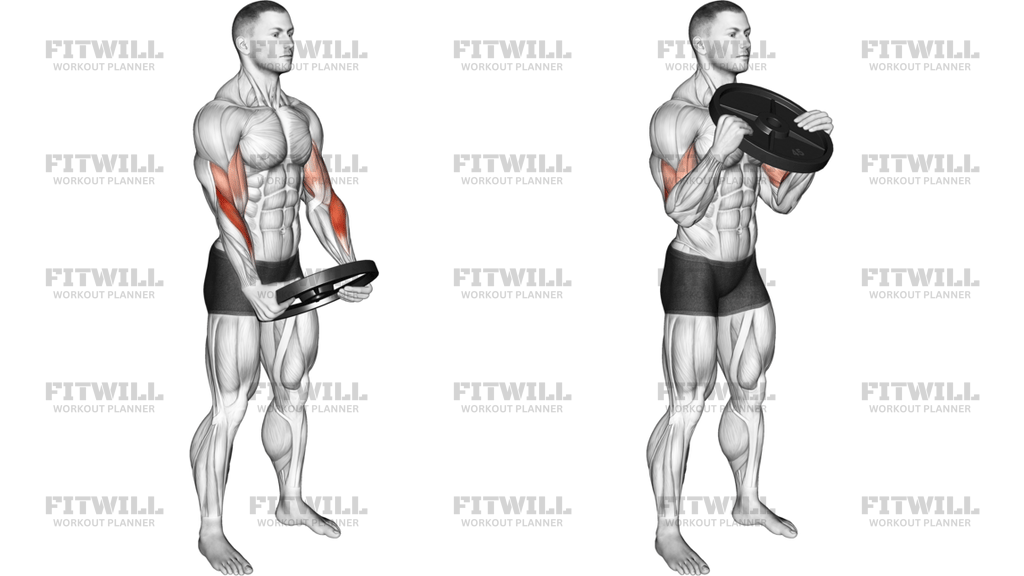
Weighted Plate Standing Biceps Curl is a standing arm exercise that uses a single weight plate as the resistance. The movement is simple, but the plate changes the feel of the curl because the load sits farther from the hand than a dumbbell or cable handle. That makes the exercise especially useful for building strict elbow flexion, grip control, and steady upper-arm positioning.
The main work comes from the biceps, with help from the brachialis, forearms, and shoulder stabilizers that keep the plate steady. Because the plate is easy to swing, the setup matters more than it does on many other curl variations. A balanced stance, stacked ribs, and quiet elbows keep the tension on the arms instead of turning the rep into a small full-body heave.
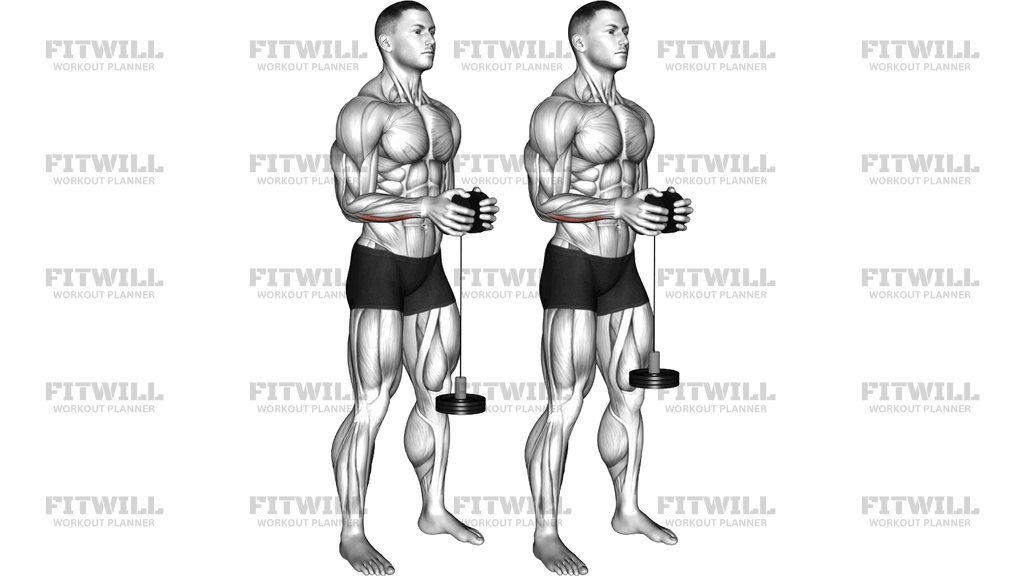
Start with the plate held in front of the thighs and the elbows tucked near the sides. Curl the plate upward by bending the elbows, not by letting the shoulders roll forward. The plate should travel in a clean arc toward the upper chest or sternum, then lower under control until the arms are almost straight again. A short squeeze at the top and a slow return make the rep more effective than chasing height or speed.
This variation fits well as accessory work for arm strength, hypertrophy, or warm-up volume when you want a straightforward curl with a slightly different loading feel. Beginners can use it with a light plate and short, controlled sets. Keep the wrists neutral, avoid leaning back, and stop the set when the plate starts drifting or the elbows begin to swing ahead of the torso.
[ Workout Log & Planner ]
Put your next workout in Fitwill
Keep your plan and training log ready when you are.


Instructions
- Stand tall with your feet about hip-width apart and hold a weight plate in front of your thighs with both hands on the plate so the load stays centered.
- Keep your elbows close to your sides, chest lifted, ribs stacked over your pelvis, and wrists straight before the first rep.
- Brace your midsection and let your shoulders stay down instead of shrugging up toward your ears.
- Curl the plate upward by bending only at the elbows and keep your upper arms nearly still.
- Bring the plate toward your lower chest or sternum in a smooth arc without swinging your torso back.
- Pause briefly at the top and squeeze the biceps without letting the elbows drift forward.
- Lower the plate slowly until your arms are almost straight again and keep tension through the descent.
- Exhale as you curl up, inhale on the way down, and reset your stance before the next repetition.
Tips & Tricks
- Choose a plate size that lets you keep your wrists neutral; a plate that is too large usually forces the hands and forearms into an awkward angle.
- If the plate starts to tip forward, lower the load or shorten the range instead of chasing a higher curl.
- Keep the elbows slightly in front of the torso if needed, but do not let them travel far forward and turn the curl into a front raise.
- Use a slower lowering phase than lifting phase to make the biceps do more of the work.
- Keep the shoulders quiet; if they rise each rep, the load is too heavy for strict curling.
- A narrow stance is not required, but your feet should stay planted so the plate does not become a balance drill.
- Grip the plate firmly enough to control the edge, but do not squeeze so hard that the forearms fail before the biceps.
- Stop the set when your torso starts rocking backward or the plate begins to drift away from your midline.
Frequently Asked Questions
What muscles does the Weighted Plate Standing Biceps Curl work?
It mainly targets the biceps, with the brachialis, forearms, and shoulder stabilizers helping control the plate.
Can beginners perform this exercise?
Yes. Beginners should start with a light plate and focus on keeping the elbows still and the wrists straight.
How should I hold the plate during the curl?
Hold it securely on the sides or lower half of the plate so the load stays centered and the wrists do not bend back.
Should my elbows move forward as I curl the plate?
Only slightly. If the elbows drift far forward, the curl becomes a shoulder-driven swing instead of a strict arm exercise.
How high should I lift the plate?
Curl it to about the lower chest or sternum. Higher than that usually adds shoulder movement without improving the biceps work.
Why does this curl feel harder on my forearms than a dumbbell curl?
The plate creates a longer lever and a less natural hand position, so the forearms have to work harder to keep the load steady.
What is the biggest form mistake to avoid?
Leaning back and swinging the plate up. That shifts the effort away from the biceps and makes the rep sloppy.
When is this exercise most useful in a workout?
It works well as accessory arm work after bigger pulling movements or as a light technique drill before heavier curl variations.