Fly Agains Chains
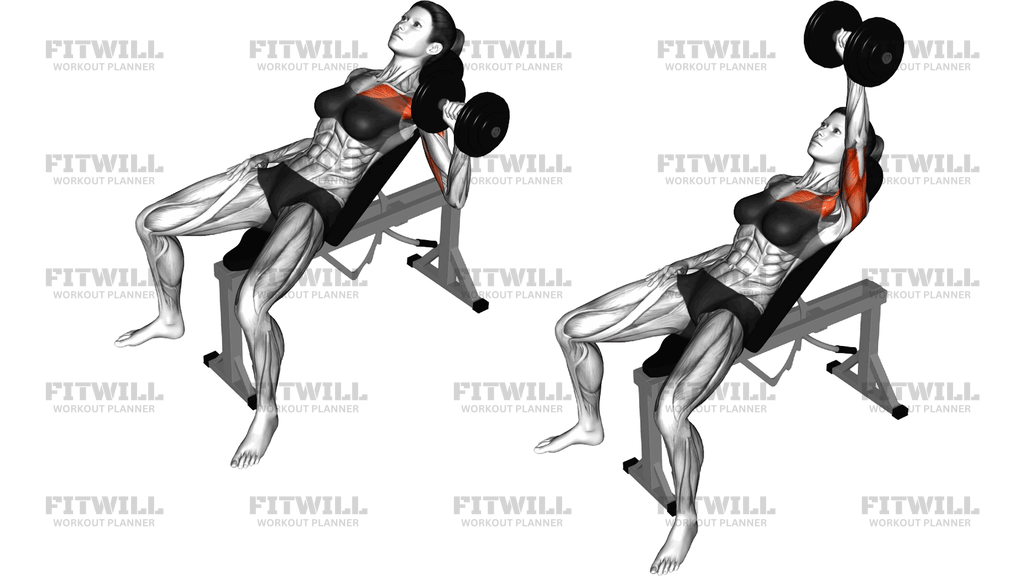
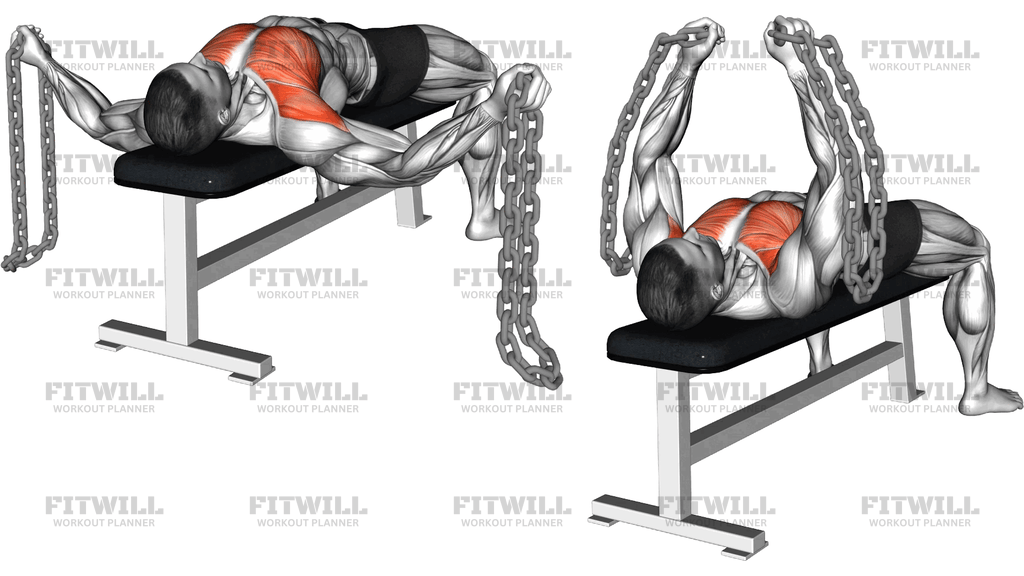
Fly Against Chains is a flat-bench chest fly variation that uses hanging chains to challenge the pecs and shoulder stabilizers through a longer, more demanding finish. The exercise is built around a wide horizontal arc: the chest opens under control in the lowered position, then the arms come back together over the chest with the chains becoming heavier as they rise. That changing load makes position and tempo more important than chasing a big range or a flashy rep.
The main training effect is chest isolation with a strong stability demand. The pectorals do most of the work, while the front delts, serratus, and upper back keep the shoulders organized on the bench. Because the arms travel away from the torso, this movement rewards lifters who can keep the shoulder blades set down and back, maintain a soft elbow angle, and resist the urge to turn the rep into a press.
The setup matters more here than on many other chest movements. Lie flat with the head, upper back, and glutes anchored to the bench, feet planted, and wrists stacked so the chains hang cleanly from the hands. Start with a slight bend in the elbows and lower only until the chest is stretched without the shoulders rolling forward. If the range gets too deep, the front of the shoulder will usually complain before the chest gets a better stimulus.
At the top, bring the hands back together in a controlled arc and squeeze the chest instead of slamming the chains into position. The chains should stay quiet and controlled, not swinging from momentum. That top-end tension is the point of the exercise, so use a load that lets you own the last third of the movement. A slower lowering phase and a brief pause in the stretched position usually make the rep cleaner and safer.
This is best used as an accessory chest movement after pressing work or as a focused hypertrophy exercise when you want constant tension and a stronger lockout challenge. It can work well for experienced lifters who already control dumbbell fly mechanics and want a new loading profile. If the shoulders feel unstable, shorten the range, reduce chain length, or swap to a lighter fly variation until the bench position feels secure and repeatable.
[ Workout Log & Planner ]
Put your next workout in Fitwill
Keep your plan and training log ready when you are.


Instructions
- Lie flat on a bench with your head, upper back, and glutes in contact, feet planted firmly on the floor, and a chain in each hand.
- Set your shoulder blades down and back, stack your wrists over your forearms, and keep a small bend in both elbows before you begin.
- Start with your arms opened wide in a controlled stretch, letting the chains hang straight without twisting your wrists.
- Inhale and lower the arms in a wide arc until you feel the chest lengthen, but stop before the shoulders roll forward.
- Keep the elbow angle almost fixed as you reverse the motion, and sweep the hands back together over mid-chest.
- Exhale as you bring the chains up, leading the movement with your upper arms instead of turning it into a press.
- Squeeze the chest at the top for a brief moment while keeping the chains steady and quiet.
- Lower the chains again under control for the next rep, then finish the set by bringing them down safely to the floor or rack.
Tips & Tricks
- Keep your shoulder blades pinned to the bench; if they slide forward, the front of the shoulder takes over the rep.
- Let the chains hang vertically from your hands so they do not sway or twist as you lower and raise them.
- A fixed soft bend in the elbows protects the joint and keeps the movement a fly instead of a straight-arm press.
- Lower only until the chest is stretched and the upper arms are roughly in line with the torso; deeper is not better if the shoulders drift.
- Use a slow lowering phase so the chains do not pull you into the bottom position.
- The top of the rep is the hardest part because the chains get heavier as they rise, so do not rush the squeeze.
- Choose a chain load that lets you control the last third of the arc without shrugging or arching your back.
- If the hands wobble, shorten the range and clean up the path before adding load.
Frequently Asked Questions
What muscles do Fly Against Chains work?
The pecs do most of the work, with the front delts, serratus, and upper back helping stabilize the shoulders on the bench.
Why use chains instead of dumbbells for this fly?
Chains make the top of the rep heavier, so the squeeze and control at the finish become a bigger part of the exercise.
How low should I lower the chains on the bench?
Lower only until you feel a strong chest stretch without the shoulders rolling forward or the upper arms dropping below a controlled fly position.
Should my elbows stay bent the whole time?
Yes. Keep a small, steady bend in the elbows so the movement stays in the chest and shoulders instead of turning into a press.
Is this exercise okay for beginners?
It can be, but only with a light chain load and a short, controlled range until the bench position feels stable.
What is the most common mistake with the chains?
Letting them swing. The chains should hang quietly and rise under control instead of bouncing at the top.
Where does this fit in a workout?
It works best after pressing work or as a chest accessory when you want more isolation and top-end tension.
What should I do if my shoulders feel pinched?
Shorten the range, reduce the chain load, and keep your shoulder blades set before each repetition.