Safety Bar Front Squat
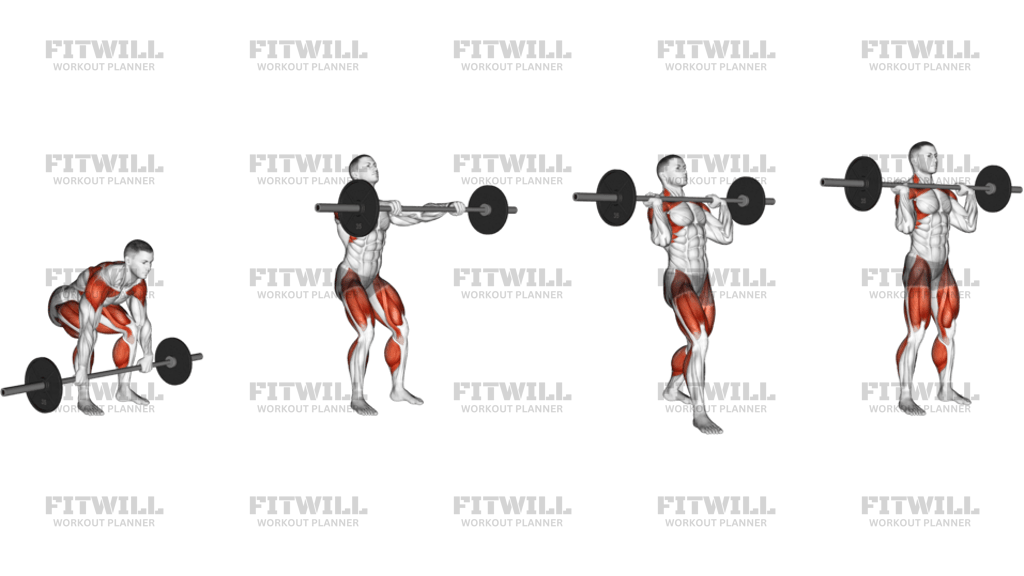
Safety Bar Front Squat is a squat variation performed with a safety bar resting across the upper back and shoulders while the hands hold the front handles. The image shows a deep, upright squat pattern with the elbows tucked in front of the torso and the trunk held tall. That setup matters because the safety bar changes the leverage of the lift and gives you a very different feel from a straight bar back squat: the load sits higher, the torso stays more vertical, and the quads are asked to do a lot of the work.
This movement is usually used to build leg strength, quad size, trunk stiffness, and squat confidence without needing to hold a barbell in a full front rack. The handles help the lifter keep the chest up and the upper back organized, which is especially useful if wrist, shoulder, or front-rack mobility limits a traditional front squat. In practice, it is a powerful squat pattern for strength blocks, lower-body hypertrophy work, or as a joint-friendlier squat option when you still want a demanding knee-dominant lift.
The starting position sets the whole rep. Stand with feet about shoulder-width apart, brace before you descend, and keep the bar centered so it does not roll forward on the pads. As you sit down, let the knees travel in the same direction as the toes and keep pressure through the whole foot, especially the midfoot and heel. The torso should stay tall without overextending the low back. If the chest drops or the heels pop up, the bar position and depth are usually too ambitious for the current load or mobility.
At the bottom, keep control instead of relaxing into the stretch. Drive up by pushing the floor away and letting the knees and hips rise together rather than shooting the hips straight up first. The safety bar rewards clean reps with a strong upward drive and punishes sloppy tempo, so the best version of the exercise looks smooth and deliberate on the way down and forceful but organized on the way up. Breathe in and brace before each rep, then exhale after you pass the hardest point.
Use a depth that you can own without losing foot pressure or spinal position. If the bar digs into the neck, the setup is too high or the pads are not seated evenly; if the elbows collapse or the torso folds, the load is too heavy. Safety Bar Front Squat is most useful when you want a serious squat stimulus with a more upright torso and less shoulder demand than a traditional front rack position.
Fitwill
Log Workouts, Track Progress & Build Strength.
Achieve more with Fitwill: explore over 9600 exercises with images and videos, access built-in and custom workouts, perfect for both gym and home sessions, and see real results.
Start your journey. Download today!




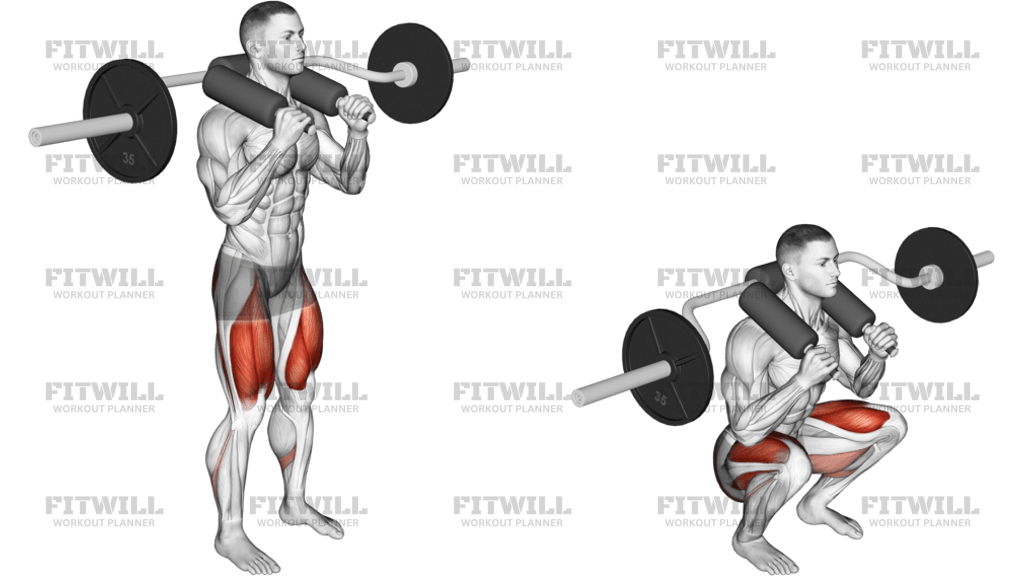
Instructions
- Set the safety bar across the tops of your shoulders and upper back, then grasp the front handles with your elbows slightly forward of your ribs.
- Stand with feet about shoulder-width apart, toes turned out just enough to let your knees track comfortably, and keep your whole foot rooted to the floor.
- Take a breath, brace your trunk, and make sure the pads sit evenly before you start the first rep.
- Unlock the hips and knees together and sit straight down between your legs while keeping your chest tall and your head neutral.
- Lower until your thighs reach at least parallel if your mobility allows, or stop at the deepest position you can control without losing foot pressure.
- At the bottom, keep tension through your core and legs instead of relaxing onto the bar.
- Drive up by pushing the floor away, leading with the chest and hips together so the torso stays upright through the ascent.
- Exhale as you pass the hardest part of the rep, then reset your brace before the next repetition.
- After the final rep, stand tall and re-rack the bar only when you are fully stable.
Tips & Tricks
- Keep the bar centered on the pads; if it feels like it is sliding, reset the setup before you squat.
- Think about sitting straight down, not folding forward, so the quads stay loaded and the torso does not collapse.
- Let the knees travel in line with the toes instead of forcing them inward to chase depth.
- Use the handles to keep the upper back organized, but do not pull hard enough to turn the rep into an arm exercise.
- Keep your heels down and pressure on the midfoot; a heel lift usually means the stance or depth is too aggressive.
- Descend under control and avoid bouncing off the bottom, especially when the load gets heavy.
- Choose a depth that preserves spinal position; a slightly higher squat is better than a deep rep with a rounded low back.
- If the front of the shoulders or neck feels pinched, check pad placement and bar height before adding load.
Frequently Asked Questions
What muscles work most in a Safety Bar Front Squat?
The exercise is primarily a quad-dominant squat, with the glutes, adductors, core, and upper back working hard to keep the torso upright and the bar stable.
Why use a safety bar instead of a straight bar front squat?
The safety bar pads sit on the shoulders and the handles help you stay organized, so it is often easier on the wrists and shoulders than a true front rack position.
Where should the bar sit on my body?
The bar should rest evenly across the upper back and tops of the shoulders, not on the neck. If the pads are too high or uneven, the rep will feel awkward and unstable.
How deep should I squat on this movement?
Go as deep as you can while keeping your heels down, chest tall, and trunk braced. Parallel or slightly below parallel is a solid target if your mobility allows it.
Should I hold the handles tightly?
Grip them firmly enough to keep the bar and upper back stable, but do not yank the handles. The legs should drive the movement, not the arms.
What is the most common form mistake?
The most common issue is folding the torso forward or letting the heels lift as the lifter chases depth. That usually means the load is too heavy or the stance needs adjustment.
Is this a good option if I cannot front rack a barbell?
Yes. That is one of the main advantages of the safety bar version: you can train a squat pattern with a more upright torso without demanding full front-rack mobility.
How should I breathe during the set?
Take a full breath and brace before each rep, hold that pressure through the descent, then exhale as you drive up through the sticking point.