Spinal Stretch On Stability Ball
Spinal Stretch on Stability Ball is a controlled trunk mobility and core-activation exercise that uses the ball to support the pelvis while the torso rounds and side-bends through the waist. The movement is not about speed or force. It is about creating a smooth shortening through the ribs and obliques while keeping the neck relaxed, the hips stable, and the ball steady under you.
The ball changes the exercise because it gives the spine a movable base. Sitting centered on the ball lets you fold through the midsection without collapsing backward or cheating with a big hip shift. That makes the setup important: if you are too far forward, the ball feels unstable; if you are too far back, the stretch becomes awkward and the low back can take over. A balanced seat position, feet planted, and hands lightly supporting the head keep the trunk doing the work.
As you move, think about drawing the rib cage toward the hip on the side you are training while the other side stays long. The elbows should stay open enough that the head is only supported, not pulled. Exhale into the curl, pause briefly in the shortened position, then inhale as you come back to a tall stacked posture. The ball should roll only a small amount; if it is traveling a lot, the movement has become a rock or swing instead of a spinal stretch.
This exercise fits well in warm-ups, recovery sessions, core-focused circuits, and accessory work where you want controlled motion instead of heavy loading. It is also useful when the goal is to feel the waist, front abs, and deep stabilizers without compressing the joints. Keep the range pain-free, avoid forcing the neck, and stop if the low back pinches or the movement turns into a yank on the head.
[ Workout Log & Planner ]
Put your next workout in Fitwill
Keep your plan and training log ready when you are.


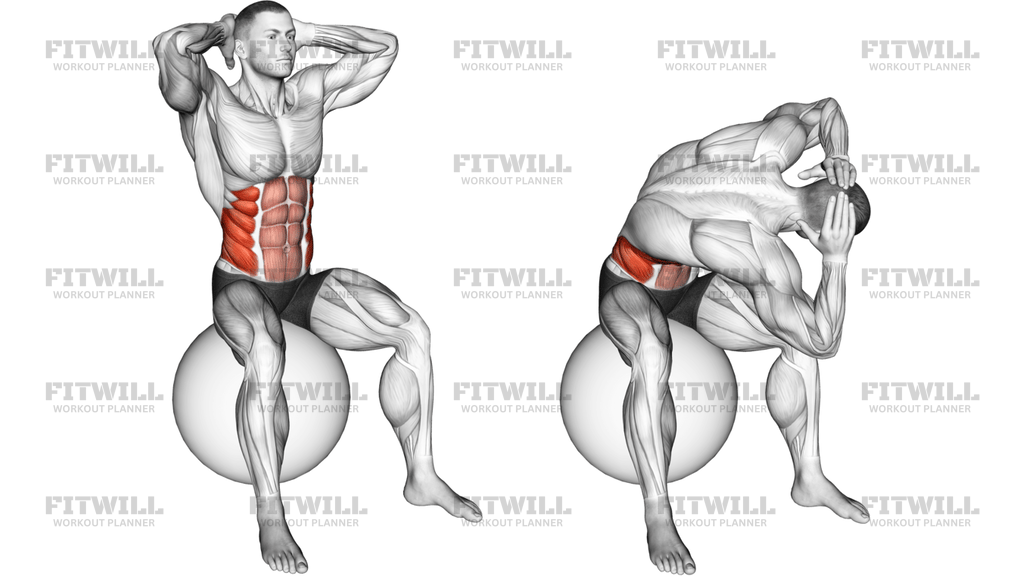
Instructions
- Sit centered on the stability ball with your feet planted wider than your hips and your pelvis stacked over the middle of the ball.
- Place your hands lightly behind your head and keep your elbows open so your neck is supported, not pulled.
- Brace gently and let your rib cage settle over your pelvis before you start the curl.
- Exhale and curl the rib cage down toward one hip, keeping the movement smooth and controlled.
- Allow only a small roll of the ball; the stretch should come from the waist, not from bouncing or sliding.
- Pause briefly in the shortened position while keeping your shoulders relaxed and your chin neutral.
- Inhale and uncurl back to a tall seated position until your ribs are stacked over your hips again.
- If your workout calls for both sides, repeat the same quality of movement on the other side after you reset.
Tips & Tricks
- Sit on the forward half of the ball, but not so far forward that you feel like you will slide off it.
- Plant the feet wide enough to make the ball feel quiet before the first rep starts.
- Think about bringing your sternum toward your hip instead of dropping the elbow toward the floor.
- Keep the hands passive behind the head; the arms are there for support, not for pulling.
- Make the exhale do the work of shortening the waist before you chase a bigger range.
- If the ball rolls a lot, reduce the range until the spine moves more than the hips.
- A smooth pause at the shortened position is more useful here than bouncing through multiple quick reps.
- If you feel the neck or low back more than the side waist, shorten the range and reset your posture.
Frequently Asked Questions
What muscles does Spinal Stretch on Stability Ball work?
It mainly targets the obliques and upper abdominals, with help from the deeper trunk stabilizers and the muscles that support the neck and hips.
Is this more of a stretch or a core exercise?
It is both. The motion creates a controlled stretch through the side waist while the trunk muscles keep you balanced and in control.
How should I position my hands behind my head?
Let the fingertips support the head lightly and keep the elbows open. If your hands are pulling the neck forward, the setup is too aggressive.
Should the ball move a lot during the rep?
No. The ball should stay mostly quiet under you. A small amount of roll is normal, but the rep should come from the waist rather than from sliding around.
Do I need to twist as I curl?
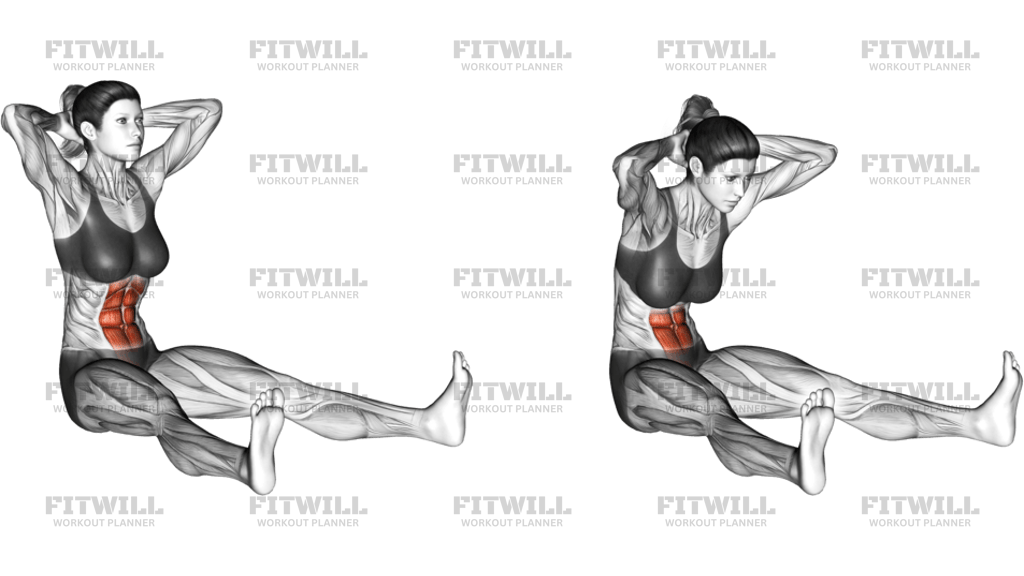
Not necessarily. Follow the version shown in the image by curling and side-bending through the torso first. Any rotation should be very small and controlled if it is part of your program.
Can beginners do this on a stability ball?
Yes, as long as they keep the range short, the feet planted, and the pace slow enough to stay balanced.
Where should I feel the stretch most?
You should feel it across the side waist and upper abs, with a light stretch through the trunk rather than a pinch in the neck or low back.
What should I do if my low back feels uncomfortable?
Shorten the range, sit taller on the ball, and keep your ribs stacked over your hips. If the discomfort remains sharp or increases, stop the set.