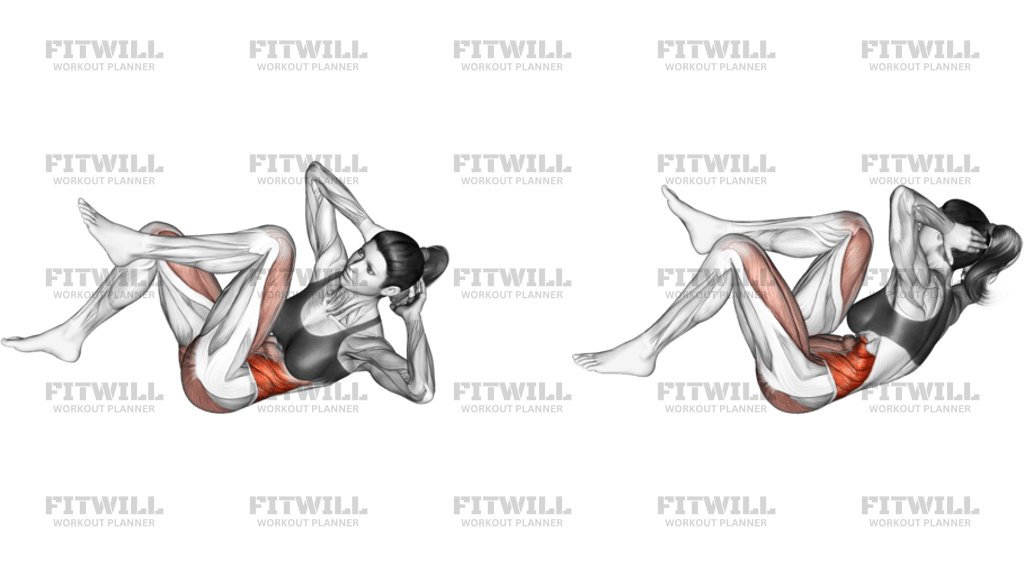
Lying Leg Figure Eight
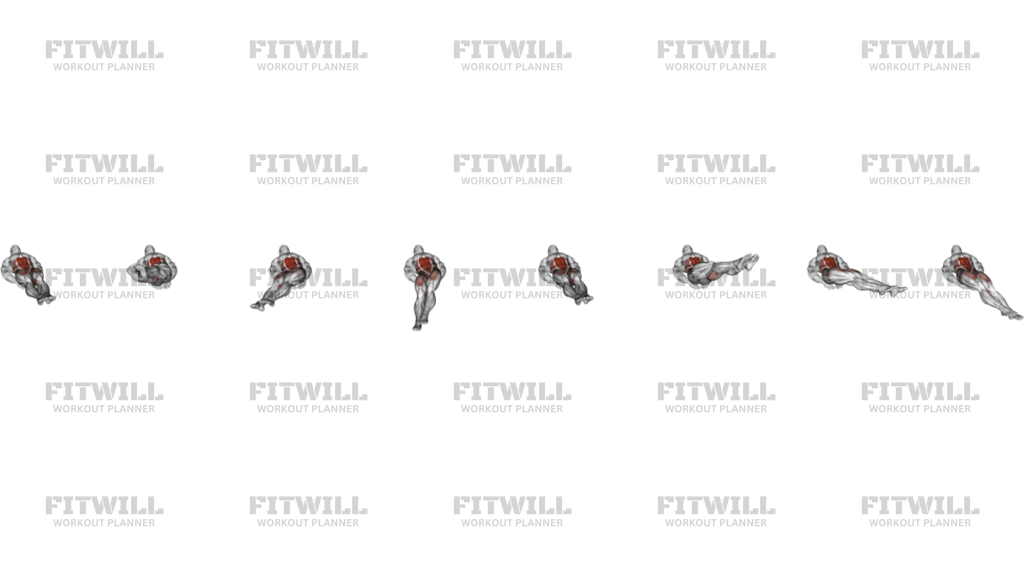
Lying Leg Figure Eight is a floor-based bodyweight core drill where you lie on your back and trace a smooth figure-eight path with your legs. The movement looks simple, but it asks for real control: your lower back has to stay quiet, your ribs need to stay down, and your hips have to move without turning the repetition into a swing. That makes it useful for building coordination as well as abdominal endurance.
The exercise is aimed at the waist and core with a strong emphasis on lower-abdominal control, obliques, and hip flexor engagement. Because the legs travel in an alternating loop, the trunk has to resist twisting and arching while the pelvis stays organized. When done well, you feel the work in the front of the hips and deep in the midsection rather than in the neck or lower back.
Setup matters more here than on many other core drills. Lie on a mat or flat floor, keep your arms relaxed for balance, and position your legs high enough that you can hold the lumbar spine against the floor. A smaller range with clean control is better than a dramatic circle that pulls the ribs up or makes the low back lift. If your hamstrings are tight, bend the knees slightly and shorten the pattern.
Use a steady tempo and let the legs draw the shape instead of kicking through it. The path should stay smooth, symmetrical, and deliberate from rep to rep. Exhale through the hardest part of the crossing, then inhale as the legs open back out. If you cannot keep the pelvis stable, raise the legs, reduce the size of the figure eight, or pause briefly at the crossover.
This is a good accessory movement for warm-ups, core circuits, Pilates-style training, or conditioning blocks where control matters more than load. It is also a practical regression for people who need a low-load way to train trunk stability without spinal compression. Keep the range pain-free, stop the set when the low back starts to arch, and treat every rep as a test of control rather than speed.
Fitwill
Log Workouts, Track Progress & Build Strength.
Achieve more with Fitwill: explore over 9600 exercises with images and videos, access built-in and custom workouts, perfect for both gym and home sessions, and see real results.
Start your journey. Download today!




Instructions
- Lie on your back on a mat with your arms relaxed by your sides and your palms down for balance.
- Lift both legs off the floor to a height you can control, keeping the knees straight or only slightly bent.
- Press your lower back gently into the mat and keep your ribs from flaring up.
- Begin tracing a small figure-eight pattern with both legs together, letting the hips guide the path.
- Cross through the middle of the pattern smoothly instead of kicking or snapping the legs through.
- Keep the circle narrow enough that your pelvis stays still and your lower back does not arch.
- Exhale as the legs pass through the center of the figure eight and inhale as they open back out.
- Continue for the planned reps, then lower the legs slowly and reset before the next set.
Tips & Tricks
- If your low back lifts, raise the legs higher and make the figure eight smaller.
- A slight knee bend is a valid regression when tight hamstrings pull you out of position.
- Keep the motion smooth at the hips; the feet should not be whipping around to create momentum.
- Think about drawing the pattern from your pelvis, not just moving your ankles.
- Keep your neck and shoulders heavy on the floor instead of curling up to help the movement.
- Slow reps make this exercise harder in the right way because they force the trunk to stabilize.
- If one side feels less coordinated, reduce the speed and match the size of the loop on both sides.
- Stop the set when the figure eight turns into a leg swing or your breathing gets choppy.
Frequently Asked Questions
What muscles does Lying Leg Figure Eight work?
It mainly trains the lower abs, obliques, and hip flexors, with deep core stabilizers helping keep the pelvis steady.
How do I know if my range is too big?
If your lower back pops off the floor, your ribs flare, or the legs start swinging, the pattern is too large.
Can beginners do this exercise?
Yes. Beginners should keep the legs higher, bend the knees a little if needed, and use a very small figure-eight path.
Do I need any equipment for this movement?
No. A mat or other comfortable flat surface is enough.
What is the most common mistake?
The biggest mistake is using momentum instead of control, which usually shows up as a low-back arch or a jerky crossing.
Where should I feel this exercise?
You should feel tension in the front of the hips and the midsection, especially the lower abs and obliques, not in the neck.
How can I make Lying Leg Figure Eight easier?
Shorten the loop, keep the legs higher, and bend the knees slightly so you can keep the pelvis quiet.
How can I make it harder?
Lower the legs a little, slow the tempo, and pause briefly when the legs cross through the center of the pattern.
Is this a good core finisher?
Yes. It works well near the end of a workout when you want controlled abdominal work without external load.