Standing Lateral Stretch
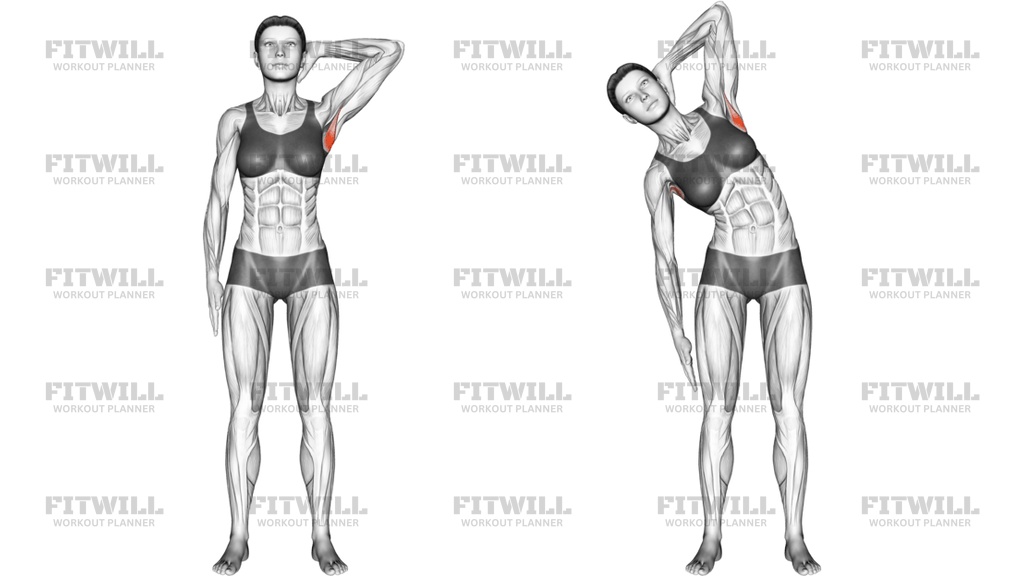
Standing Lateral Stretch is a standing side-bend stretch for the rib cage, obliques, lat region, and the long line of the torso. In the image, the body stays upright through the lower body while the upper body tilts away from the working side, creating a clear stretch along the side body rather than a twist or forward fold. The exercise is usually done with body weight and can be performed on a mat or firm floor for comfort.
The setup matters because this stretch is easy to turn into a shrug, a lean, or a rotation if the ribs and pelvis are not stacked first. A clean position gives you a better stretch through the side of the trunk and shoulder without pinching the neck or dumping the pelvis forward. The bent elbow and hand-behind-head position help keep the chest open while the free arm reaches down the outside of the body.
When performed well, the movement should feel long and controlled from the standing foot to the fingertips. The torso should arc smoothly to the side while the hips stay level and pointed forward. The return to standing is just as important as the lean itself: come back under control, reset your posture, and repeat on the other side so both sides of the trunk get equal work.
This stretch is useful in a warm-up, cool-down, mobility block, or recovery session when you want to open the lateral line of the body after pressing, pulling, running, or overhead work. It is also a practical option for beginners because it does not require load, momentum, or complex balance. The key is to stay in a pain-free range, breathe into the stretched side, and avoid forcing the shoulder or low back into a bigger range than the body can own.
Fitwill
Log Workouts, Track Progress & Build Strength.
Achieve more with Fitwill: explore over 9600 exercises with images and videos, access built-in and custom workouts, perfect for both gym and home sessions, and see real results.
Start your journey. Download today!




Instructions
- Stand tall on a mat or firm floor with your feet about hip-width apart and your ribs stacked over your pelvis.
- Place one hand behind your head with the elbow pointing out, and let the other arm hang long beside your body.
- Keep both hips facing forward and your standing leg grounded before you begin the stretch.
- Inhale to lengthen through the crown of your head and create space between your ribs and pelvis.
- Exhale and lean your torso away from the bent-elbow side, keeping the chest open instead of turning forward.
- Let the free hand slide down the outside of the leg as the side of your trunk opens.
- Keep the neck long and the shoulder of the bent arm relaxed instead of shrugging upward.
- Hold the end position for a slow breath, then return to tall standing under control.
- Reset your posture and repeat on the opposite side for balanced work.
Tips & Tricks
- Think about making space between your lower ribs and hip on the stretched side, not just bending sideways.
- Keep the elbow of the hand-behind-head arm open so the chest does not collapse forward.
- If the low back takes over, shorten the range and keep the movement in the upper torso.
- Let the pelvis stay level instead of hiking one hip up toward the ribs.
- Reach the free hand down the thigh rather than reaching forward, which would turn the stretch into a twist.
- Breathe into the side body on each hold; a slow exhale usually lets the ribs open further without forcing.
- Use a mirror or a wall the first few times if you tend to lean or rotate instead of side-bending cleanly.
- Stop the stretch before the shoulder or neck feels pinched; this movement should feel like length, not joint pain.
Frequently Asked Questions
What does Standing Lateral Stretch mainly target?
It mainly targets the side body, including the obliques, lats, and the muscles between the ribs and pelvis on the stretched side.
Why is one hand placed behind the head?
That arm position helps keep the chest open and gives you a cleaner side bend instead of letting the torso fold forward.
Should my torso twist during the stretch?
No. The rib cage should stay mostly facing forward while the body bends to the side.
How far should I lean to the side?
Lean only until you feel a strong but comfortable stretch along the side of the torso. The range should stay pain-free and controlled.
Can beginners use this stretch?
Yes. It is beginner-friendly because it uses body weight only and can be shortened to match your flexibility.
What is a common mistake with this movement?
The most common mistake is rotating forward or shrugging the upper shoulder, which reduces the side-body stretch.
Should I feel this in my lower back?
You may feel some length near the waist or low back, but the stretch should stay comfortable and should not create sharp lumbar pain.
When is this stretch most useful?
It works well after upper-body training, running, or long periods of sitting when the side body feels tight.
How can I make the stretch more effective?
Stack the ribs over the pelvis first, exhale as you lean, and keep the movement smooth instead of bouncing.