Standing Reach Up Back Rotation Stretch
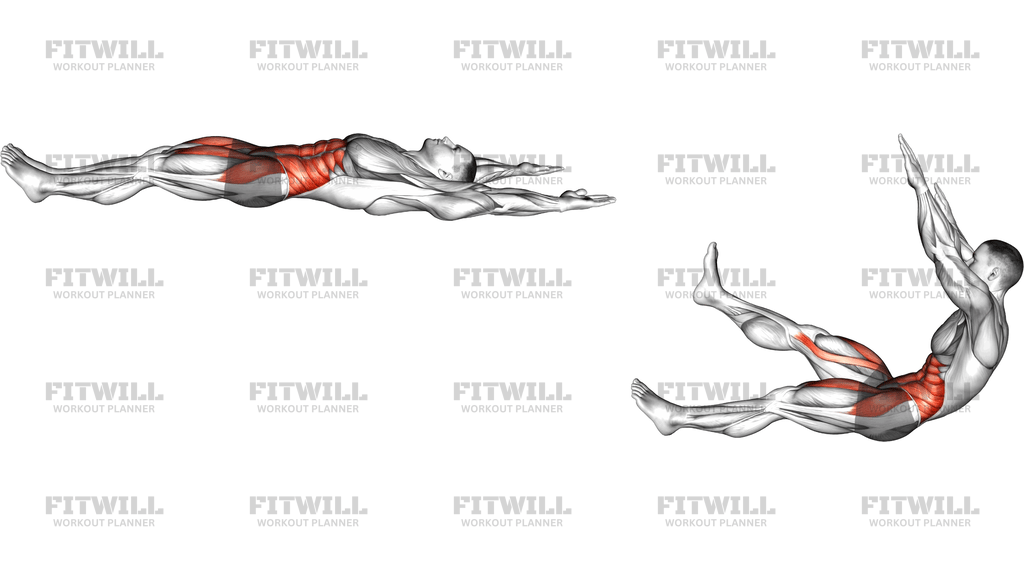
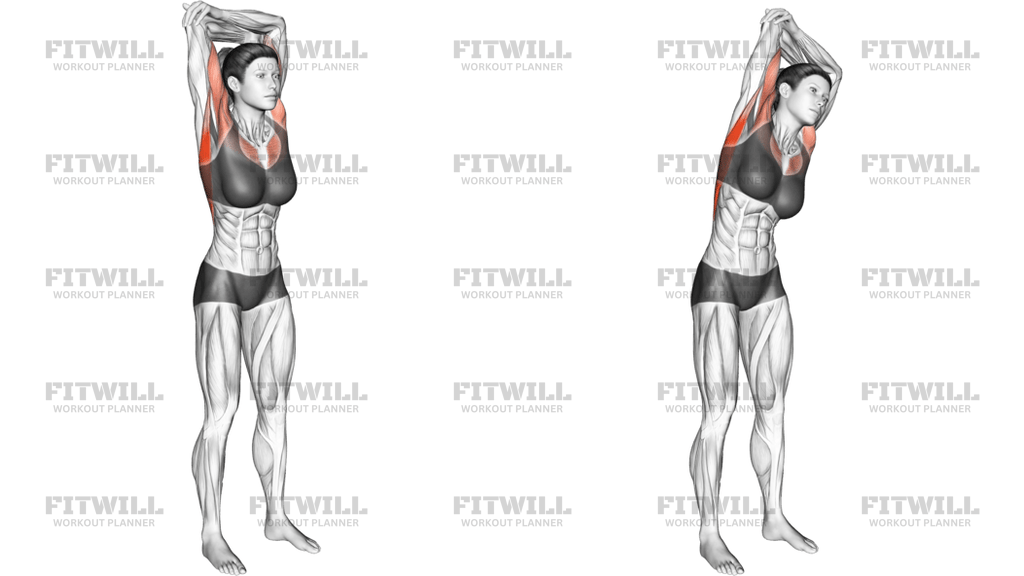
Standing Reach Up Back Rotation Stretch is a bodyweight standing mobility drill for the shoulders, lats, upper back, and trunk. The image shows a tall stance with the hands clasped overhead, then a controlled lean and rotation that opens the side body and ribcage. It is not a power movement or a loaded strength exercise; the value comes from slow positioning, steady breathing, and a range you can hold without twisting aggressively.
This stretch is useful when the upper back feels stiff, the shoulders do not comfortably reach overhead, or the ribcage and torso need to move together instead of compensating through the low back. Keeping the feet planted and the hips stacked lets the stretch happen through the lats, obliques, and thoracic spine rather than turning into a sloppy side bend. The overhead reach also encourages the shoulders to stay active instead of collapsing forward.
The setup matters. Stand tall, brace lightly, and keep the ribs from flaring while the arms stay long overhead. From there, rotate and arc gently into the side that feels tight, then breathe into the stretched side body before returning to center. The movement should feel smooth and controlled, with no bouncing or aggressive pulling on the arms. If the lower back takes over, reduce the range and keep the motion smaller.
Use this stretch in a warm-up, between upper-body sets, or after training when you want to restore overhead motion and trunk mobility. It is especially relevant for people who sit a lot, press overhead, or feel limited through the lats and chest before training. The best rep is the one that creates a clear opening in the side body while the neck stays relaxed and the pelvis remains stable.
[ Workout Log & Planner ]
Put your next workout in Fitwill
Keep your plan and training log ready when you are.


Instructions
- Stand tall on the floor or a mat with your feet about hip-width apart and your weight even across both feet.
- Interlace your fingers and press your palms upward so your arms are straight overhead.
- Keep your ribs stacked over your pelvis, then lightly brace your abdomen so the low back does not arch hard.
- Reach both arms long, then begin a slow side-and-back rotation toward the tighter side while the elbows stay extended.
- Let the stretch open through the lats, upper back, and side ribs instead of collapsing the chest forward.
- Hold the end position for a steady breath or two without bouncing or yanking on the hands.
- Return through center with control and reset your posture before the next rep.
- Repeat on the opposite side and keep the range symmetrical from rep to rep.
Tips & Tricks
- Keep the elbows locked out and the hands actively reaching so the stretch comes from the torso, not from bending the arms.
- Move only as far as you can keep both heels grounded and the pelvis quiet.
- If the low back pinches, shorten the arc and think tall through the crown of the head.
- Exhale into the stretched side ribs to help the thoracic rotation happen without force.
- Do not let the shoulders shrug all the way to the ears; keep them long and active overhead.
- A small lean is usually enough for this drill, especially if the lats are very tight.
- Keep the chin neutral instead of chasing the hands with your head.
- Use a slower return than the reach so you do not spring out of the stretch.
Frequently Asked Questions
What does Standing Reach Up Back Rotation Stretch target most?
It mainly targets the lats, side body, upper back, and shoulder complex.
Can beginners perform this exercise?
Yes. It is beginner-friendly because you can control the range easily and keep both feet planted.
Do I need equipment for this stretch?
No. It is a bodyweight mobility drill, although a mat can make the standing position more comfortable.
What is the biggest mistake with the overhead reach?
People usually flare the ribs and turn it into a low-back arch instead of a controlled trunk stretch.
Should the arms stay straight the whole time?
Yes. Straight elbows keep the stretch organized through the shoulders, lats, and side torso.
Where should I feel the stretch most?
You should feel it along the side ribs, latissimus area, upper back, and sometimes into the triceps or shoulders.
When is this stretch most useful?
It works well before overhead pressing, after back training, or anytime your torso feels stiff from sitting.
How long should I hold each side?
A short, controlled hold is enough. Focus on breathing and position rather than forcing a long static stretch.