Cable Rope Lying Triceps Extension
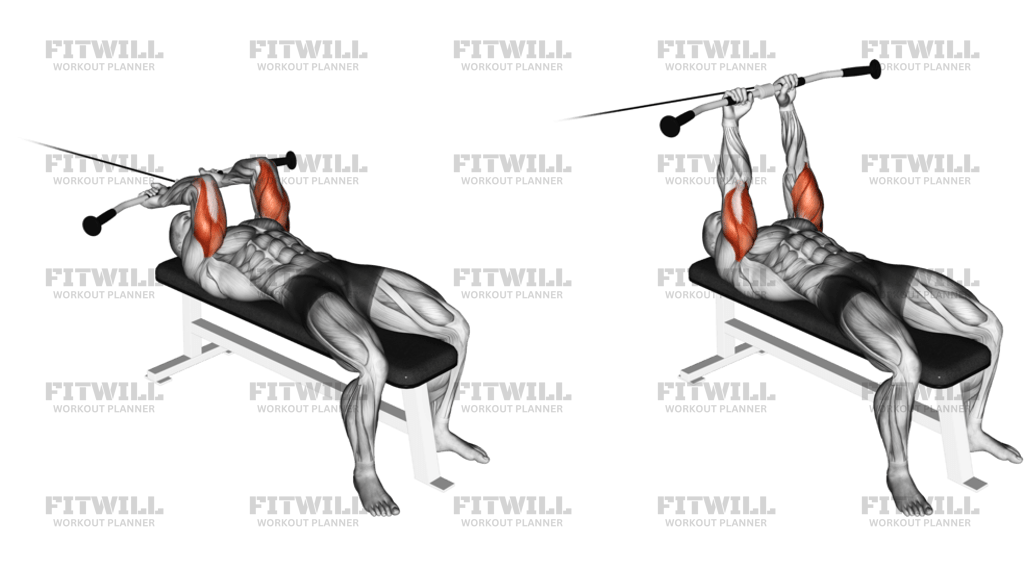
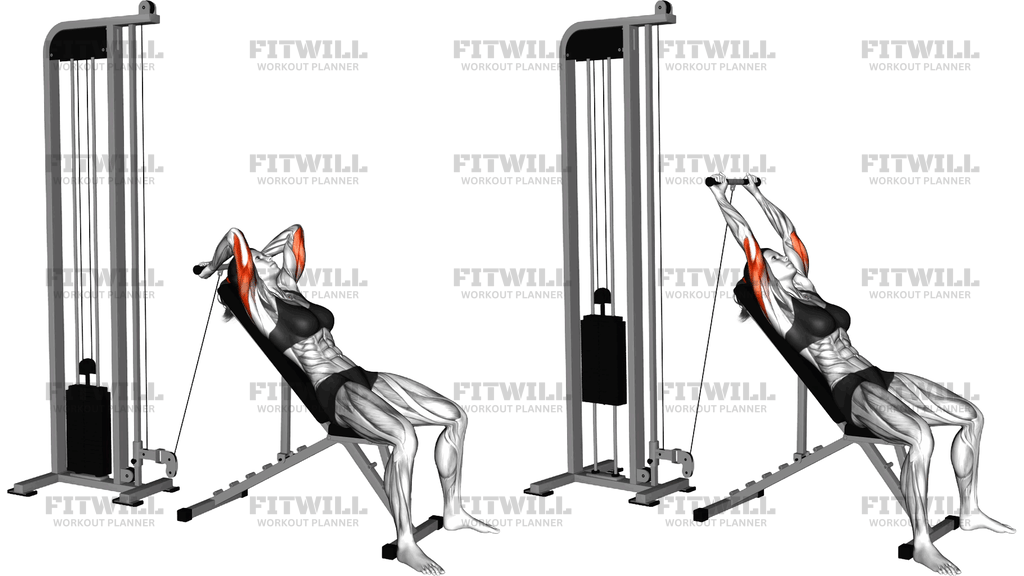
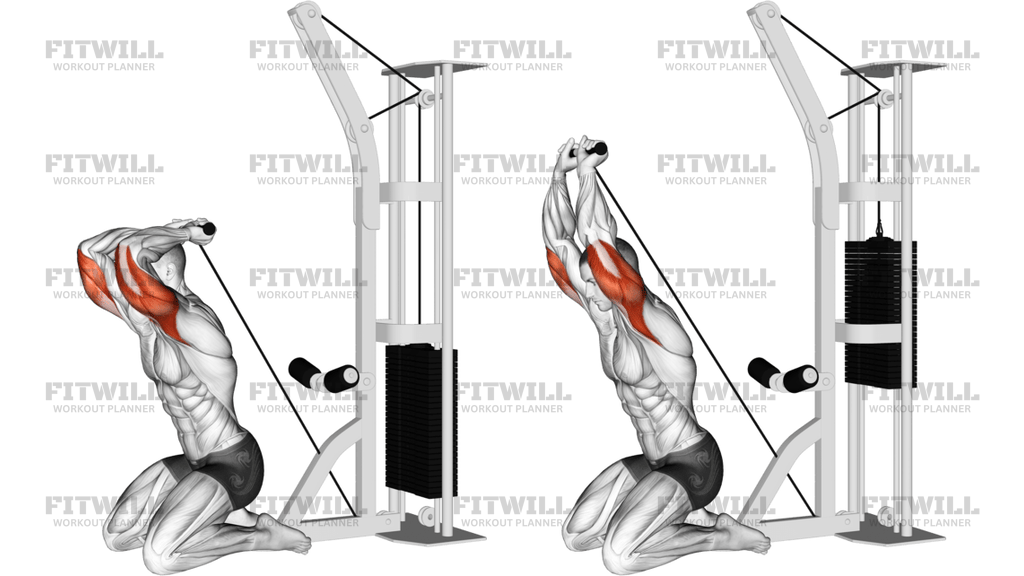
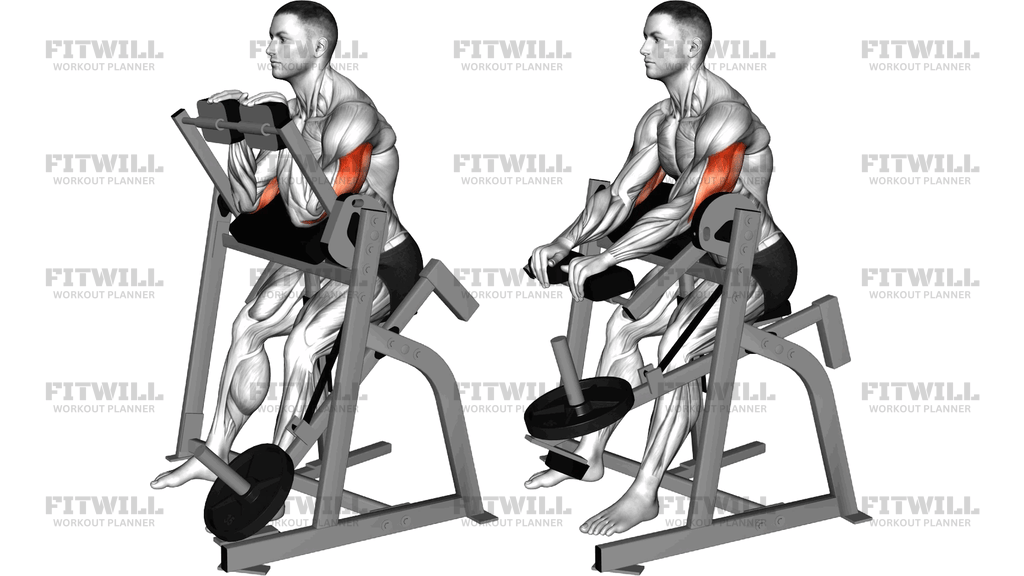
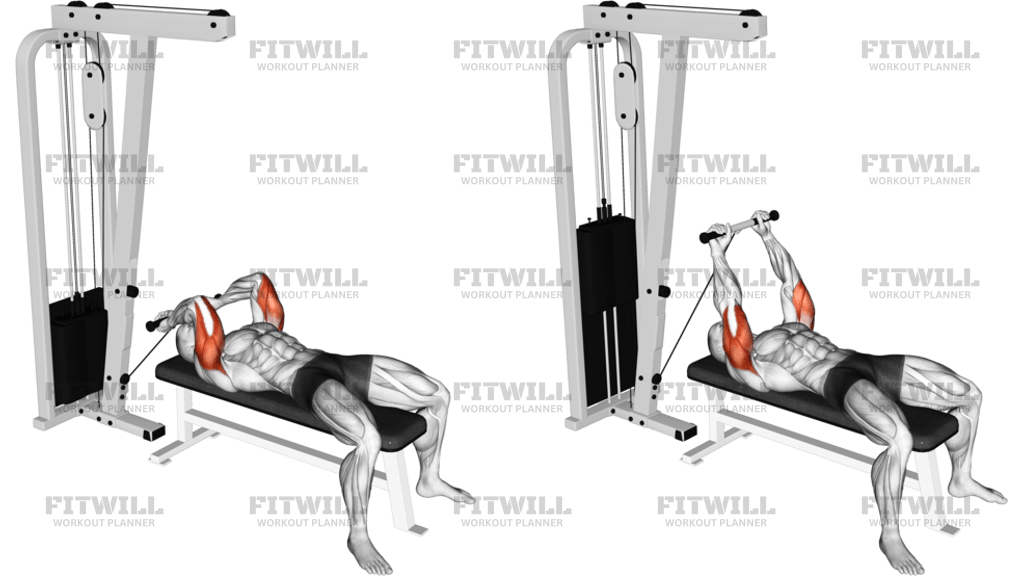
Cable Rope Lying Triceps Extension is a cable-based triceps isolation exercise performed while lying on a flat bench with a rope attachment. The setup keeps constant tension on the arms from the low pulley, which makes it a useful choice when you want strict elbow extension work without standing momentum or a loose top position.
The exercise mainly targets the triceps brachii, especially the long and lateral heads, while the forearms help stabilize the rope and the shoulders stay quiet to keep the elbows from drifting. Because you are lying down, the bench and rope path do a lot of the balance work for you, which lets you focus on clean elbow movement instead of body English.
The setup matters. Place the bench so the cable can travel past the top of your head, lie back with your head closest to the pulley, and hold the rope with your elbows stacked over your shoulders. From there, the movement should feel like a pure hinge at the elbows: lower the rope with control until the hands come near the sides of your head, then extend the elbows until the forearms line up over the upper arms again.
Cable resistance changes the feel of the rep compared with dumbbell skull crushers or EZ-bar extensions. The line of pull stays active through most of the range, so the exercise rewards a steady tempo and a consistent elbow path. It is especially useful as an accessory lift for arm size, pressing strength support, or higher-rep triceps work when you want a joint-friendly load that still keeps tension on the target muscles.
Good repetitions are smooth and deliberate. Keep the wrists stacked, avoid letting the elbows flare backward, and stop the set if your shoulders start taking over the motion. A lighter load with crisp positioning will usually train the triceps better than forcing a heavy rope through a shortened range or turning the lift into a chest press.
Fitwill
Log Workouts, Track Progress & Build Strength.
Achieve more with Fitwill: explore over 9600 exercises with images and videos, access built-in and custom workouts, perfect for both gym and home sessions, and see real results.
Start your journey. Download today!




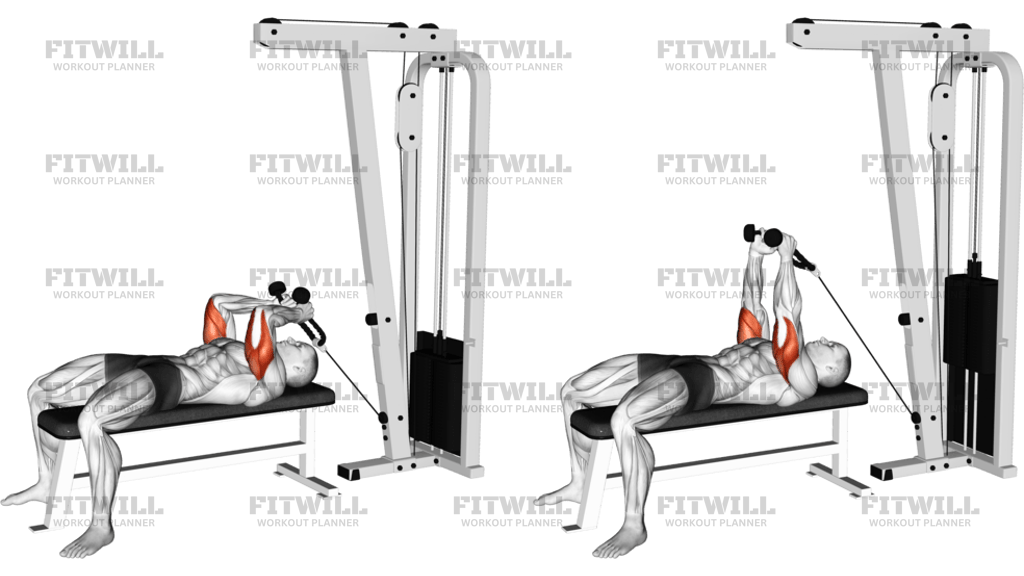
Instructions
- Set a bench flat beside a low cable pulley and attach a rope handle so the cable can run past the top of your head.
- Lie back on the bench with your head closest to the pulley, feet flat on the floor, and your upper back supported firmly on the pad.
- Grip the rope ends with neutral wrists and bring your elbows up so they point toward the ceiling above your shoulders.
- Start with your hands above your face and your elbows bent, keeping the upper arms mostly still.
- Brace your torso and lower the rope by bending only at the elbows until the handles travel down beside your temples or ears.
- Press the rope back up by straightening your elbows until your forearms stack over your upper arms without locking out aggressively.
- Keep the cable under control on the way down and the way up; do not let the rope yank your hands backward.
- Breathe in as you lower and exhale as you extend, keeping the ribs down and the neck relaxed.
- Finish the set by guiding the rope back to the start with control before sitting up and releasing the handle.
Tips & Tricks
- Keep the bench close enough to the pulley that the rope stays taut at the top; slack makes the first half of the rep sloppy.
- Let your elbows point up and slightly inward, but do not let them drift wide toward a chest-press angle.
- Finish by separating the rope ends just enough to keep the wrists neutral, not by over-splaying the hands.
- If the rope hits your face or forehead, move the bench a little farther from the stack so the line of pull clears your head.
- Use a load that lets you keep the upper arms nearly fixed; if the shoulders roll forward, the set is too heavy.
- Lower under control for a full elbow bend, but do not force the rope deep enough to jam the shoulders or elbows.
- Keep the ribs down and the low back settled on the bench so you do not turn the movement into a partial bridge.
- Treat the top position as a triceps squeeze, not a hard elbow snap; a smooth finish keeps tension on the rope.
- Higher reps usually work well here because the cable gives continuous resistance and punishes sloppy speed.
- If one side of the rope twists more than the other, reset your grip before the next rep so both arms extend evenly.
Frequently Asked Questions
What muscles does Cable Rope Lying Triceps Extension work most?
The triceps are doing most of the work, with the long head usually feeling the strongest stretch when your elbows bend near your head.
Why use a rope attachment instead of a straight bar?
The rope lets your hands split slightly at the top, which can feel more natural on the wrists and lets you finish the elbow extension cleanly.
How should I position the bench for Cable Rope Lying Triceps Extension?
Set the bench beside the low pulley so the cable can travel past your head without scraping the frame. Your head should be closest to the stack and your feet should stay planted.
Should my elbows move during the rep?
A small amount of drift is normal, but the upper arms should stay mostly fixed. If the elbows swing back toward your chest, the set has turned into a different exercise.
How deep should I lower the rope?
Lower until your hands come near the sides of your head and you feel the triceps stretch, but stop before the shoulders start rolling forward or the rope loses tension.
Can beginners do Cable Rope Lying Triceps Extension?
Yes, as long as the load is light enough to keep the elbows stacked and the rope path controlled. It is often easier to learn than a free-weight skull crusher because the cable guides the line of pull.
What is the most common mistake on this exercise?
Letting the shoulders take over is the biggest issue. Keep the upper arms quiet and think about straightening the elbows rather than pressing the rope upward.
What rep range works well here?
This movement usually shines in moderate to higher rep sets, where you can keep tension smooth and avoid cheating the finish with momentum.