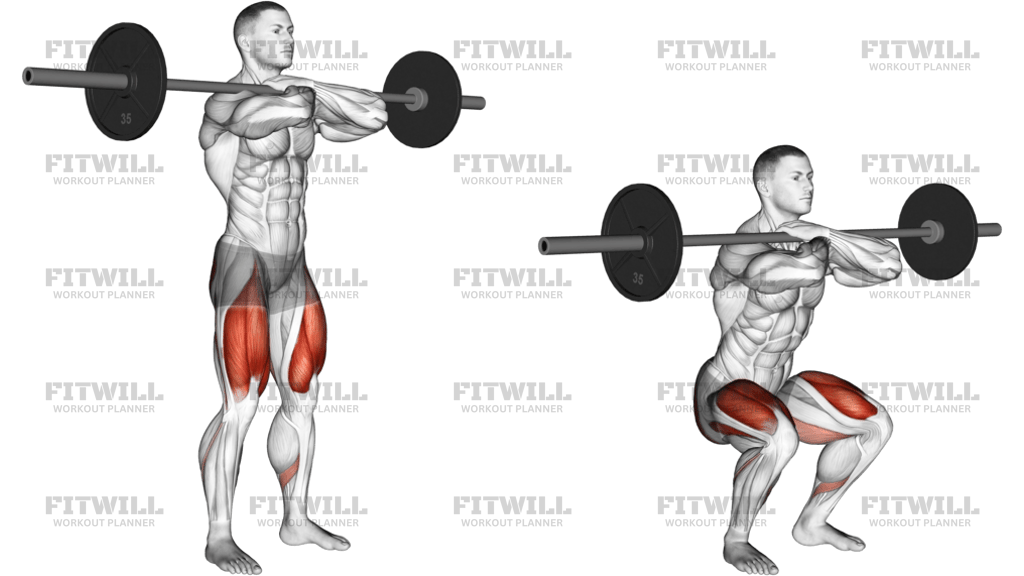
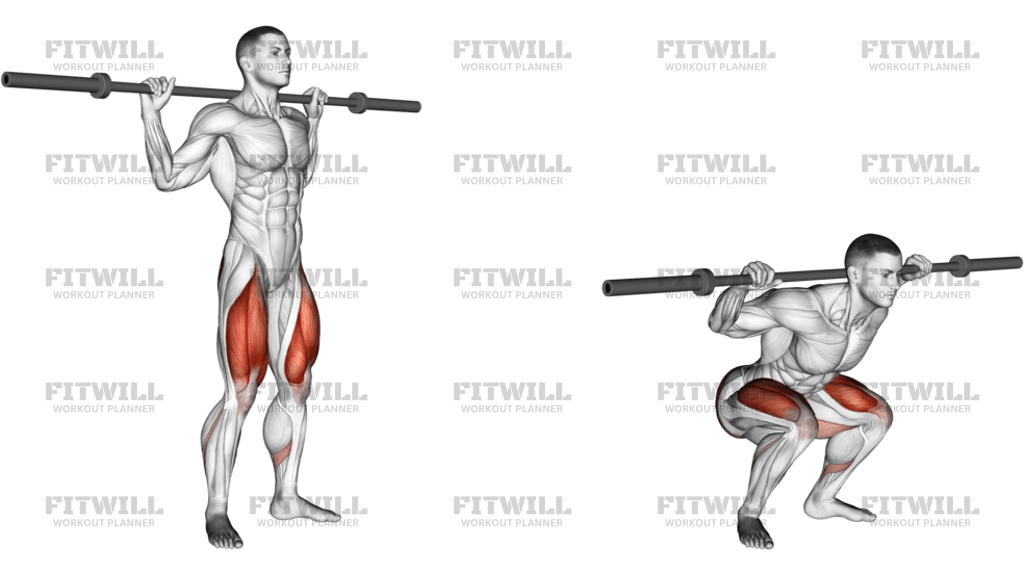
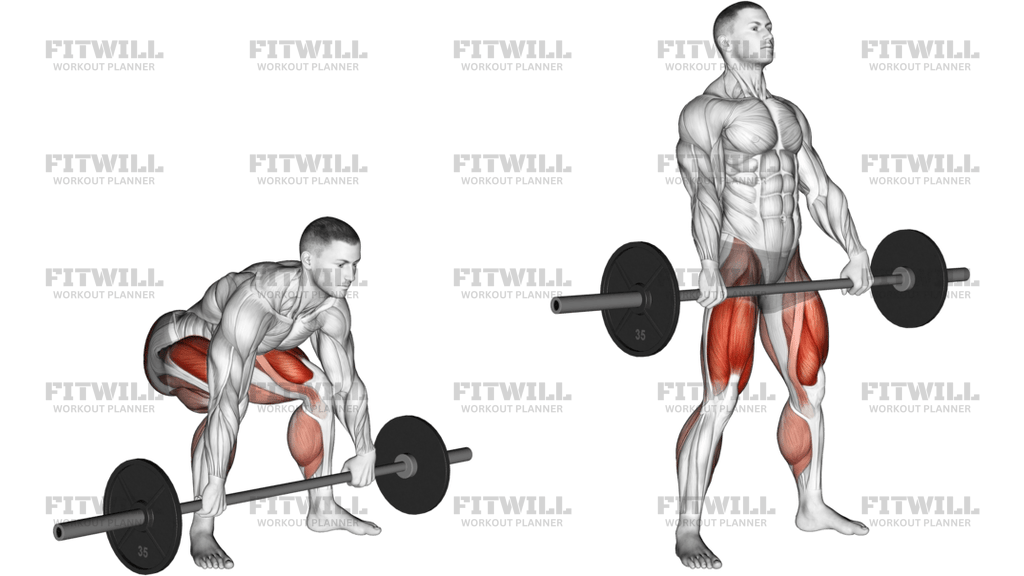
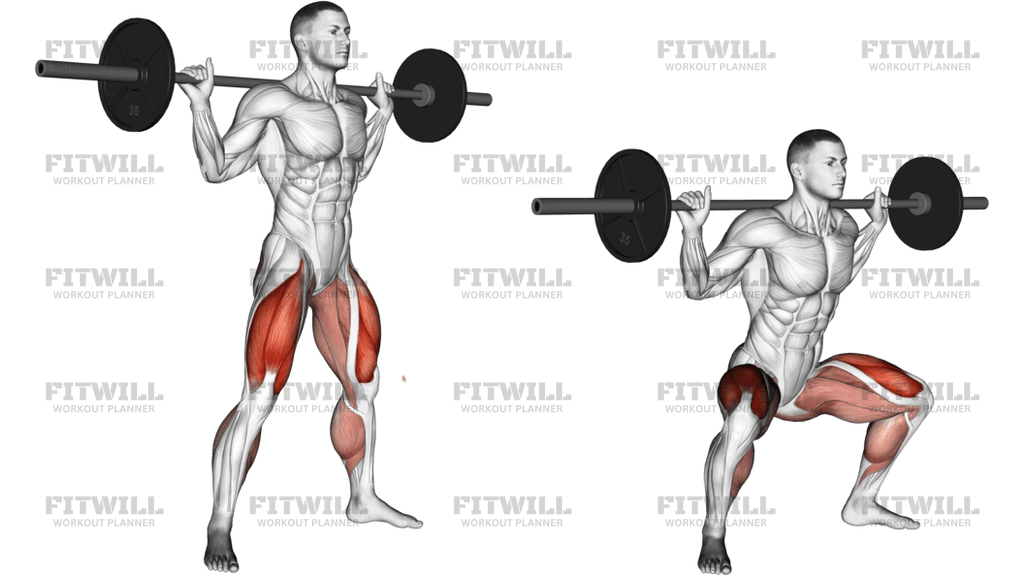
Barbell Squat 2 Sec Hold
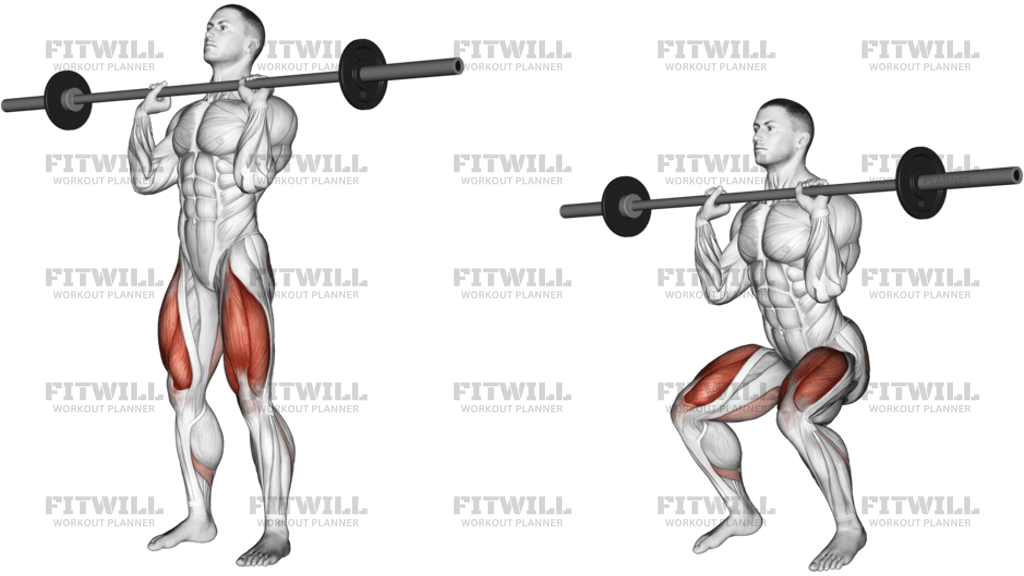
Barbell Squat 2 Sec Hold is a paused back squat that keeps the bar fixed across the upper back while the lifter sinks into the bottom of the squat and holds that position for two full seconds before driving up. The pause removes the bounce out of the hole, so each rep demands more leg strength, trunk stiffness, and clean control than a fast squat. It is a direct lower-body strength exercise, but it also doubles as a skill builder for bracing, depth awareness, and staying tight under load.
The main training emphasis is the thighs and glutes, with the hamstrings, core, and spinal erectors working hard to keep the torso and pelvis organized. In anatomy terms, the primary work is driven by the Gluteus maximus, with help from the Biceps femoris, Rectus abdominis, and Erector spinae. Because the bottom position is held deliberately, weak posture shows up quickly: if the knees cave, the chest collapses, or the low back rounds, the set gets harder immediately.
The setup matters as much as the squat itself. The bar should sit firmly across the upper back, the feet should be planted before the first rep, and the stance should allow the knees to travel naturally over the toes. A controlled inhale and brace before the descent help lock the rib cage and pelvis together so the pause does not turn into a resting position. The goal is to stay active in the bottom, not to relax on the joints or the bar.
Use the descent to own the path, pause without losing tension, then drive up through the mid-foot and heels. The two-second hold makes this especially useful for lifters who want better technique, better bottom-position strength, or a stricter squat variation for accessory work. It fits well in strength blocks, pause-squat progressions, or lower-body sessions where clean reps matter more than load. Keep the weight honest, the depth repeatable, and the return to standing smooth so every rep teaches the same pattern.
[ Workout Log & Planner ]
Put your next workout in Fitwill
Keep your plan and training log ready when you are.


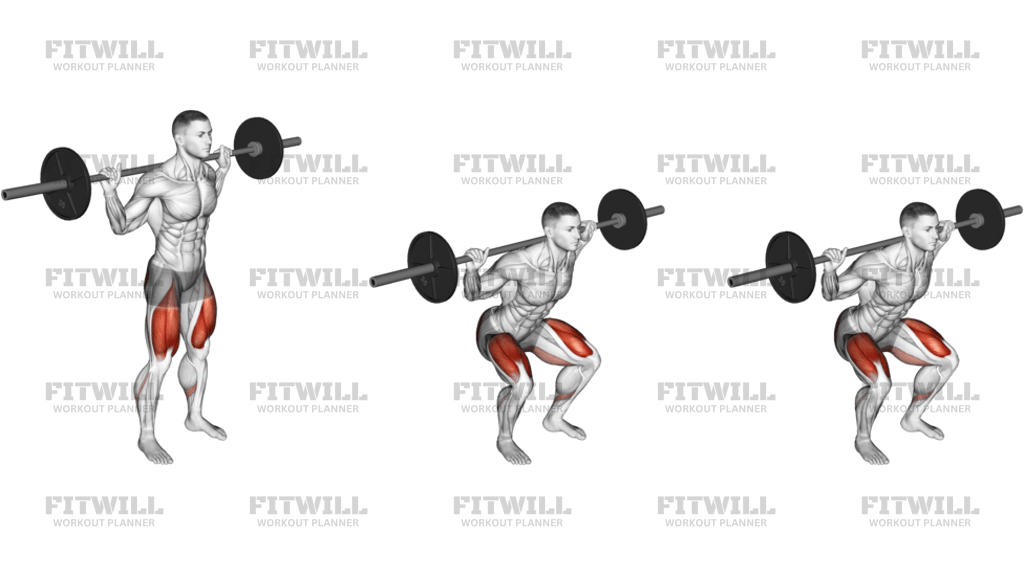
Instructions
- Set the bar across your upper back, unrack it, and take two or three short steps back to a stable squat stance.
- Plant both feet about shoulder-width apart with toes slightly turned out and distribute pressure through the whole foot.
- Inhale, brace your torso, and keep your chest tall before you start the descent.
- Sit your hips down and back while letting the knees track in line with the toes.
- Lower until your thighs reach the desired squat depth and the bar stays over the middle of the foot.
- Hold the bottom position for two full seconds without relaxing your hips, knees, or trunk.
- Drive up by pushing the floor away and keeping the knees from caving inward.
- Stand tall at the top, reset your breath, and repeat for the planned reps.
Tips & Tricks
- Treat the two-second pause as an active hold; stay braced instead of sinking onto your hips or relaxing your lower back.
- Keep the bar path centered over the mid-foot. If it drifts forward, the pause will feel much harder on the back and quads.
- Let the knees open in the same direction as the toes so the bottom position stays stable and the thighs can work fully.
- Use a load you can control out of the pause. If you have to bounce, the weight is too heavy for this variation.
- Keep your heels down and your whole foot loaded; lifting the heels usually shortens the pause and shifts tension away from the legs.
- Breathe in before each descent and exhale as you pass the sticky point on the way up, not while you are sinking into the bottom.
- If your chest collapses in the hole, reduce depth slightly or lighten the bar until you can keep the torso rigid for the full hold.
- Keep your gaze neutral and your neck long. Looking up hard often changes your torso angle and makes the pause less stable.
Frequently Asked Questions
What muscles does the Barbell Squat 2 Sec Hold work most?
It mainly trains the thighs and glutes, with the hamstrings, core, and spinal erectors helping you stay tight during the pause.
Where should the bar sit on this squat variation?
The bar should rest securely across the upper back, not on the neck, so you can hold the bottom position without losing upper-back tension.
How low should I squat before starting the two-second hold?
Go to the deepest position you can control while keeping your heels down, knees tracking well, and your lower back from rounding.
Can beginners use the Barbell Squat 2 Sec Hold?
Yes, but only with light weight and a depth they can hold without collapsing. The pause exposes weak positions quickly.
What makes the two-second hold harder than a normal barbell squat?
The pause removes the stretch reflex at the bottom, so you have to create force from a dead stop instead of bouncing out of the hole.
Why do my knees want to cave in at the bottom?
The paused bottom position is demanding on hip control. Reduce the load, keep your stance slightly wider if needed, and push the knees out in line with the toes.
Should I use this exercise as a main lift or an accessory?
It works best as a main technical or strength accessory lift, especially when you want better squat depth, control, or bottom-end strength.
What is the most common mistake with this squat hold?
Rushing into the ascent or relaxing in the bottom. The hold should stay active, and the rep should come up without a bounce.