Lever Incline One-Arm Chest Press Plate Loaded
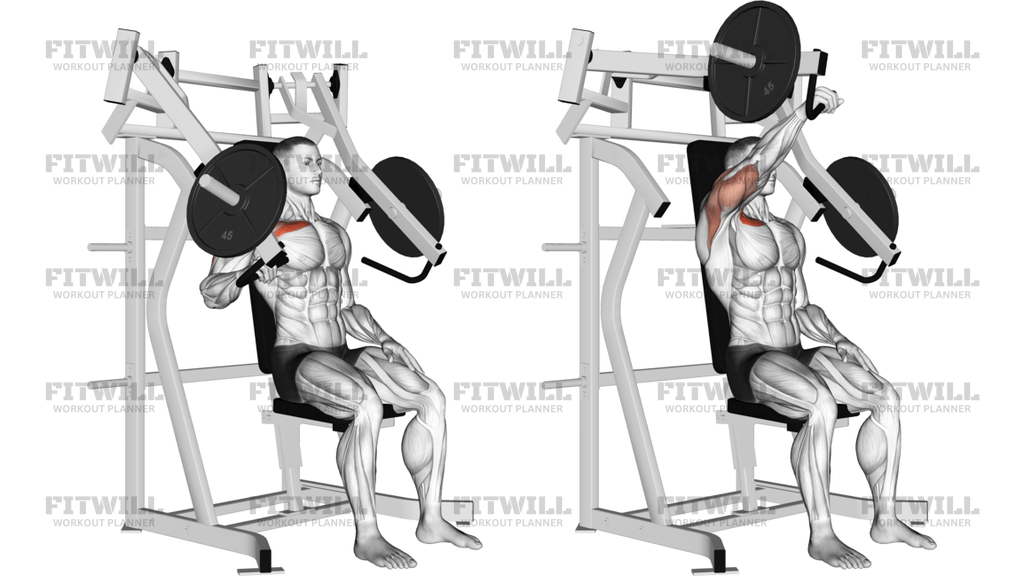
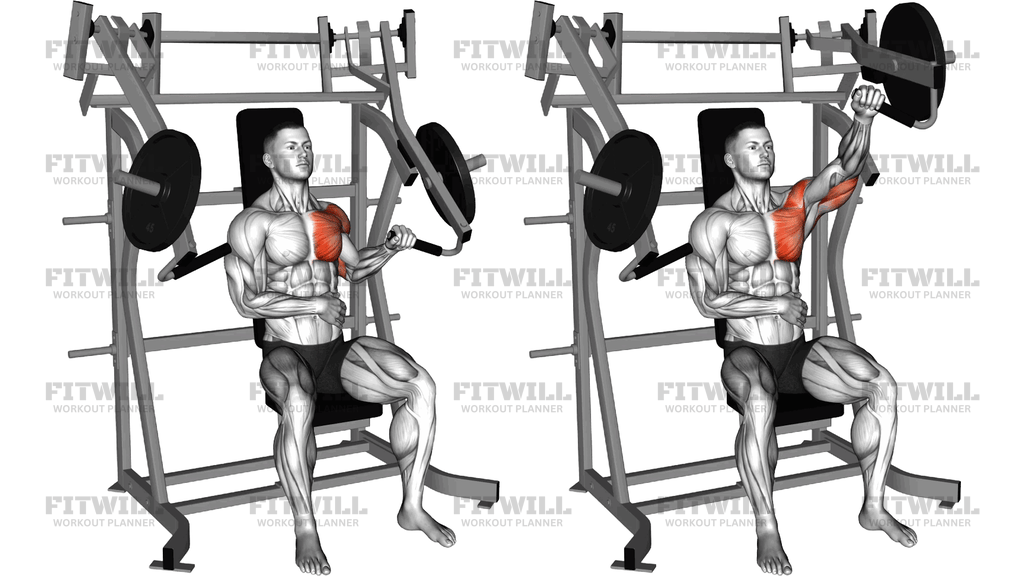
The Lever Incline One-Arm Chest Press is a seated, plate-loaded machine press that drives one arm through a fixed incline arc while the other side of the body works to stay square. The back pad, seat height, and handle position matter because they determine whether the press tracks through the chest and front shoulder or gets turned into a shrugging, twisting shoulder press.
This version is useful when you want a strong chest-focused press with built-in stability from the machine but extra anti-rotation demand from the unilateral setup. The upper chest, front deltoid, and triceps all contribute, while the torso, obliques, and lower body keep you anchored to the seat. That makes it a practical choice for building pressing strength, cleaning up side-to-side asymmetry, or training around a barbell pattern when you want less overall spinal loading.
The cleanest reps start before the first press. Set the seat so the handle begins near upper-chest or shoulder height, plant both feet, and keep your back and glutes in contact with the pad. Grip the working handle, keep the free hand on your thigh or the frame if needed, and stack your ribs over your pelvis so the machine moves your arm instead of pulling your torso off line. The first half of the rep should feel like a controlled drive up and slightly forward along the machine's arc, not a flare of the elbow or a twist through the trunk.
On the way up, exhale as you press and finish with the elbow near full extension without snapping the joint hard into lockout. At the top, the chest should feel engaged and the shoulder should stay down rather than shrugging forward. Lower the handle slowly until you feel a deep but controlled chest stretch and the machine returns to the starting arc. If your shoulder starts to pinch, your torso rotates, or the weight stack forces you to bounce out of the bottom, reduce the load or shorten the range until the rep stays smooth.
Because the machine fixes the path, the main skill is staying organized against that path. It fits well in chest or upper-body sessions as a primary press, a unilateral accessory, or a corrective tool for left-right imbalances. Beginners can use it safely if they keep the load conservative and let the seat and back pad do their job, while more advanced lifters can use it to push harder without losing the pressing line.
[ Workout Log & Planner ]
Put your next workout in Fitwill
Keep your plan and training log ready when you are.


Instructions
- Adjust the seat so the handle starts near upper-chest or shoulder height, and sit with your back and hips fully supported on the pad.
- Plant both feet flat, keep your ribs stacked over your pelvis, and place the free hand on your thigh or the frame so your torso stays square.
- Grip the working handle with one hand and set the shoulder blade down and back without arching hard through the lower back.
- Press the handle up and slightly forward along the machine's fixed arc until the arm is nearly straight.
- Keep the elbow from flaring wide or locking aggressively at the top.
- Lower the handle under control until you feel a deep chest stretch and the machine reaches the bottom of the arc.
- Breathe out on the press and breathe in as you return to the start.
- Repeat for even reps on both sides before re-racking the handle safely.
Tips & Tricks
- Set the seat high enough that the first rep begins near the upper chest, not overhead.
- Keep both hips glued to the seat so the working side does not drag the torso toward the handle.
- Use the free hand as a brace on your thigh or the frame to resist rotation.
- Think of pressing up and forward in the machine's arc, not straight out to the side.
- Stop the descent when the shoulder stays packed and the chest stretch still feels controlled.
- If the shoulder rolls forward at the top, lower the load and finish with the chest, not the trap.
- Use a slower lowering phase than lifting phase to keep tension on the pressing side.
- Match left and right reps carefully; do not let the stronger arm dictate the range.
Frequently Asked Questions
What muscles does the Lever Incline One-Arm Chest Press work?
It primarily trains the chest, with strong help from the front deltoid and triceps. The single-arm setup also challenges the core and obliques to keep your torso from twisting.
Is this machine press good for beginners?
Yes, as long as the seat is set correctly and the load stays light enough to keep the arc smooth. The machine guides the path, which makes it easier to learn pressing mechanics.
How should I set the seat on this incline press machine?
Set the seat so the handle starts around upper-chest or shoulder height in the bottom position. If the start is too high, the rep turns into a shrug; if it is too low, you lose a clean pressing line.
Should I rotate my torso when I press one arm at a time?
No more than a small amount. The goal is to keep the chest square to the pad and resist twisting so the working side does the press instead of the torso.
Why does my shoulder feel more involved than my chest?
That usually means the seat is too low, the elbow is flaring too much, or the handle path is drifting too high. Adjust the seat and keep the press path slightly up and forward.
Can I press through a full lockout on this machine?
Finish with the arm nearly straight, but do not slam the joint into hard lockout. A brief, controlled finish is enough to keep tension on the chest and triceps.
How do I keep from twisting during the set?
Keep both feet planted, keep your back pressed into the pad, and brace the free hand on your thigh or the frame. A slightly lighter load also makes it easier to stay square.
What if the bottom stretch bothers my shoulder?
Shorten the range a little and lower the seat if needed. You should feel chest tension, not a sharp pinch in the front of the shoulder.