Body Saw Plank
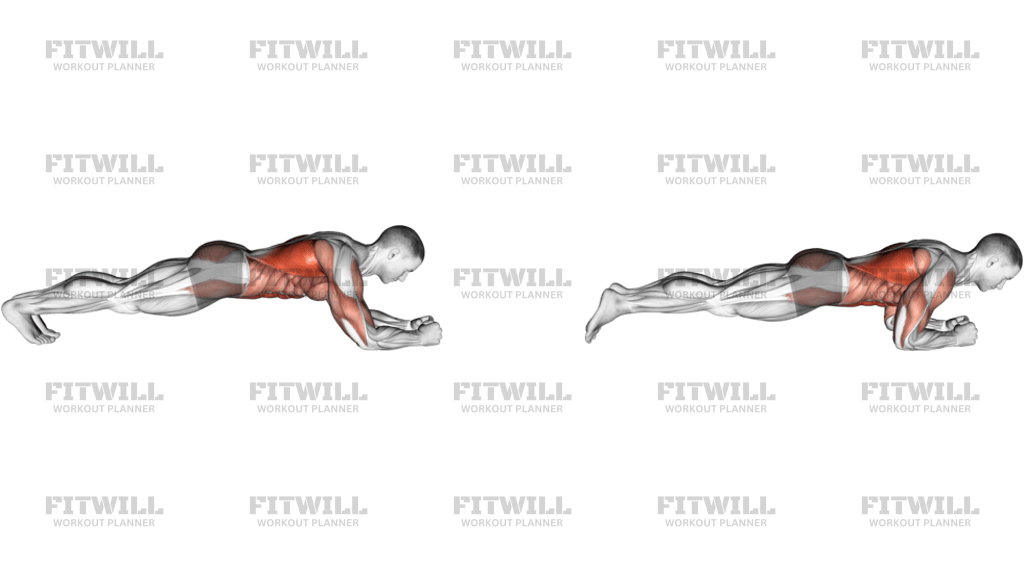
Body Saw Plank is a forearm plank variation where you rock the whole body forward and backward in a straight line instead of holding still. The movement looks small, but it creates a strong anti-extension challenge for the abs, obliques, deep core, glutes, and shoulder stabilizers because the torso has to resist sagging while the body shifts over the forearms and toes.
The setup is the first priority. Place your elbows under or just slightly in front of your shoulders, keep the forearms parallel, extend the legs long, and set the toes into the floor. Before the first rep, make a single rigid line from head to heels by tightening the abs, squeezing the glutes, and pulling the ribs down. If the hips are too high, the set turns into an easy hover; if the low back drops, the core loses the battle immediately.
Each repetition should feel like one piece of wood gliding forward and back. Shift the shoulders a few inches in front of the elbows, then pull them back to the start without bending at the hips or letting the pelvis tip. The forearms stay anchored, the neck stays long, and the chest does not collapse toward the floor. A controlled breath pattern helps: exhale as you slide forward or backward, then inhale as you return while keeping the brace intact.
Body Saw Plank is useful for lifters and athletes who want better trunk stiffness, shoulder endurance, and control in plank-based positions. It fits well as core accessory work after big lifts, in a warm-up, or in a conditioning block where you want high tension without load. The payoff comes from repeatable position, not from chasing a huge range of motion, so a short clean rock is more valuable than a bigger rep with broken alignment.
Stop the set when the low back starts to arch, the shoulders drift behind the elbows, the hips pike, or the neck starts reaching forward. Beginners can use this exercise if they keep the glide short and the body line strict. The best version feels demanding in the abs and shoulders while the rest of the body stays quiet and organized.
[ Workout Log & Planner ]
Put your next workout in Fitwill
Keep your plan and training log ready when you are.


Instructions
- Set up in a forearm plank with your elbows under or slightly in front of your shoulders, forearms parallel, toes tucked, and legs straight.
- Press the forearms into the floor, squeeze your glutes, and pull your ribs down until your body forms one straight line from head to heels.
- Keep your neck neutral and look at the floor just ahead of your hands.
- Shift your shoulders a few inches forward so they travel slightly past your elbows while the torso stays rigid.
- Keep the hips level and avoid bending at the waist as you glide forward.
- Pull the body back to the starting line under control, letting the shoulders return over the elbows.
- Exhale as you move and inhale as you come back, but never let the brace disappear.
- Repeat for the planned reps, then stop as soon as the low back starts to sag or the hips begin to pike.
Tips & Tricks
- Keep the elbows stacked close to the shoulders; if they drift too far forward, the shoulders take over and the plank gets unstable.
- Think about moving the shoulders and heels together as one rigid board instead of sliding the chest and hips separately.
- Squeeze the glutes hard enough to keep the pelvis from tipping into low-back extension.
- Make the glide short and exact; a smaller clean body saw is better than a long rep with broken posture.
- Keep pressure through the forearms and the balls of the feet so the body stays anchored while it shifts.
- If the neck starts jutting forward, reset the gaze and shorten the range immediately.
- Use slow, even breathing rather than holding your breath for the whole set.
- End the set at the first sign of hip pike, low-back sag, or shoulder shrugging.
Frequently Asked Questions
What muscle does Body Saw Plank target most?
The abs are the main target, with a strong hit to the obliques, deep core, glutes, and shoulder stabilizers.
How is a body saw plank different from a regular forearm plank?
A regular forearm plank is mostly a hold, while the body saw adds a small forward-back glide that increases anti-extension demand.
Where should my elbows be in the forearm plank setup?
Set them under or just slightly in front of the shoulders so the plank starts stacked and stable.
Should my hips move during the glide?
The hips should move only as part of one rigid body line, not fold or lift independently.
Can beginners do Body Saw Plank safely?
Yes, if they keep the range short and maintain a solid plank line without letting the low back sag.
Why do I feel this in my shoulders as well as my abs?
The shoulders have to stabilize the forearm plank while the body shifts, so some shoulder fatigue is normal.
What should I do if my low back starts to arch?
Shorten the glide, squeeze the glutes harder, and stop the set if you cannot keep the ribs down.
Where does Body Saw Plank fit in a workout?
It works well as core accessory work, a warm-up drill, or a conditioning block when you want high tension without extra load.