Resistance Band Seated Hip Flexion
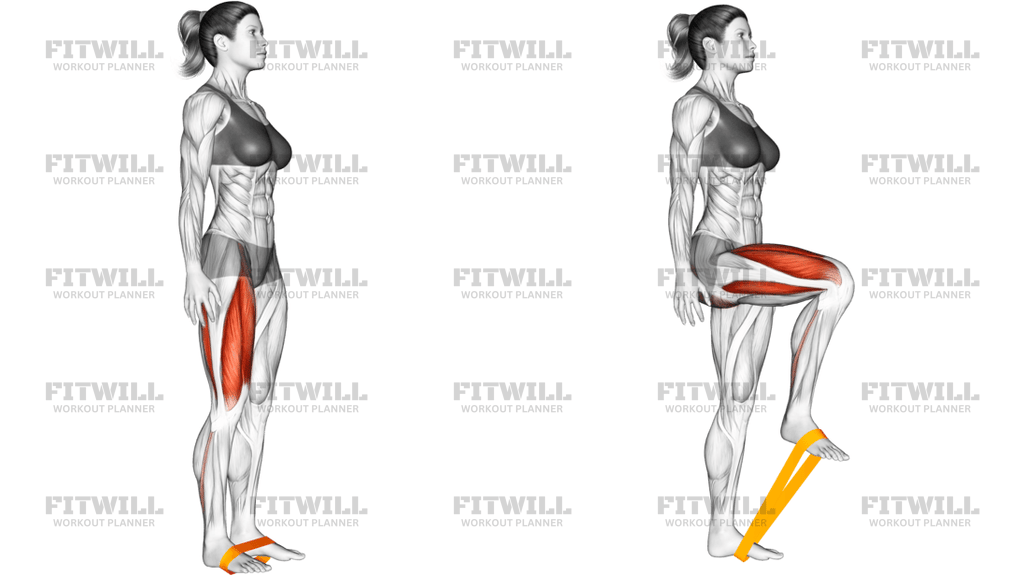
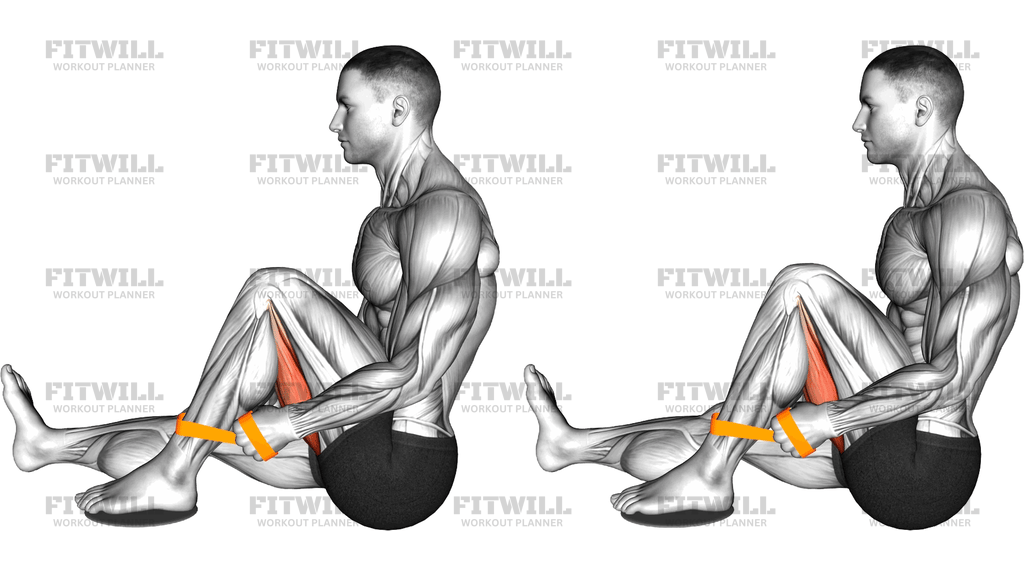
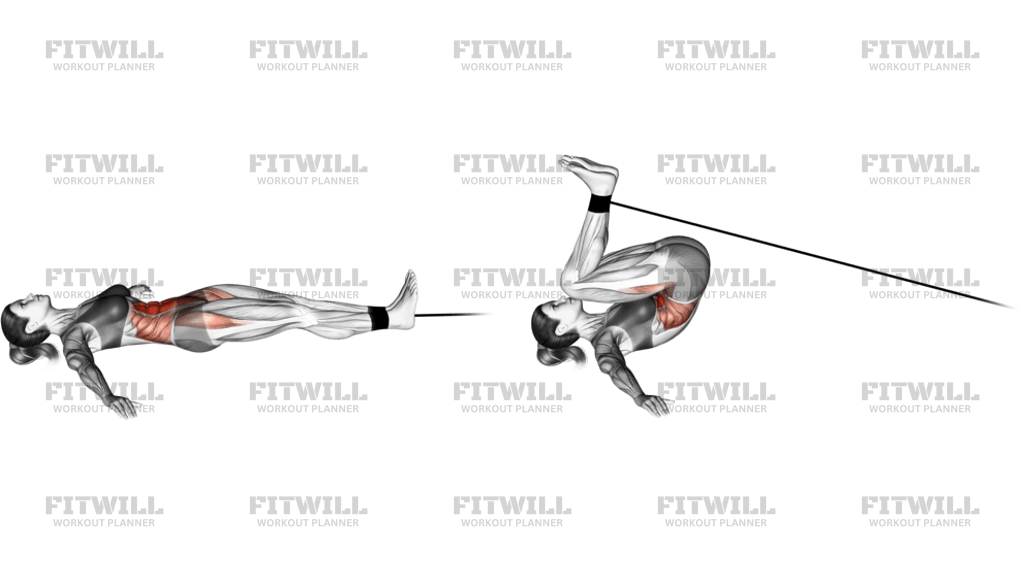
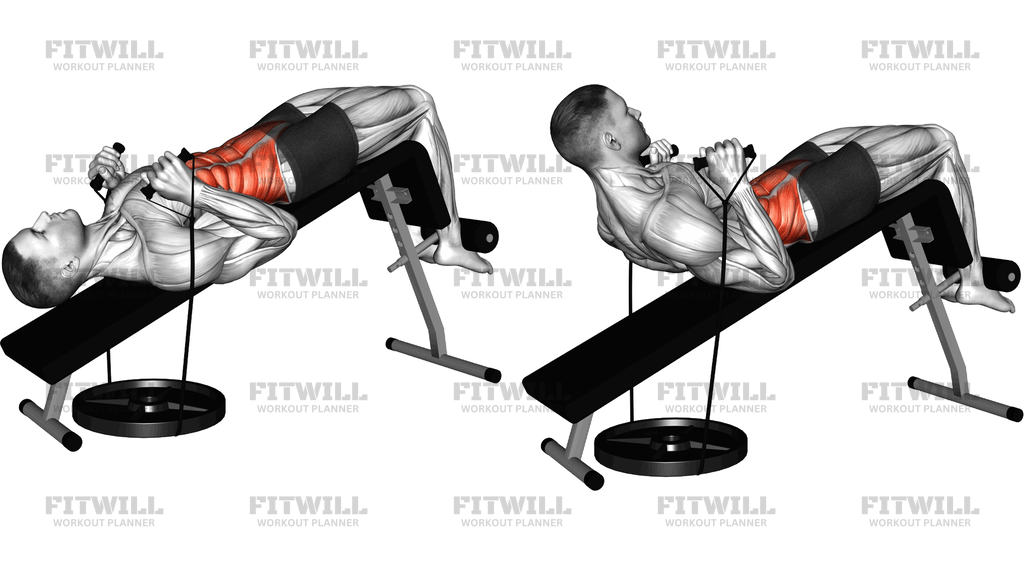
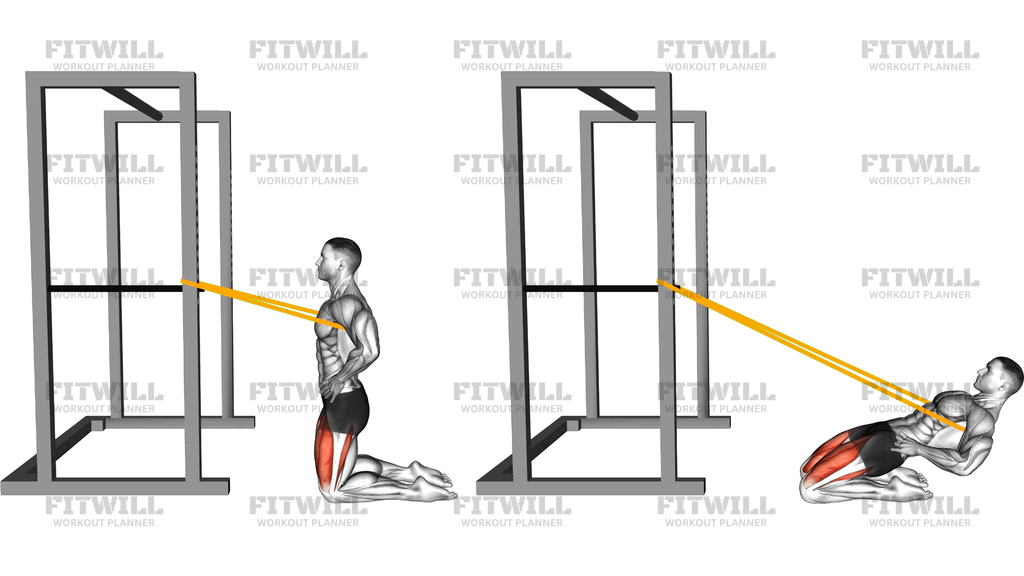
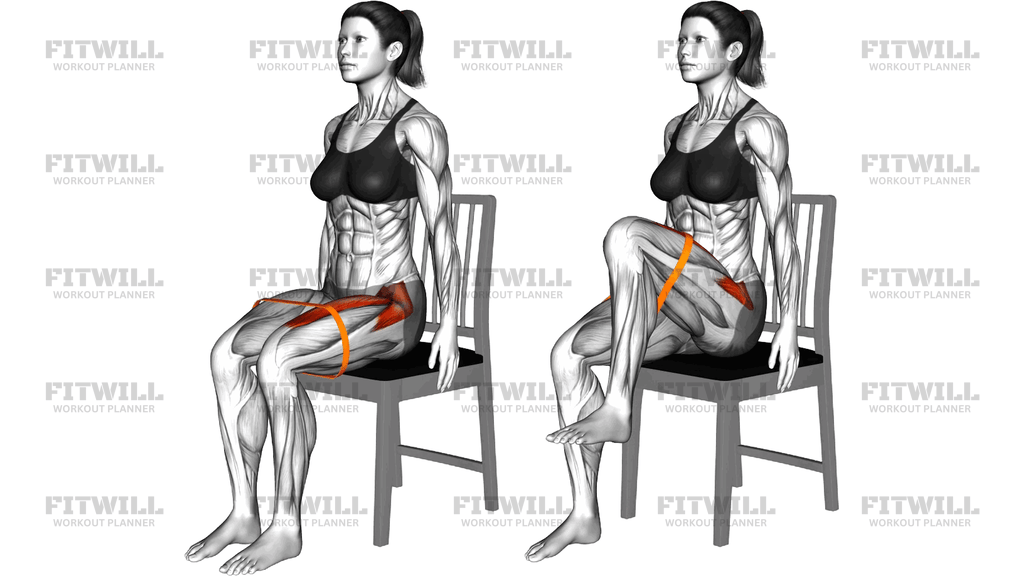
Resistance Band Seated Hip Flexion is a simple but targeted movement for the muscles that lift your thigh toward your torso. You sit upright on a sturdy chair or bench with a resistance band looped around both thighs just above the knees, then drive one knee upward against the band's pull while the other foot stays planted. Because the band anchors across both legs, every lift has to pull the band up and over the working thigh, which creates smooth resistance exactly where the hip flexors do their job.
This exercise is especially useful for people who sit for long hours, since prolonged sitting tends to leave the hip flexors in a shortened, underactive state. Runners, cyclists, and lifters also benefit, because strong hip flexors contribute to a stronger knee drive during sprinting and better control of the thigh during single-leg movements. It is a common choice in rehab-style and warm-up settings because the seated position removes balance demands and lets you focus purely on the hip motion.
The main muscles working are the hip flexors at the front of the hip, particularly the iliopsoas and rectus femoris. Your core works isometrically to keep your torso tall and stop you from collapsing backward or leaning away as the knee rises, and the supporting leg's hip muscles help stabilize your pelvis so it does not tilt as you lift.
Setup matters more than it looks. Sitting tall on the front edge of the chair with both sit bones grounded gives the hip room to flex fully, while a band positioned just above the knees keeps the resistance in line with the thigh. If the band sits too low near the shins or too high near the hips, the pulling angle changes and the movement feels awkward or loses tension at the top.
To perform it well, lift your knee straight up toward your chest rather than swinging it outward or forward, pause briefly at the top, and lower it back down slowly so the band controls the descent. Keep the movement on one side for all planned repetitions, then switch legs, or alternate sides if you prefer. The tempo should stay deliberate: fast, bouncy reps let momentum do the work the hip flexors should be doing.
Because the setup only requires a band and a chair, this exercise fits easily into desk-break routines, warm-ups before lower-body training, or cool-downs on recovery days. Start with a light band and higher repetitions to learn the motion, and only move to a stiffer band once you can lift your knee high without rocking your torso or shrugging your shoulders.
[ Workout Log & Planner ]
Put your next workout in Fitwill
Keep your plan and training log ready when you are.


Instructions
- Sit upright on a sturdy chair or bench, positioned on the front half of the seat so your hips can move freely.
- Loop a resistance band around both thighs just above the knees and slide your feet together so the band sits snug but not stretched tight.
- Place both feet flat on the floor about hip-width apart, with your hands resting lightly on the sides of the seat for balance.
- Sit tall through your spine, draw your shoulder blades gently back, and brace your core as if preparing for a light nudge to the stomach.
- Exhale and drive one knee straight up toward your chest, pulling the band upward and letting your foot clear the floor.
- Pause for a beat at the top of the lift, keeping your torso upright and your pelvis level on the seat.
- Inhale and lower your foot back to the floor slowly, resisting the band's pull on the way down instead of letting it snap your leg down.
- Complete all repetitions on one leg, then switch sides, or alternate legs rep by rep if that suits your routine.
- Between sets, stand up or loosen the band briefly so circulation returns to your legs before the next round.
Tips & Tricks
- If your torso falls backward as the knee rises, move to the very front edge of the seat and think about growing taller through the crown of your head rather than lifting with your lower back.
- A band that is too heavy will drag your knee outward or force a short, choppy lift; downsize the band so you can raise your thigh to at least parallel with the floor.
- Watch for the band sliding down toward the knees mid-set — reposition it just above the knees before starting, since a slipping band changes the resistance angle.
- Keep the lifting knee tracking straight up in line with the hip; letting it drift outward turns the movement into a hip abduction pattern and reduces the hip flexor focus.
- Pause at the top instead of bouncing — the seated position makes it easy to pump reps quickly, and a one-second hold is what separates real hip flexor work from leg swinging.
- The planted foot should stay flat and quiet; if it slides or the heel lifts, you are compensating through the supporting leg rather than isolating the working hip.
- Avoid gripping the seat edges hard and shrugging — your hands are there for balance only, and white-knuckling the chair usually means the load or range is too aggressive.
- If you feel pinching at the front of the hip, reduce the lift height slightly and keep the movement smooth rather than forcing the knee to the chest.
Frequently Asked Questions
Which muscles does Resistance Band Seated Hip Flexion work?
The primary movers are the hip flexors at the front of the hip, mainly the iliopsoas and rectus femoris. Your core and the stabilizing muscles around the planted hip work to keep your torso and pelvis steady.
Why is the resistance band looped around both thighs instead of anchored to the chair?
With the band around both thighs just above the knees, lifting one knee stretches the band upward across the other leg, creating resistance in line with the thigh. This keeps the load directly opposed to the hip flexion path without needing an anchor point.
Is Resistance Band Seated Hip Flexion good for beginners?
Yes, it is one of the most beginner-friendly hip flexor exercises because the seated position removes balance demands and the band load is easy to adjust. Start with a light band and focus on a tall torso and smooth tempo.
How high should I lift my knee during Resistance Band Seated Hip Flexion?
Aim to raise your thigh until it is roughly parallel to the floor or slightly higher, as long as your torso stays upright and you feel no pinching at the front of the hip. Range you can control beats height you have to lean back for.
Why does my lower back arch or my torso lean back when I lift the knee?
That usually means the hip flexors are being assisted by the lower back or the load is too heavy. Sit taller, brace your core before each rep, and either lighten the band or reduce the lift height so the motion comes from the hip joint itself.
How many reps and sets should I do?
For strength and activation, 2 to 3 sets of 10 to 15 controlled reps per side works well. For a warm-up or desk-break routine, lighter band tension with 12 to 20 reps per side is a practical choice.
Can I do Resistance Band Seated Hip Flexion every day?
Because the load is light and the range is joint-friendly, it can be performed most days as activation work. If you train it with a stiff band close to muscular fatigue, treat it like any strength exercise and allow a day of recovery between sessions.
What can I use if I don't have a chair?
Any stable seat works, including a workout bench, sturdy box, or the edge of a couch, as long as your knees can hang slightly past the edge and your feet reach the floor or dangle freely without tipping.
Is this exercise safe if I feel tightness in the front of my hip?
Mild stretching sensations are normal, but sharp or pinching discomfort is a signal to stop and adjust. Lower the lift height, slow the tempo, and use a lighter band; if the discomfort persists, check with a qualified professional before continuing.