Resistance Band Seated Single Leg Curl
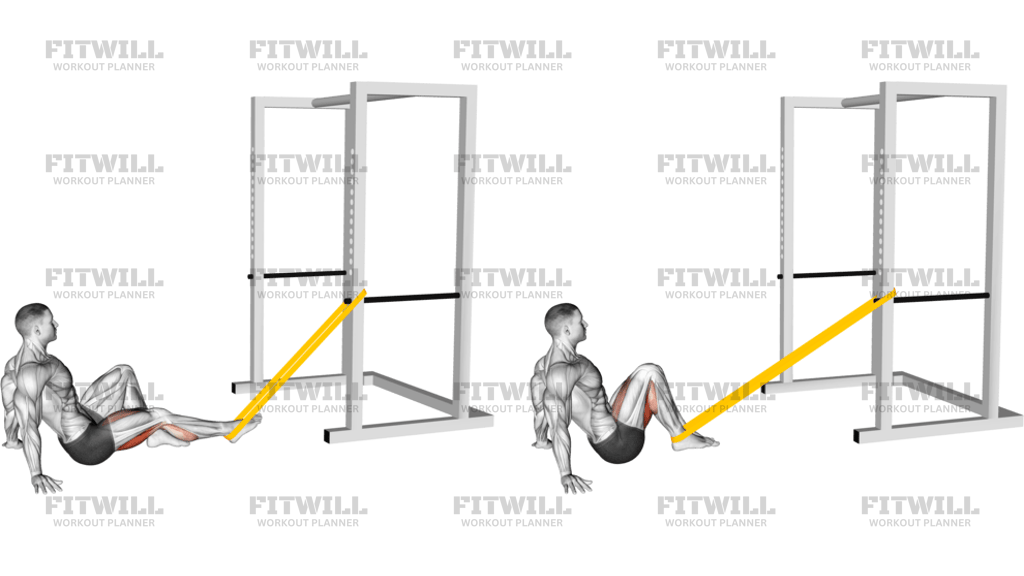
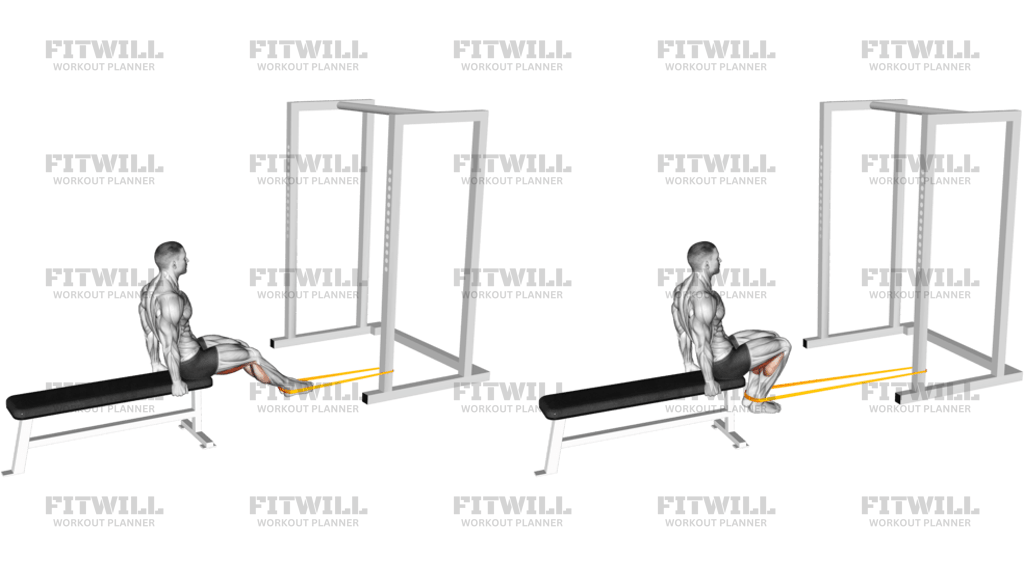
Resistance Band Seated Single Leg Curl is a single-leg hamstring exercise done from a seated, slightly reclined position with the band anchored in front of you. The band creates constant tension as you bend one knee against resistance, so the working leg has to control both the curl and the return. It is a useful choice when you want direct hamstring work without loading the spine the way a heavy machine or barbell movement can.
This variation emphasizes the hamstrings on the working side while the hips, trunk, and non-working leg help keep you steady. Because only one leg is doing the work, it is easier to notice side-to-side differences in strength, cramping, or range of motion. That makes Resistance Band Seated Single Leg Curl valuable for warm-ups, accessory work, rehab-style training, or lower-body sessions where you want more control than load.
The setup matters more here than in many band exercises. Sit with the band looped around the working foot and anchored low in front of you so the pull stays aligned with the lower leg. Keep the other leg bent and planted or relaxed out of the way, then lean back enough to support yourself on your hands while keeping your torso steady. If the anchor is too high or too far off to one side, the band will twist the knee and make the curl feel sloppy instead of clean.
Each repetition should feel like the heel is drawing back toward the hamstring, not like the whole body is scooting away from the anchor. Curl the lower leg smoothly, pause when the hamstring is fully shortened, and then return under control until the knee is nearly straight again. The return phase matters because the band keeps tension on the hamstring as it lengthens, which is where many people lose position and let the pelvis rock or the torso round.
Resistance Band Seated Single Leg Curl works well for moderate to higher-rep sets because the resistance increases as the band stretches and the exercise rewards patience. It is especially useful when you need a joint-friendly hamstring option that still gives a clear squeeze at peak contraction. If you feel it mostly in your hip flexors, low back, or the band pulling your body forward, the setup is usually off and the anchor, body angle, or band tension should be adjusted before continuing.
[ Workout Log & Planner ]
Put your next workout in Fitwill
Keep your plan and training log ready when you are.


Instructions
- Sit on the floor or a mat with one leg extended and the other leg bent, then loop the resistance band around the foot of the working leg and anchor it low in front of you.
- Lean back and support yourself on your hands behind your hips so your torso stays slightly reclined and the band pulls straight toward the working foot.
- Set the working heel on the floor with the knee nearly straight, then square your hips and keep your non-working leg relaxed or planted for balance.
- Brace your midsection and keep your chest lifted so the band tension comes from the leg instead of from sliding your torso backward.
- Curl the working lower leg by bending the knee and drawing the heel back toward your hamstring in one smooth path.
- Keep the upper thigh quiet and let the knee be the joint that moves while the pelvis and shoulders stay as still as possible.
- Squeeze briefly when the heel is closest to your body, then pause before you let the band pull the leg forward.
- Lower the leg slowly until the knee is almost straight again, keeping tension on the band and avoiding a hard snap at the bottom.
- Finish the set, unhook the band carefully, and switch legs or reset the anchor before starting the next side.
Tips & Tricks
- Anchor the band low and centered with the foot so the pull stays in line with the lower leg instead of twisting the knee inward or outward.
- If the band drags your torso forward, scoot closer to the anchor or sit more upright before adding more tension.
- Keep the working heel light on the floor only at the start; once the curl begins, do not push off the ground to help the rep.
- A small bend at the start is fine, but do not let the knee lock hard at the bottom or the band will yank the joint forward.
- Slow down the return phase so the hamstrings keep working as the leg lengthens, not just when you curl it in.
- Use a folded mat or towel under your hands if the floor is hard and you cannot keep the torso steady without shoulder strain.
- If your hips keep rocking, reduce the band tension and shorten the range until each rep stays smooth.
- Exhale as you curl the heel in and inhale as the leg opens back out.
- Stop the set when the band starts to snap the foot forward or you lose the feeling of the hamstring doing the work.
Frequently Asked Questions
What muscle does Resistance Band Seated Single Leg Curl target most?
The hamstrings are the main movers, especially when you keep the thigh still and let the knee do the curling.
Where should I anchor the band for Resistance Band Seated Single Leg Curl?
Use a low, stable anchor in front of you so the band pulls straight toward the working foot. A high anchor usually changes the line of pull and makes the curl feel awkward.
Should my torso stay upright in Resistance Band Seated Single Leg Curl?
A slight recline is usually better because it gives you room to brace and keep the pelvis quiet. If you lean too far back, though, the hips may start to rock to finish the rep.
Can beginners do Resistance Band Seated Single Leg Curl?
Yes. Start with a light band and a shorter range so you can learn how to keep the knee moving without sliding your torso or twisting the hip.
Why does the band keep pulling me forward?
The anchor is probably too far away, too high, or the band is too heavy. Move closer, lower the anchor, or use less tension so the line of pull stays manageable.
Do I need to keep the non-working leg in a specific position?
Keep it bent and out of the way, or plant it lightly for balance. The goal is to stop the body from rolling as the working leg curls.
How far should I curl the leg in Resistance Band Seated Single Leg Curl?
Curl until you get a strong hamstring squeeze without the pelvis moving or the band losing alignment. More range is not better if the hip starts to lift or the torso shifts.
What if I feel this more in my hip or low back than in my hamstrings?
Check that the band is anchored low, the torso is supported by your hands, and the working thigh stays quiet. If the low back still takes over, reduce tension and shorten the curl.