Band Resisted Chin-Up
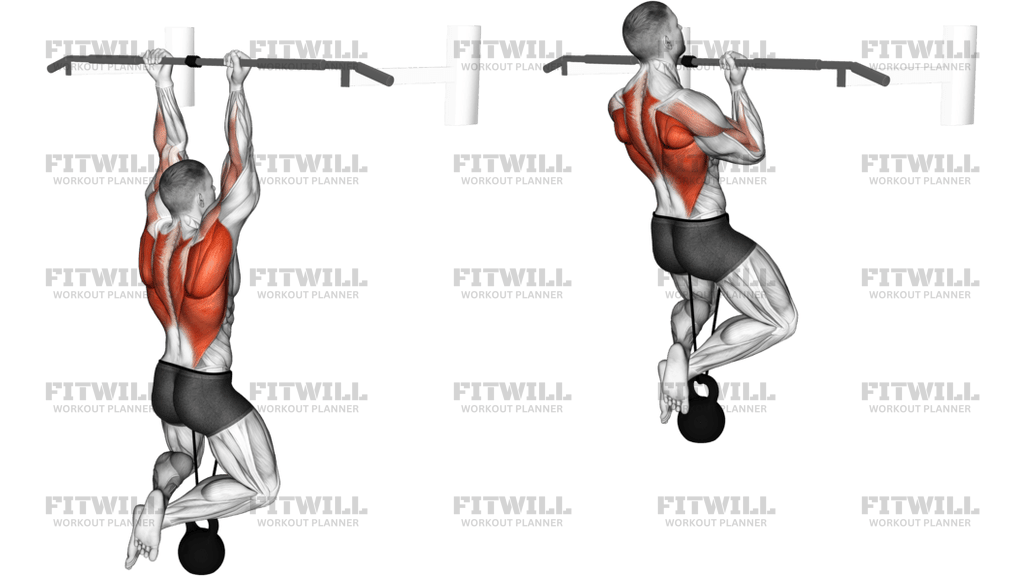
Band Resisted Chin-Up is a vertical pulling exercise built around an underhand grip on a pull-up bar. In this setup, the band reduces how much bodyweight you have to lift, which makes the movement useful for learning the chin-up path, building back and biceps strength, or collecting cleaner reps when full bodyweight chin-ups are not yet consistent. Because the load changes across the range, the exercise rewards a controlled start and a deliberate finish instead of swinging to get over the bar.
The main job comes from the lats and elbow flexors, with the upper back, rear shoulders, forearms, and core helping you stay organized. A good repetition starts from a still hang: shoulders set, ribs not flared, legs quiet, and the band centered so it helps without twisting you. If the band is too loose or too strong, your torso will drift and the rep will stop feeling like a chin-up.
Grasp the bar with palms facing you, usually about shoulder width, then pull your chest upward by driving your elbows down and back. Keep the chin close to the bar path, avoid craning your neck, and finish when the chin clears the bar without kicking the legs or turning it into a half row. Lower yourself under control until the elbows straighten and the shoulders return to a stable hang.
This variation is useful as a progression toward strict chin-ups, as a lighter accessory movement on back day, or as a volume option when you want more quality reps with less joint stress. It also works well when you want to practice the top position and eccentric control without grinding each repetition. The band should make the first inch of the pull manageable, not turn the exercise into a bounce off the stretch.
Treat the repetition like a skill lift. Smooth pull, brief pause near the top if you can control it, and a slow return to the bottom. If your shoulders roll forward, your legs swing, or the bar contact changes every rep, reduce assistance and rebuild the pattern before chasing more volume.
[ Workout Log & Planner ]
Put your next workout in Fitwill
Keep your plan and training log ready when you are.


Instructions
- Loop a long resistance band over a secure pull-up bar, step one foot into the bottom of the band, and take a shoulder-width underhand grip on the bar.
- Hang with your arms straight, your chest lifted, and your body centered under the bar so the band hangs vertically without twisting you.
- Set your shoulders down away from your ears before the first pull and keep your legs quiet so they do not swing for momentum.
- Drive your elbows down and back to pull your chest toward the bar, keeping your chin close to the same path as your sternum.
- Squeeze hard at the top when your chin clears the bar, but keep your neck long instead of reaching your chin forward.
- Lower yourself slowly until your elbows straighten and your shoulders settle back into an active hang.
- Reset any swing at the bottom, re-center the band under your body, and take a breath before the next rep.
- Step out of the band only after you are hanging still and ready to safely finish the set.
Tips & Tricks
- Choose a band that lets you reach the top without jerking; if you have to kick to clear the bar, the band is too light.
- Keep the grip around shoulder width. A wider grip shortens the pull and makes it harder to bring the chest up cleanly.
- Think about driving the elbows toward your ribs instead of curling the chin upward to the bar.
- Keep your ribs stacked over your pelvis so the lower back does not arch hard when you pull.
- Pause for a split second at the top only if you can keep the shoulders down and the neck relaxed.
- Use a slow, controlled descent of about two to three seconds to build strength through the lower half of the rep.
- If the band shifts to one side, stop and re-center it before the next rep so the pull stays even.
- Crossing the ankles lightly can help quiet the legs if they want to swing behind you.
- Stop the set when the last third of the lowering phase gets sloppy, because that is where shoulders usually start to lose position.
Frequently Asked Questions
What muscles does Band Resisted Chin-Up train most?
It emphasizes the lats and biceps, with the upper back, forearms, and core helping stabilize the pull.
Is Band Resisted Chin-Up easier than a strict chin-up?
Yes. The band reduces the load, especially out of the bottom, so it is a common progression toward unassisted reps.
What grip should I use on Band Resisted Chin-Up?
Use a shoulder-width underhand grip unless the bar or your shoulders require a slightly narrower setup. The palms should face you for the classic chin-up path.
Where should the band sit during Band Resisted Chin-Up?
Keep the band centered under your body, with your foot or knee set so the band hangs straight and does not twist your hips.
How high should I pull on Band Resisted Chin-Up?
Pull until your chin clears the bar. If you are yanking higher by craning your neck, the rep has usually gone past the point of good control.
What is the most common mistake on Band Resisted Chin-Up?
Swinging the legs or shrugging the shoulders at the bottom. Keep the body quiet and start each rep from an active hang instead of a loose drop.
Can beginners do Band Resisted Chin-Up?
Yes, if they can hang safely and keep the band centered. A stronger band and a slower lowering phase make the movement more manageable.
What can I use instead of Band Resisted Chin-Up?
A band-assisted chin-up, assisted pull-up machine, or lat pulldown can all train the same pulling pattern if a bar is not available.