Resistance Band Seated Face Pull
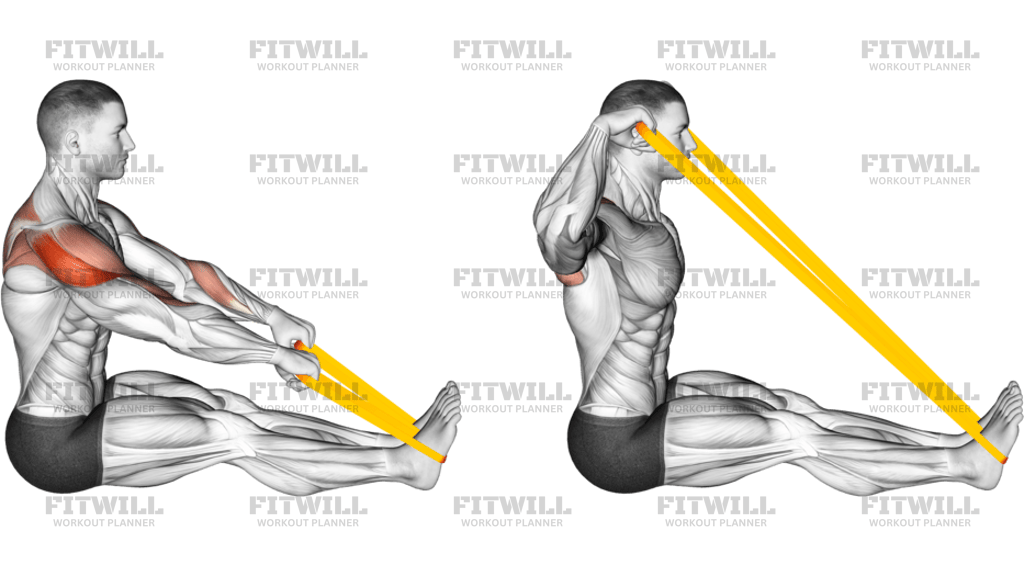
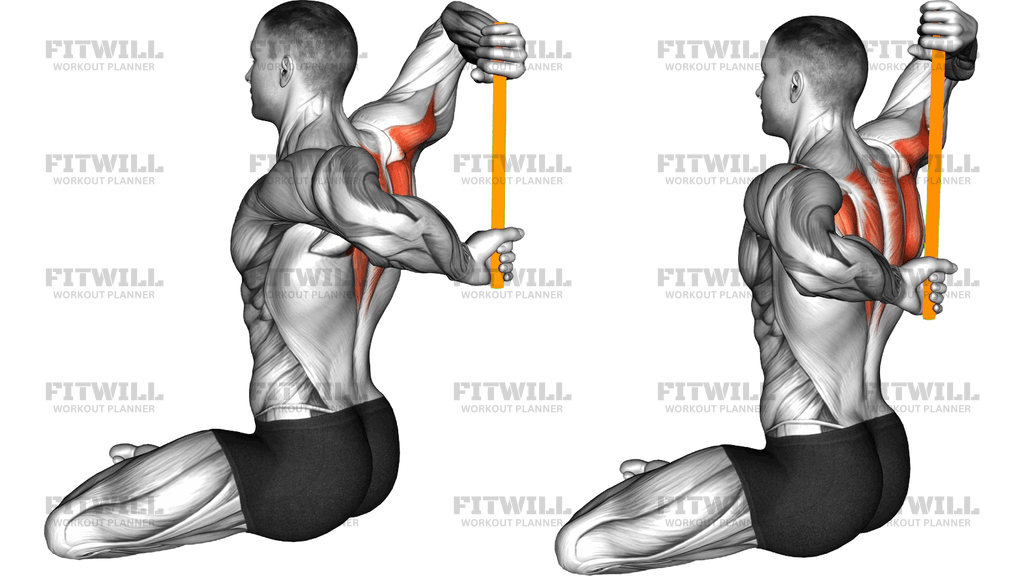
Resistance Band Seated Face Pull is a seated pulling exercise that trains the rear shoulders, upper back, and the small muscles that help the shoulder blade and rotator cuff work together. The seated position removes a lot of lower-body cheating, so the exercise stays focused on upper-back control instead of momentum. That makes it useful for shoulder warm-ups, posture work, and accessory training after pressing or rowing.
The setup matters because the band angle changes where the tension lands. Sit tall facing a secure anchor point, usually around eye or upper-chest height, and start with light tension in the band before you pull. Keep your ribs stacked over your pelvis, your neck long, and your shoulders set down rather than shrugged so the first inch of the rep comes from the upper back and rear delts instead of the traps taking over. If you feel yourself leaning back before the pull even starts, step farther away from the anchor or choose a lighter band.
Each rep should travel toward the face, not the chest. Pull with your elbows high and slightly out, separate your hands as the band reaches your nose or forehead, and finish by squeezing the shoulder blades without arching the lower back. The return should be slow and deliberate so the band does not yank your arms forward or pull your torso out of position. A smooth return is as important as the pull because it keeps tension on the rear shoulders and teaches the shoulder blades to move without losing control.
This movement fits well in a warm-up, an accessory block, or as a corrective drill after heavy benching and overhead work. It is also a good choice for lifters who need more scapular control or who spend a lot of time in pressing positions. Light resistance and clean reps are usually more valuable here than chasing a heavy band or a big range of motion. For most people, moderate reps with a brief pause at the face will produce better results than trying to force extra load.
Keep the exercise pain-free and precise. If the anchor is too low, the pull turns into a row; if the band is too high, the shoulders tend to shrug. The best version looks smooth, quiet, and repeatable from rep one to rep ten, with the neck relaxed and the upper back doing the work. When the movement gets sloppy, the set should end rather than letting the band or the torso decide the path for you.
[ Workout Log & Planner ]
Put your next workout in Fitwill
Keep your plan and training log ready when you are.


Instructions
- Sit on the floor or a bench facing a secure band anchor at about eye or upper-chest height.
- Hold the band with both hands and slide back until there is light tension before the first rep.
- Plant your feet or extend your legs, then sit tall with your ribs stacked over your pelvis.
- Set your shoulders down and slightly back without arching your lower back.
- Pull the band toward your face, leading with your elbows and keeping them high and slightly out.
- Separate your hands as the band reaches your nose or forehead and squeeze your upper back briefly.
- Lower the band slowly until your arms are straight again and your shoulders stay controlled.
- Reset your posture and repeat for the planned number of smooth reps.
Tips & Tricks
- Aim the pull at your face, not your chest, so the rear delts and upper back stay in charge.
- If you have to shrug to reach the anchor, lower the band tension or move the anchor slightly higher.
- Keep your ribs down on the return; leaning back to finish the rep turns it into a body swing.
- Think about pulling your thumbs back and apart to encourage external rotation at the shoulder.
- Use a short pause at the face to remove momentum and make each rep count.
- A lighter band usually gives better shoulder-blade control than a heavy band that pulls your posture forward.
- Let the elbows travel high but stop before the shoulders pinch or the neck tenses.
- If the band snaps your hands forward, slow the eccentric and shorten the range slightly.
Frequently Asked Questions
What muscles does Resistance Band Seated Face Pull work?
It mainly targets the rear shoulders and upper back, with the rhomboids, mid traps, and rotator cuff helping guide the pull.
Where should the band be anchored for Resistance Band Seated Face Pull?
The anchor is usually best around eye or upper-chest height so the band travels toward your face instead of becoming a low row.
Should my elbows stay high during Resistance Band Seated Face Pull?
Yes, keep them high and slightly out so the pull stays on the rear shoulders and upper back rather than drifting into a curl or row.
Can beginners do Resistance Band Seated Face Pull?
Yes. A light band and a tall seated posture make it very beginner-friendly because the seated setup cuts down on cheating.
Why do I feel Resistance Band Seated Face Pull in my neck?
That usually means the shoulders are shrugging or the band is too heavy. Reduce tension and keep the neck long while you pull.
Is Resistance Band Seated Face Pull good for posture work?
Yes, it is a solid accessory for the upper back and rear shoulders, especially if you spend a lot of time pressing or sitting.
What is the biggest mistake in Resistance Band Seated Face Pull?
Pulling the band to the chest or leaning back to finish the rep usually turns it into a different movement and reduces upper-back tension.
How many reps should I use for Resistance Band Seated Face Pull?
Most people do well with moderate to higher reps, since the goal is usually control, shoulder health, and clean scapular movement rather than max load.