Barbell Resistance Band Hip Thrust
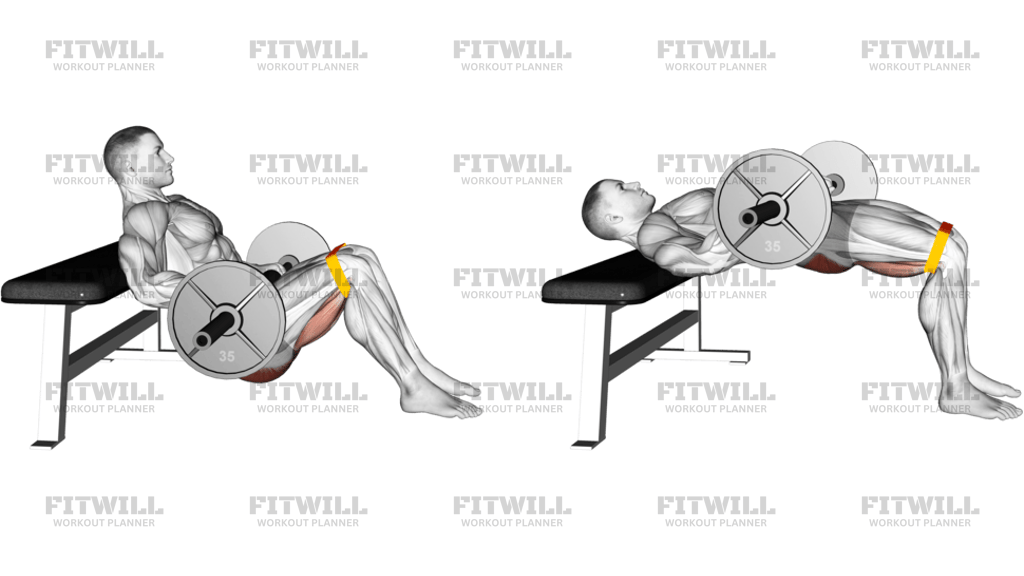
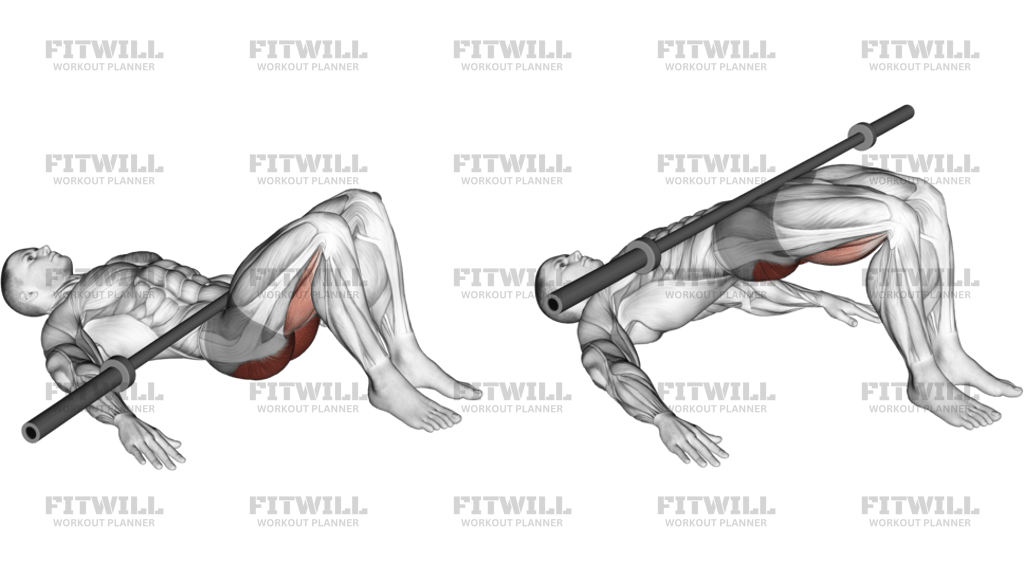
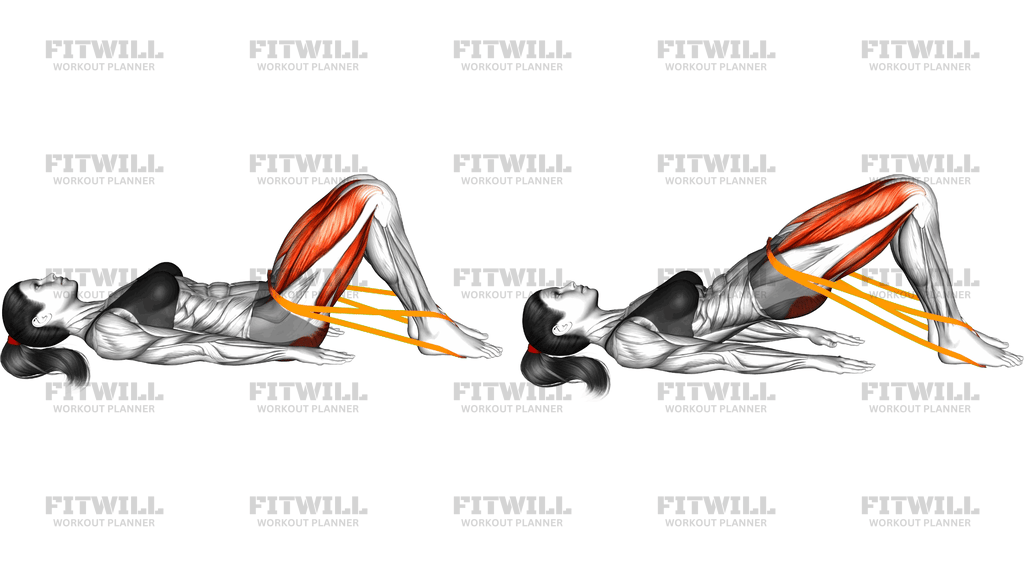
Barbell Resistance Band Hip Thrust is a glute-focused bridge variation performed with the upper back supported on a bench, a barbell settled across the hip crease, and a band adding outward tension at the knees or thighs. The movement trains hip extension under load while also asking the glutes and trunk to keep the pelvis level and the ribs down. That combination makes the exercise especially useful when you want direct lower-body strength work without a lot of knee-dominant loading.
The bench changes the exercise in an important way: it gives the torso a fixed support point so the hips can travel through a larger extension range. The barbell supplies the main external load, while the band encourages you to keep the knees gently pressed out instead of letting them cave inward at the top. When that setup is right, the top position feels like a hard glute lockout rather than a low-back hinge.
Good reps start before the hips move. Your shoulder blades should be anchored on the bench, feet planted flat, and shins close to vertical when the hips are near the top. The bar should sit low enough on the pelvis to stay stable, usually cushioned by a pad or folded towel. From there, you drive the floor away, lift until the torso and thighs form a strong line, and keep the band tension active so the knees track over the feet.
At the top, avoid turning the rep into a lumbar backbend. The goal is hip extension, not rib flare. Finish with the pelvis level, chin tucked or neutral, and the weight controlled rather than thrown upward. On the way down, lower with intent until the hips are back near the floor and the glutes stay under tension. A smooth tempo matters more than chasing a huge range or a fast rep count.
This version fits strength blocks, glute hypertrophy work, and accessory sessions where you want a hard contraction with relatively stable body mechanics. It also works well for people who need a more precise hip-dominant pattern than squats or deadlifts provide. Keep the load honest, keep the knees from drifting inward, and treat every repetition like a clean reset of the same bridge pattern.
Fitwill
Log Workouts, Track Progress & Build Strength.
Achieve more with Fitwill: explore over 9600 exercises with images and videos, access built-in and custom workouts, perfect for both gym and home sessions, and see real results.
Start your journey. Download today!




Instructions
- Sit on the floor with your upper back against the edge of a flat bench and roll the barbell into the hip crease with a pad or folded towel under it.
- Place the band above your knees or around your thighs, then plant both feet flat about hip-width apart with your heels far enough from the bench to keep your shins nearly vertical at the top.
- Tuck your chin slightly, brace your torso, and set your ribs down before the first rep begins.
- Drive through your heels and lift the hips until your torso and thighs make a strong line from shoulders to knees.
- Push the knees gently out against the band as you reach the top so they stay aligned with your feet.
- Squeeze the glutes hard for a brief pause without arching your lower back.
- Lower the bar under control until the hips are just above the floor and the glutes stay loaded.
- Reset your breath at the bottom and repeat for the planned number of reps.
Tips & Tricks
- If the bar rolls or digs into your pelvis, move the pad higher or use a thicker towel before adding more load.
- At the top, your shins should be close to vertical; if your knees drift too far forward, shift your feet slightly farther away from the bench.
- Think about lifting the hips with the glutes, not pressing the ribs upward with the low back.
- Keep steady outward pressure on the band the whole set, but do not flare the knees so wide that you lose foot pressure.
- A short pause at lockout makes the glutes do more work than bouncing through the top.
- Lowering too quickly usually makes the set feel like a drop instead of a hip extension exercise, so control the descent.
- Use a load that lets you hold the same torso angle and knee position on every rep.
- If your neck gets tense, keep your eyes fixed slightly forward and avoid cranking the head back at the top.
Frequently Asked Questions
What does Barbell Resistance Band Hip Thrust train best?
It primarily trains the glutes through loaded hip extension, with the band helping keep the knees and hips aligned.
Why is the bench position important in this hip thrust?
The bench supports the upper back so the hips can travel through a fuller range while the torso stays anchored.
Where should the band sit on the legs?
Place it above the knees or around the thighs, then keep gentle outward pressure so the knees do not collapse inward.
How do I know if my feet are set correctly?
At the top, your shins should be close to vertical and your heels should stay planted so the glutes, not the quads, finish the rep.
Should I arch my lower back at the top?
No. Finish by extending the hips and squeezing the glutes, but keep the ribs down so the movement does not turn into lumbar extension.
Is this exercise beginner-friendly?
Yes, if you start with a light barbell or even bodyweight and focus on the bench setup, foot placement, and controlled lockout.
What is the most common form error?
People often rush the rep and finish by hyperextending the low back instead of keeping the torso and pelvis stacked.
Can I use this instead of a standard hip thrust?
Yes. The barbell and band make it a stronger glute-focused variation, especially if you want extra knee-out tension at the top.