Lying Ab Press
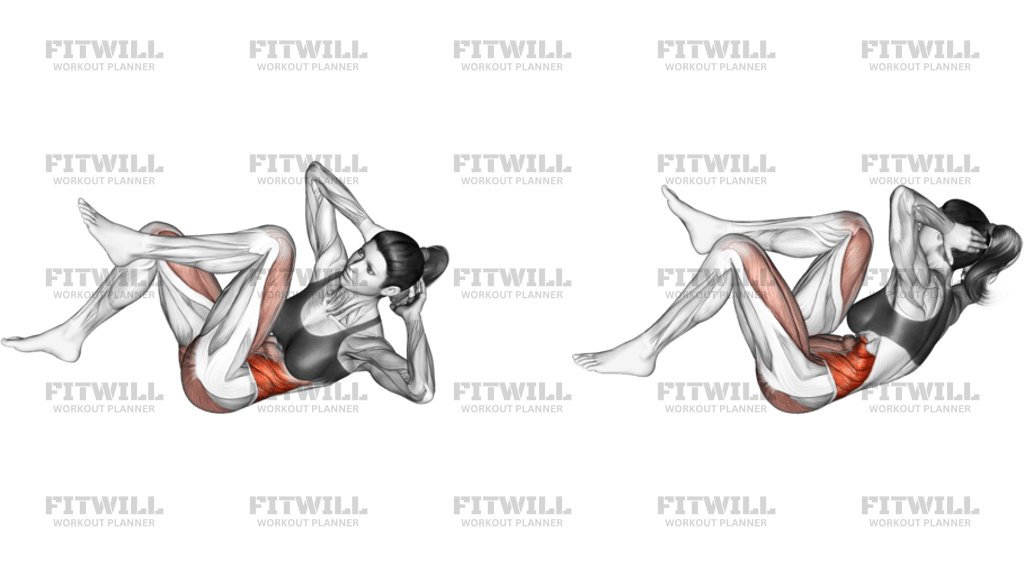
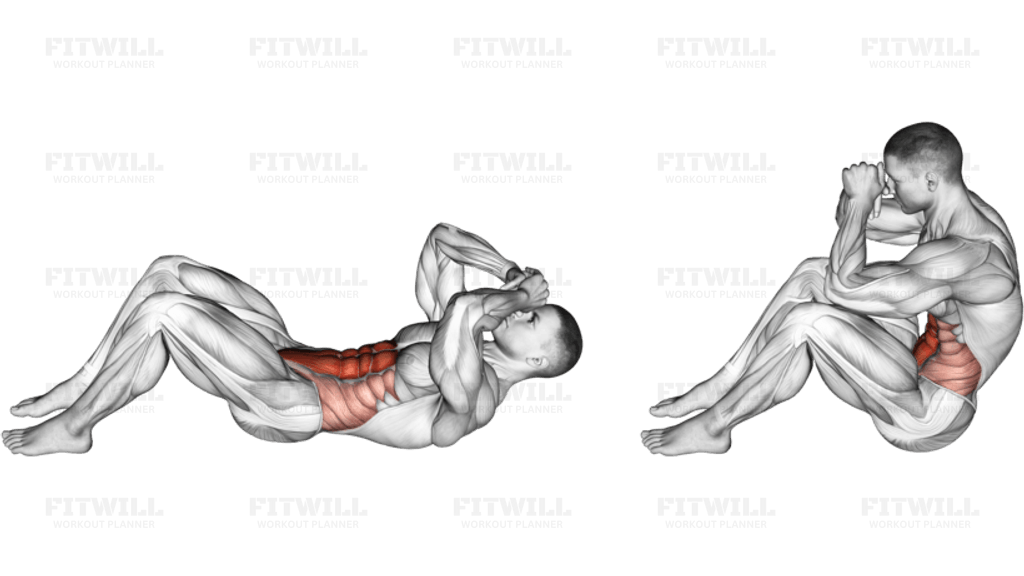
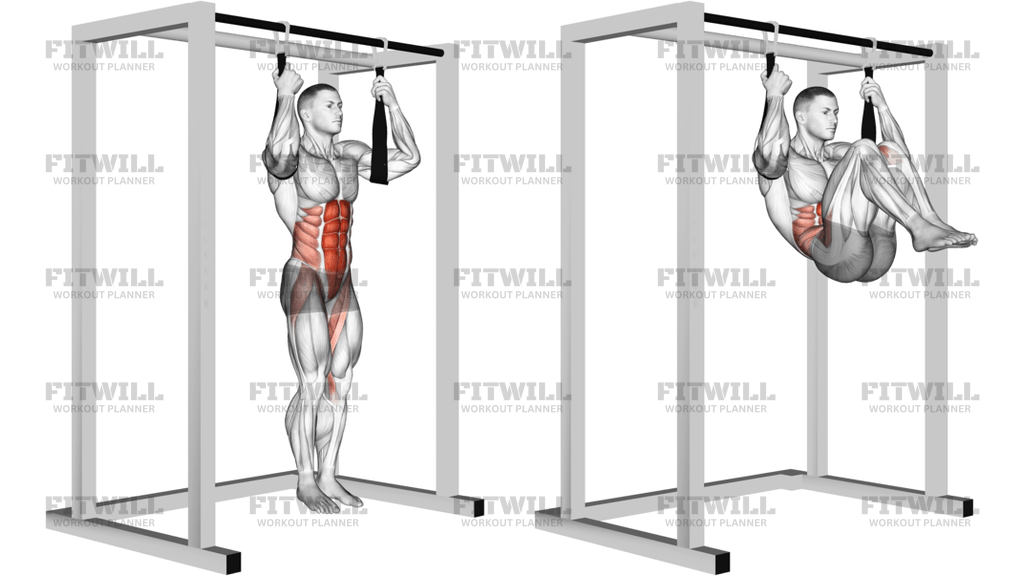
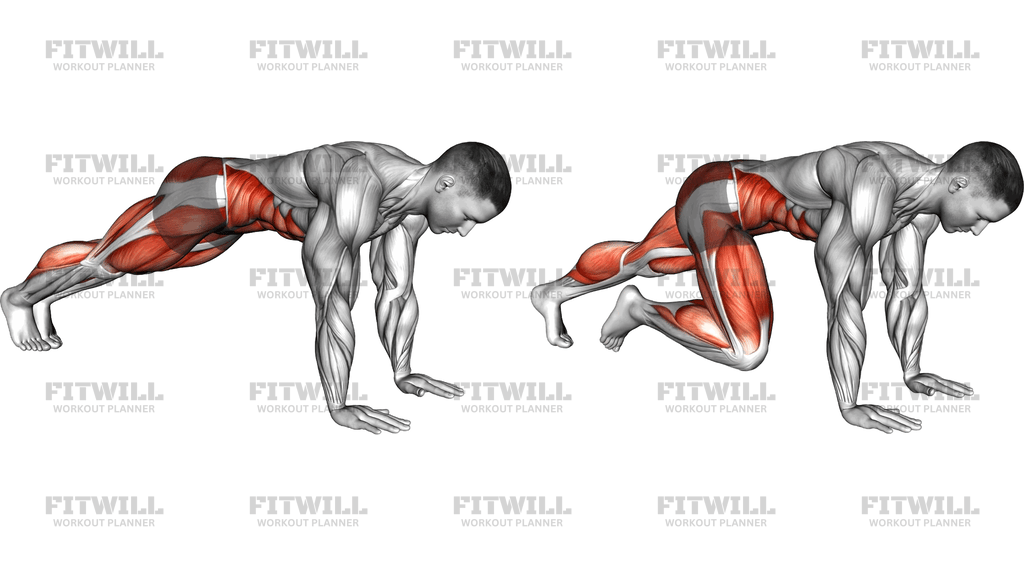
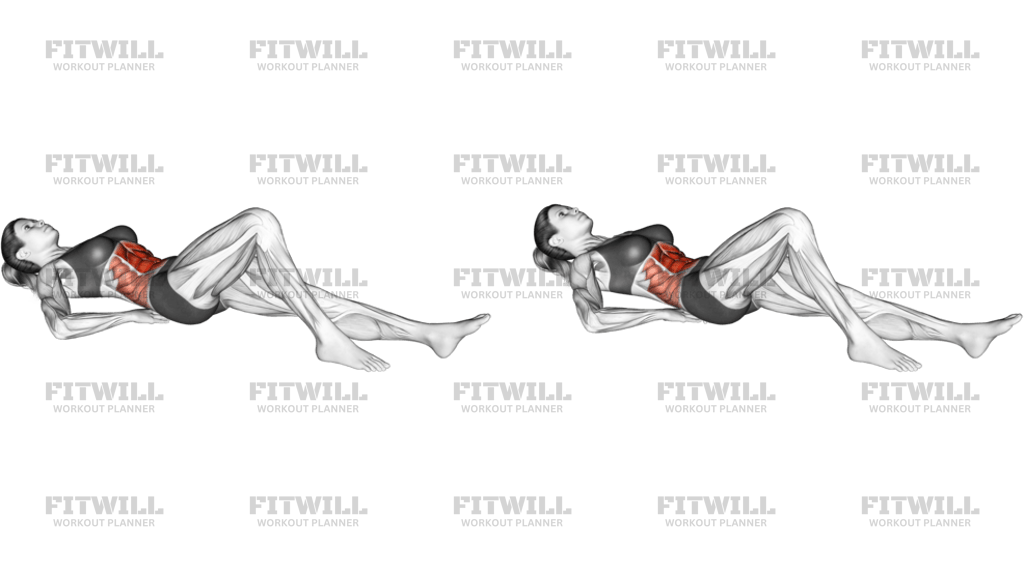
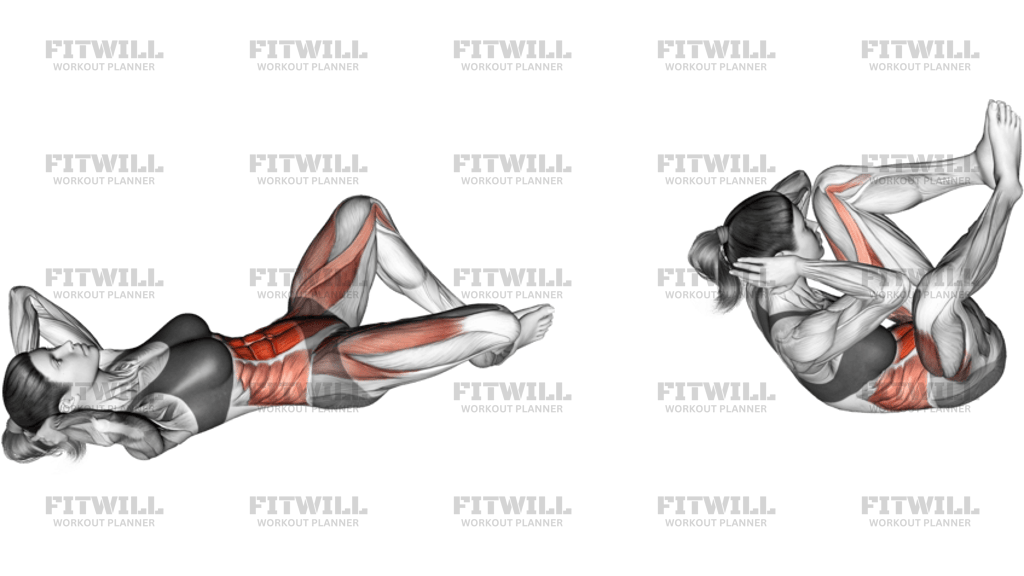
Lying Ab Press is a floor-based core exercise performed on your back with the hips and knees lifted, which makes the abdominal wall work hard to keep the ribs down and the pelvis steady. In the image, the body stays compact instead of extending or swinging, so the exercise is best understood as a controlled abdominal press rather than a fast crunch or leg raise.
The main training goal is to shorten and brace the trunk while resisting the tendency for the low back to arch. That puts the strongest emphasis on the rectus abdominis, with help from the obliques and deep core muscles to keep the torso from rotating or collapsing to one side. The hip flexors will assist because the legs stay elevated, but they should not take over the movement.
Setup matters because the position of the ribs, pelvis, and knees decides whether the abs can do the work. Lie flat, bring the thighs up, and keep the legs arranged as shown so the pelvis can stay tucked and the low back stays in contact with the floor. From there, the press should feel like a controlled abdominal contraction, not a throw of the shoulders or a yank from the neck.
Each repetition should start with a hard exhale and a strong brace. Press the abdomen inward, keep the shoulders lightly curled off the floor, and maintain the lifted leg position without letting the hips drift. If the exercise is being done as a short hold, the goal is to keep tension consistent through the full breath cycle. If it is being done for reps, lower with control, reset the brace, and press again without losing the floor contact in the lower back.
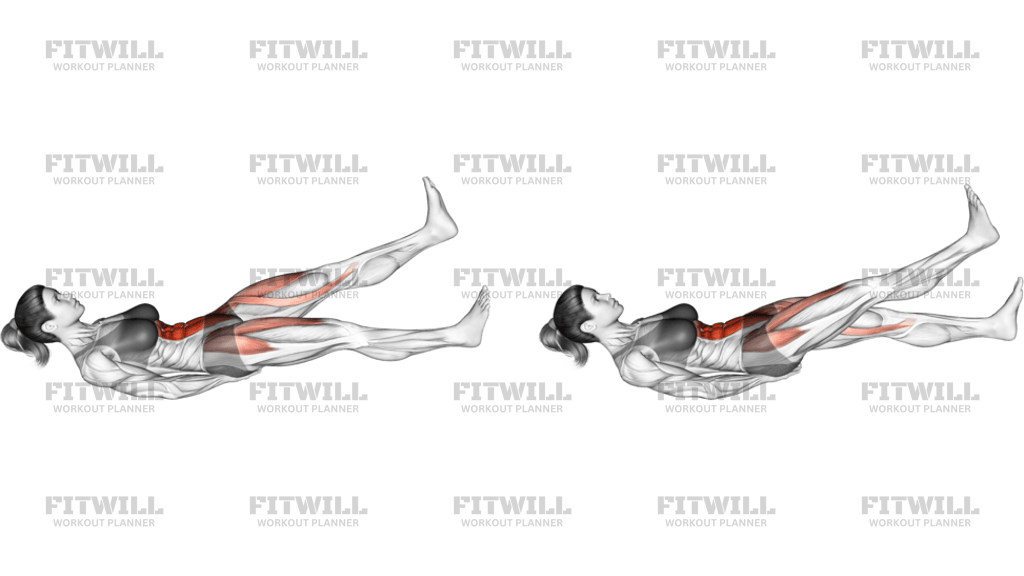
Lying Ab Press works well as a core accessory, warm-up drill, or finisher when you want strict trunk control without loading the spine. It is also useful for beginners who need a simpler supine core pattern before progressing to more demanding hollow-body or leg-lowering work. Keep the motion pain-free, reduce the leg height if the hip flexors cramp, and stop the set when you can no longer keep the ribs down and the pelvis stable.
Fitwill
Log Workouts, Track Progress & Build Strength.
Achieve more with Fitwill: explore over 9600 exercises with images and videos, access built-in and custom workouts, perfect for both gym and home sessions, and see real results.
Start your journey. Download today!




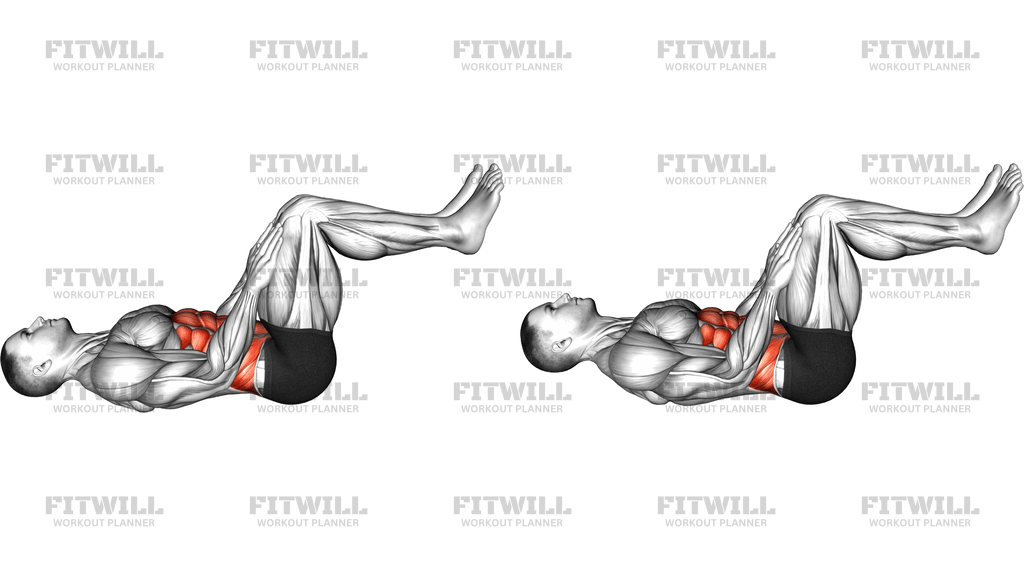
Instructions
- Lie on your back on a mat with your knees bent and your thighs lifted so the hips and knees stay in the compact position shown.
- Let your shoulders and head rest down first, then bring your hands to the fronts of your thighs or just above the knees.
- Press your lower back gently into the floor and tuck your ribs down before you begin the first rep.
- Exhale, curl your shoulder blades slightly off the floor, and press your hands into your thighs without letting the knees drift closer to your chest.
- Keep the neck long and the chin slightly tucked so the effort stays in the abs instead of the front of the neck.
- Hold the top contraction for a brief squeeze while keeping the pelvis steady and the low back flat.
- Inhale as you lower the shoulders back down and release the press without losing abdominal tension.
- Reset the brace, keep the legs lifted, and repeat for the planned number of reps or holds.
Tips & Tricks
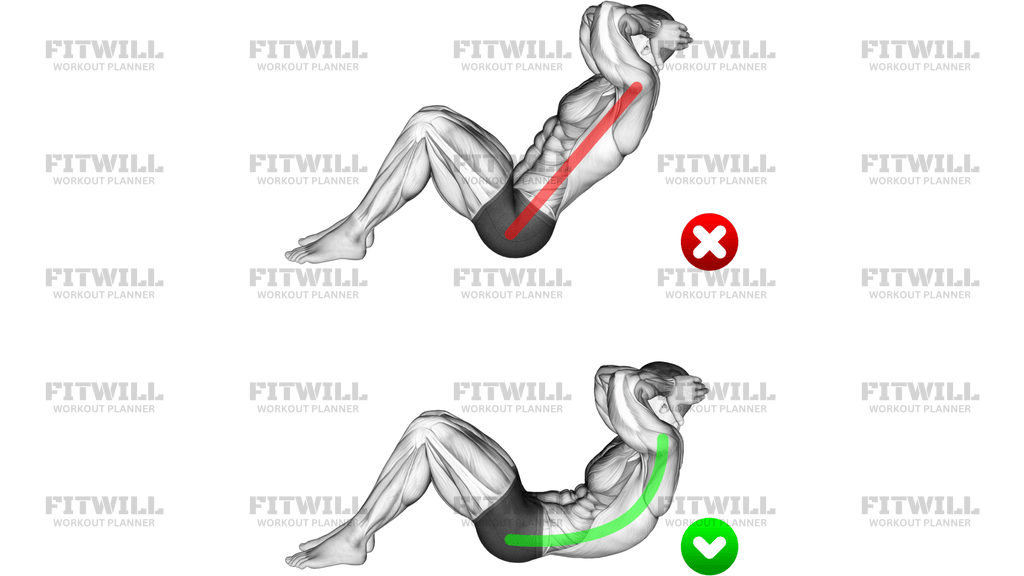
- If your low back arches, raise the knees a little and shorten the shoulder lift until the floor contact stays solid.
- Treat the exhale as the trigger for the rep; the ribs should close before the shoulders leave the floor.
- Keep the pressure even through both thighs so the torso does not twist toward one side.
- A small crunch is enough here; lifting too high turns it into a sit-up and shifts tension away from the abs.
- If the hip flexors cramp, move the knees farther from the chest and reduce the length of the hold.
- Keep the hands active against the thighs instead of simply resting there, which helps the abdominal brace stay honest.
- Do not pull the head forward; the chin should stay gently tucked with the gaze angled toward the ceiling.
- For longer sets, use short controlled holds rather than trying to force more range through the low back.
- Stop each set as soon as you can no longer keep the ribs down and the pelvis from tipping forward.
Frequently Asked Questions
What muscles does Lying Ab Press train most?
It mainly trains the rectus abdominis, with the obliques and deep core helping keep the ribs and pelvis controlled.
Can beginners perform this exercise?
Yes. It is a good beginner core drill as long as the low back stays down and the shoulder lift stays small.
Do my feet stay on the floor during Lying Ab Press?
No. In this version the legs stay lifted like the image, which increases abdominal tension and makes pelvic control more important.
Why do my hip flexors feel this more than my abs?
Usually the knees are too close to the chest or the torso is losing its brace. Raise the knees slightly and focus on closing the ribs first.
How high should I lift my shoulders?
Only a few inches off the floor. This is a compact abdominal press, not a full sit-up.
What is the most common form mistake?
Letting the low back arch or pulling the head forward. Both shift the work away from the abs and into the neck or hip flexors.
What is a useful substitution if this feels too hard?
Keep the same floor position but lower the legs a little less and use shorter isometric holds until you can keep the pelvis steady.
When should I use this exercise in a workout?
It works well as a core warm-up, accessory drill, or finisher when you want strict trunk control without external load.